
UK 2x Champion? Does that mean there is a World Champion?
I imagine there may be a few different audiences that will end up reading this, which presents the challenge of where to start with explaining it all. I think, before going into details around training for the championship, or anything surrounding roasting and green coffee, it would make sense to bring the readership to one single digestible point of what this whole championship thing is.
Some of you will be fully new to this whole world, and wont even realise that there are championships within coffee. You wont have realised yet that there are national championships, in various disciplines, who’s winners then go on to represent their countries, competing for the title on a world stage.

Yes! Stage.
People actually come to watch these things happen.
Did you know that there is even a national, followed by a World Aeropress Championship, where people get together and compete in who can make the best Aeropress. You might even be thinking…what the heck is an Aeropress. Youtube it. You will be pleasantly surprised at how much this simple coffee brewing device (designed by the maker of the Aerobie flying disk) has taken storm in the lives of even the average person aiming for a nice ‘cuppa joe’. For those who fall into this category; I will aim to walk through it with full consideration of how crazy it all may seem to you 😂.

Some of you are fully aware of the competition scene within the coffee industry, having potentially competed or watched one of the other disciplines, but have no idea what exactly happens in the Coffee Roasting Championships. And to be fair, there is likely only a handful of people that would enjoy watching us roasters stair at a screen, droplets of perspiration on our foreheads as we watch what looks like a a series of random numbers sitting next to different coloured lines moving across a grid or graph of some sort.
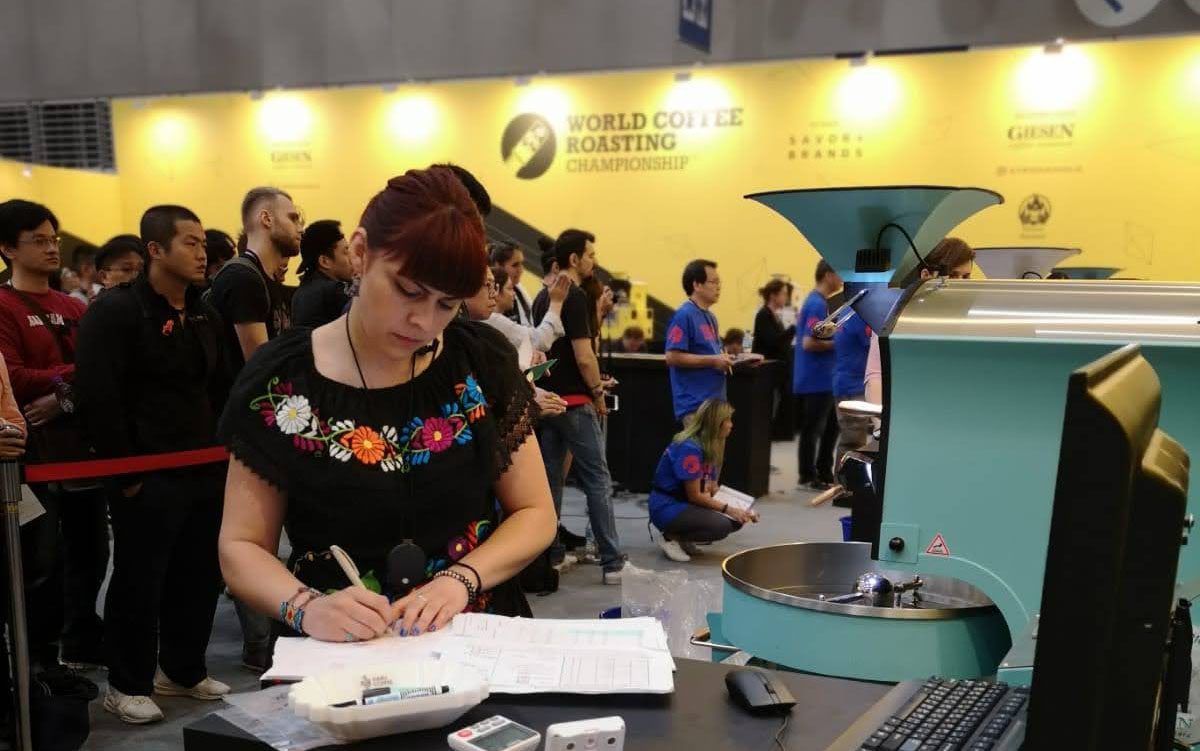
Sometimes I think it looks a bit like when you can track planes and their flight path as they are moving through the sky… but that might be the 5 year old in me that is still convinced I should be a pilot flying planes. I’ll settle for flying green coffee through a spinning drum full of energy for now, and place the pilot license on a bucket list. But so we can all visualise what i’m talking about: this is what a screen typically looks like in front of us:

For those of you who are part of this group, I look forward to sharing with you some of the various intricacies you likely didn’t know about, alongside providing insight on how exactly we train for this one since its not a competition with a presentation, and overall stands a mystery to most coffee professionals since roasting is quite the sub-sect within the industry.
The last group are the ones who plan to or already competed beside me here in the UK or the World, or those who are competing or intend to compete in this particular discipline in another country. For you, some of what I will write in this blog and any subsequent blogs about training up for and competing in the roasting championships will take you down memory lane. But for you I hope this posts bring clarity to the rest of the community, so that they have a greater understanding and respect toward what you are doing! I also hope that somewhere along my journey and through my learnings around competition in general, I might have a nugget of valuable information that helps you on your next roasting championship endeavour.
Let this blog be then dedicated to the basics, as to not write a book. There is so much one could cover, but in the words of a childhood friend- use the KISS model. Keep It Simple, Stupid.
First thing to know:
regardless of whether at the UK or World Level, this competition is a long one. It lasts 3-5 days, and every single competitor will have some sort of task they must do on each of those days! This is different to some of the other competitions out there in the industry, such as Barista Championships, where the competition lasts the amount of rounds you make it through, and the amount of time you spend actually competing is the one hour preparation slot backstage and the 15 minutes (plus set up) on stage. It is not to say Barista Championships are easier to prep for, rather that the endurance factor during the actual roasting championship is different, and that the opportunity to win a roasting championship is down to how well you do several tasks over 3-5 days, rather than whether you can duplicate the routine you did the day before. So when you train for the roasting competition, your run throughs of the whole plan need to be over days rather than 15 minutes. More on this and how training for this competition v.s. others is different in another blog soon.
What is the end product then? What is it you have to do?
Placed as simply as possible, you need to produce two final products; 1.5kg of roasted coffee which is from a Single Origin, and 1.5kg of roasted coffee which is a blend of origins. And you will have had to submit a roast plan and cup description for each before you actually roast either. These two products will need to be designed and roasted during the actual championship and in front of the timekeepers, organisers, and audiences.They will be judged from a technical perspective, alongside from a sensory/cup quality perspective. And, like Barista Championships, you will be also judged against how well you describe the coffees.
So do you just bring the coffee you want to roast?
If only it worked that way! 😂 This is one of the biggest differences between the Roasting and Barista Championships; we do not get a choice in the coffees we will use to produce our final products. In fact, we will only find out what coffees we will be expected to roast on the first day of the competition! We arrive to our orientation this is where we are told which coffees we will be given to roast.
We are provided with a specific coffee for practise roasting, another coffee for the single origin product, and three more coffees for the blend. We cannot interchange which coffees are used for what (i.e. we cannot decide to use the designated single origin coffee in the blend etc), we will be given only 6kg of each for production roasting, and we must use these and only these coffees.
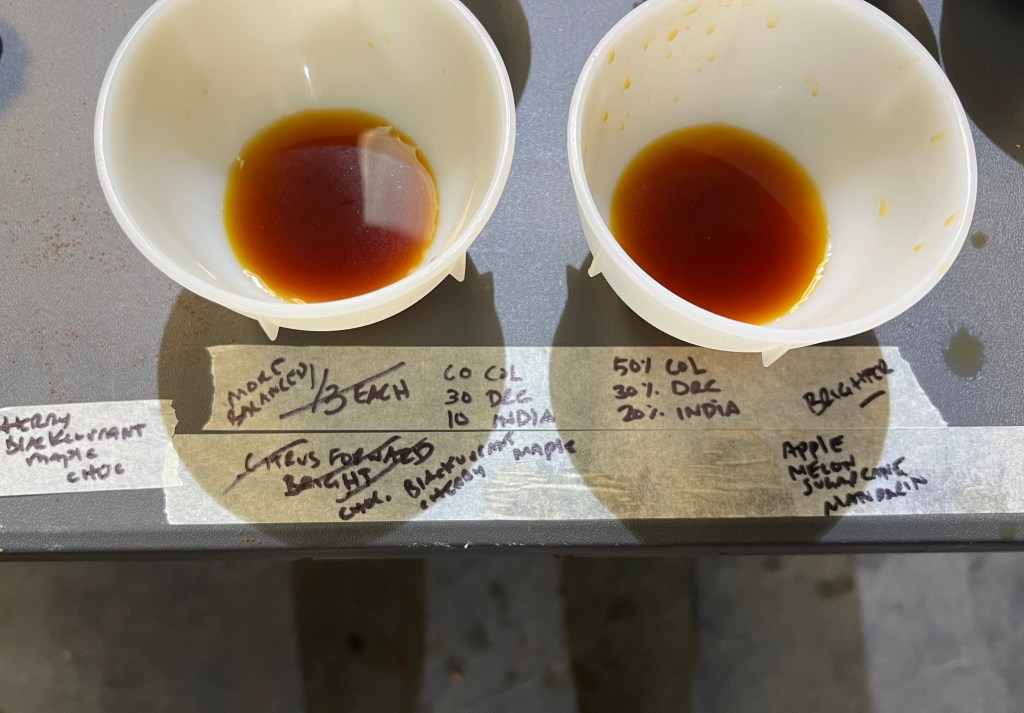
For the blend, specifically, we must use at least 10% of each of those three coffees that were designated, and have full freedom on the ratio of each of those three beyond that one small rule. This means one could chose to even dominate their blend with one of the three coffees at 80%, and the remaining two at 10%, if they so choose. These decisions, alongside how we choose to roast the coffee, are part of what we are playing with during the championship.
What happens across the three to five days:
First, we will have an orientation where we will meet our fellow competitors and be introduced to the organisers. In this meeting we will also get an introduction from each of the sponsors, as we will be required to use their equipment. We are also given demonstrations on how the judges will use the equipment to measure our results, so that we are all on the same page. This is the point at which we are told what coffees we must use, as well as what grind size they will use to taste our coffees. Being fully present, aware, and prepped with questions is essential here, as it is the main opportunity to gather as much information and clarity as possible before the competition clock starts.
On the national level (no longer required once you make it to the World stage), one will also be scored on their ability to evaluate the quality of the green coffee via the Specialty Coffee Association/CQI standard. In our industry, we call this green grading. During the first day of the competition, we are given a sample of green(un-roasted) coffee, and must provide moisture, density, colour, odour, screen size (size of bean) and find all defects within a given time limit. This section is often a make or break for those who have little experience around green grading, but a pleasure for those who hold a Q grader License.

We are also given lab practise time, which competitors use for different purposes as this is designated time to use any of the equipment or assess any of the green that you will later roast. I’ll be honest and say that what I do in this lab time acts as a major part of my strategy and has likely been one of the reasons I have managed to win twice. But more on that in a future blog- cant give away all the secrets as there is a World stage heading my way.
In addition to the lab practise we are allocated a practise roasting slot, which is un-scored. That is not to say it is unimportant! This is the first and final moment we will have to experience roasting on the production roaster we will end up using to produce the final product. For those who do not know much about roasting, every roasting machine, even from the same manufacturer/model, will interact differently. This means, even if you have been training on the same model of roaster up to now, this roasting machine may have its own idiosyncrasies. In the UK, we have 30 minutes– which is not a lot of time. It means you will only get to roast two batches of coffee, and keep in mind the coffee you will be roasting is not the same as the coffee you will have to roast for the final product! Again…what I do during these 30 minutes is a large part. of my strategy in terms of how I gather the data I will need to win.
The only time you will get to roast and taste these coffees before you create and submit your final product, is when you get to sample roast them. The allocated sample roasting slot is just enough time to do one 100-150g roast of each and, since you will have never roasted them before and will have never roasted on that specific sample roasting machine (mini version of the big roaster which usually roasts 100-200g or so of coffee), the roast is likely to not have been nailed. And yet again, this is crucial as this is where you will gather the data you need about how these coffees behave when roasting, what their potential is, and how they taste.
After you have sample and practise roasted, you will be given a set time to taste your coffees and this is where the magic happens! You finally get to find out what these coffees you are going to be working with taste like! Which means you will also finally be able to formulate your choices around your blend. Everyone approaches this differently, but ill give you a hint on what I do: wet blending, scoresheet commentary, white tape.
And then there is the night before you roast… the moment of truth… the moment you produce and submit your roasting plan. This is the moment when you need to put it all together: the data from the lab sessions and green grading, with what you learned from the practise roasting and sample roasting, with the knowledge you gained training up for the comp in the first place.
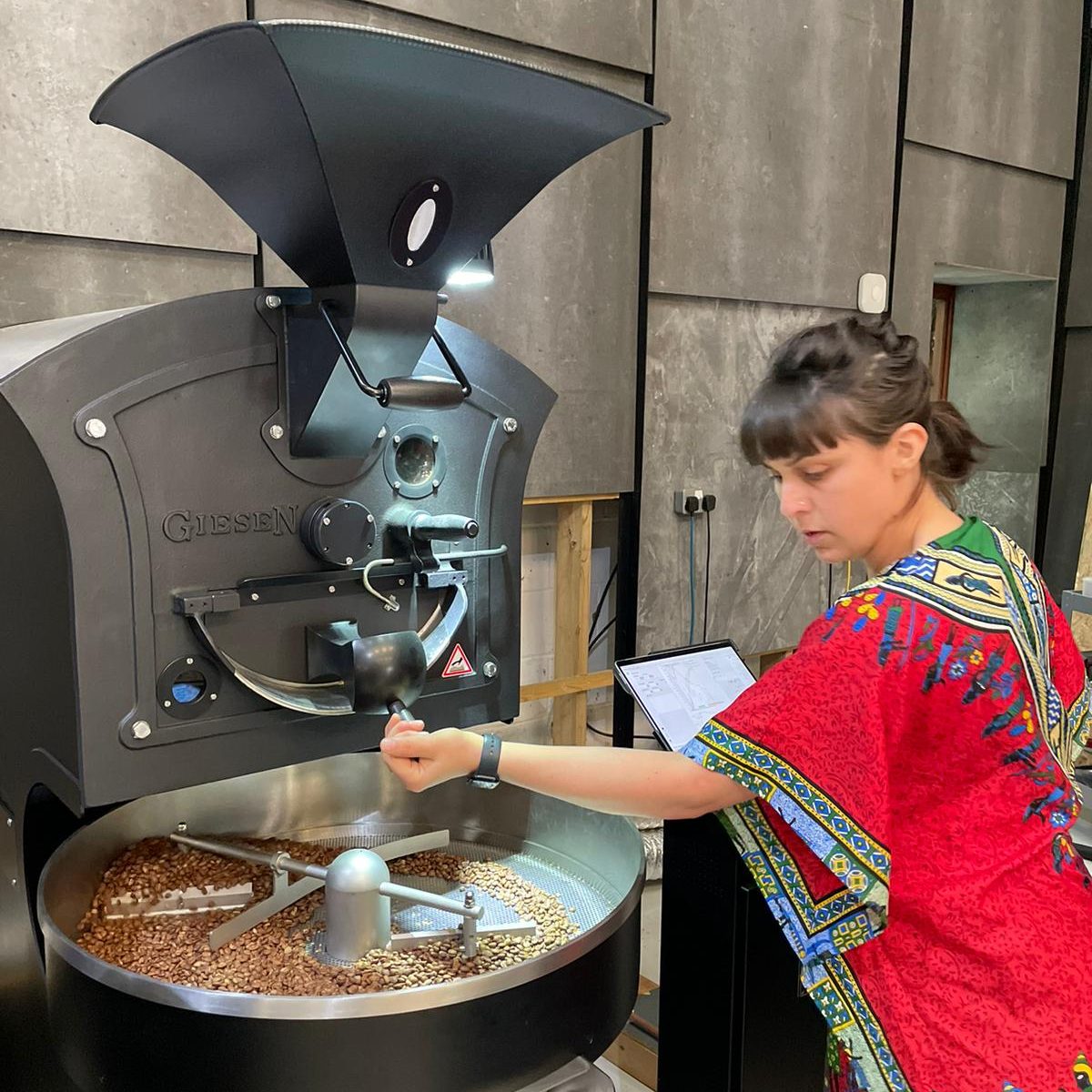
With plans submitted and an evening of solid rest, which was not my case this year as i ended up getting food poisoning on day 1 of the championship, you awake to production roasting day where you will execute everything you promise. On the world stage, this part goes on for two days, but at nationals. it is one day long. You have a half hour for the single origin, which amounts to enough time to roast maximum two batches to match what you promised, and one hour for the blend during which within that hour you will have had to actually blend the coffees to the amounts promised as well. That means, if you blend after you roast each coffee individually, you will likely have enough time to re-roast one of those coffees and will have had to nail the roast on the other three. Maybe now you understand why we have little beads of sweat when we are up there, and often look so unsure what to feel when we walk off stage!
So what are we scored on? What do we need to match?
In our roast plans we make promises on what will will do technically, as well as what sensory experience we intend to bring out in the cup through roasting and blending choices. May sound easy, but I can tell you it is not. We will have never tasted or roasted these coffees before those days, and will have had to make predictions based on previous knowledge and experience, alongside our ability to collect data.
From the technical: we will have noted at what temperature we will ‘charge the coffee’, which means what temperature the roasting machine will be at when we drop the coffee in, and what temperature we exit the coffee, or what temperature the coffee is brought to before we take it our of the roaster. We will also have noted how much weight we believe the coffee will loose, as coffee looses moisture when roasted and thus weighs less than when you first put it in the machine. And will given an agtron number denoting the colour of the coffee, which acts a numerical value from the industry standard system. This number essentially tells you how light or dark the colour of the coffee is when ground. And all of these technical parameters correlate to the sensory experience of the final cup. Higher marks for more accurate execution of the roast plan we submit, and lower marks for less accuracy.
From the sensory perspective, we will have provided a description of the sensory experience the judges will have for each product. On the evaluation day, the judges will taste and score each product, noting any roasting defects along the way, and then compare to our notes and give a separate score for accuracy of what we say against what they find.
In conclusion…
The competition is complex and it requires a certain type of preparation and knowledge.
In my run up to Taipei, I will be training hard. My experience at World’s last time, coupled with my experience at nationals, has taught me what resources and regime I will need in order to create the best opportunity. I will need to roast several different coffees, under various conditions, on a array of roasting machines that match the sponsor. I will need to work closely with my coach, alongside spend time others who may have specific expertise, so that team UK has the best chance of bringing back the gold.
And while the SCA UK kindly covers flights and accommodation for myself and one coach, they are a volunteer organisation who have limitations on what they are able to further provide.
This means that I will need to cover all other expenses of preparation including costs of green coffee, usages of space/gas/energy, training kits/resources, sustenance whilst in Taiwan, etc
And so I am aiming to be creative here, in finding a way to involve the community on this journey whilst generating further support. And so I thank you for being part of this whether it has been through supporting any of the Roastersaurus’ Road to Taipei events to date, and/or by purchasing these Roastersaurus releases.
#roasttotaipei
 Roastersaurus