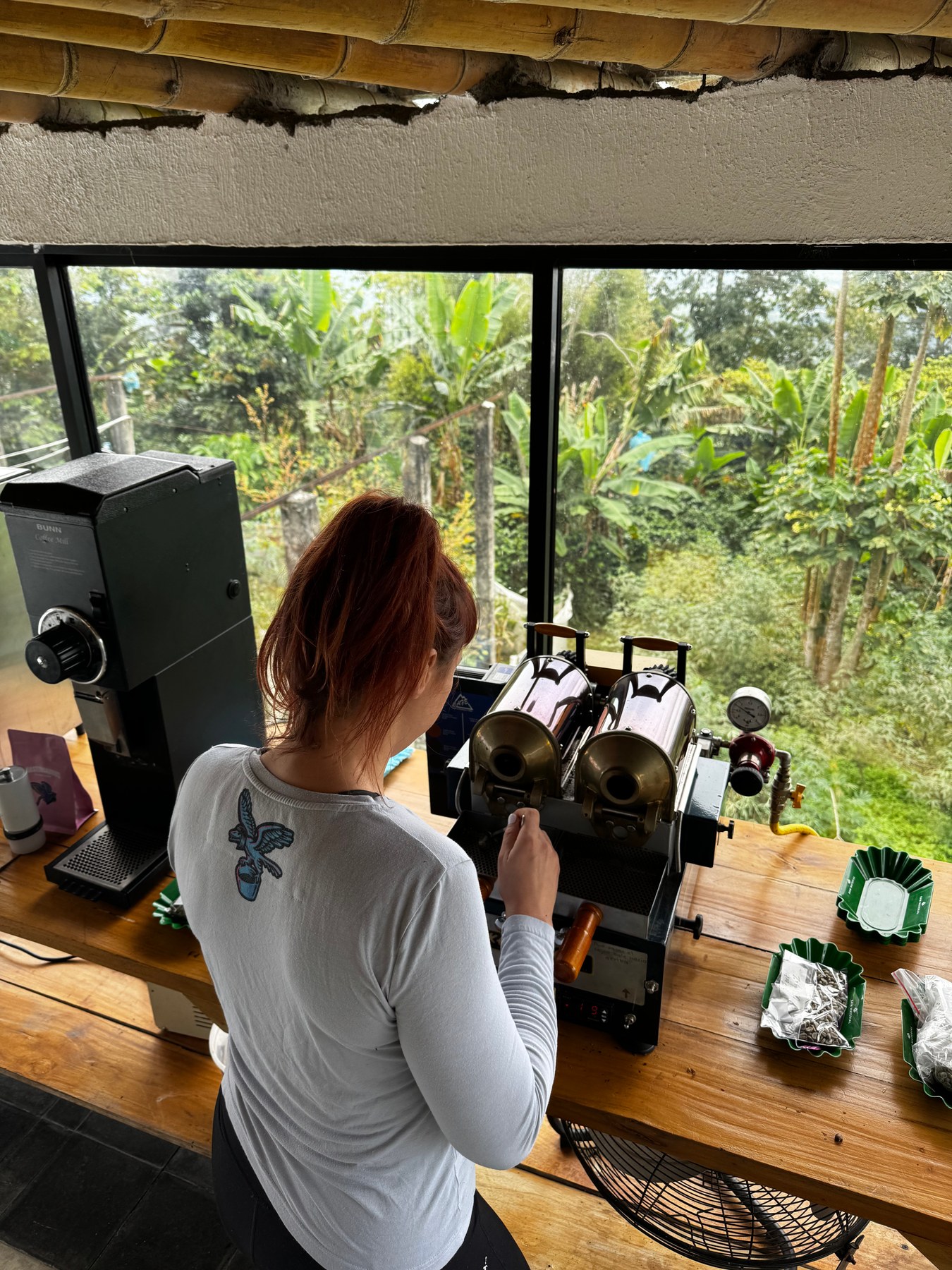
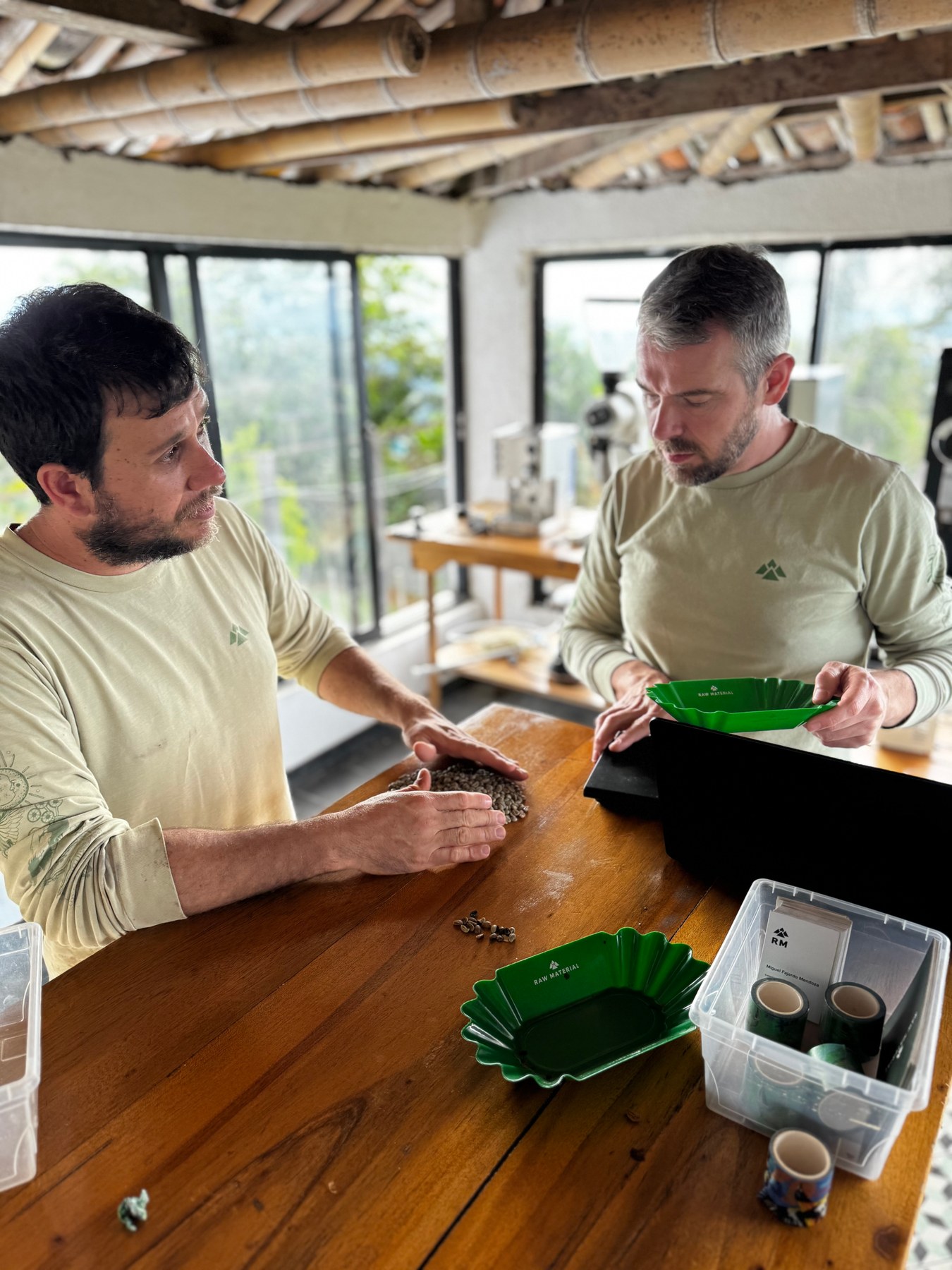
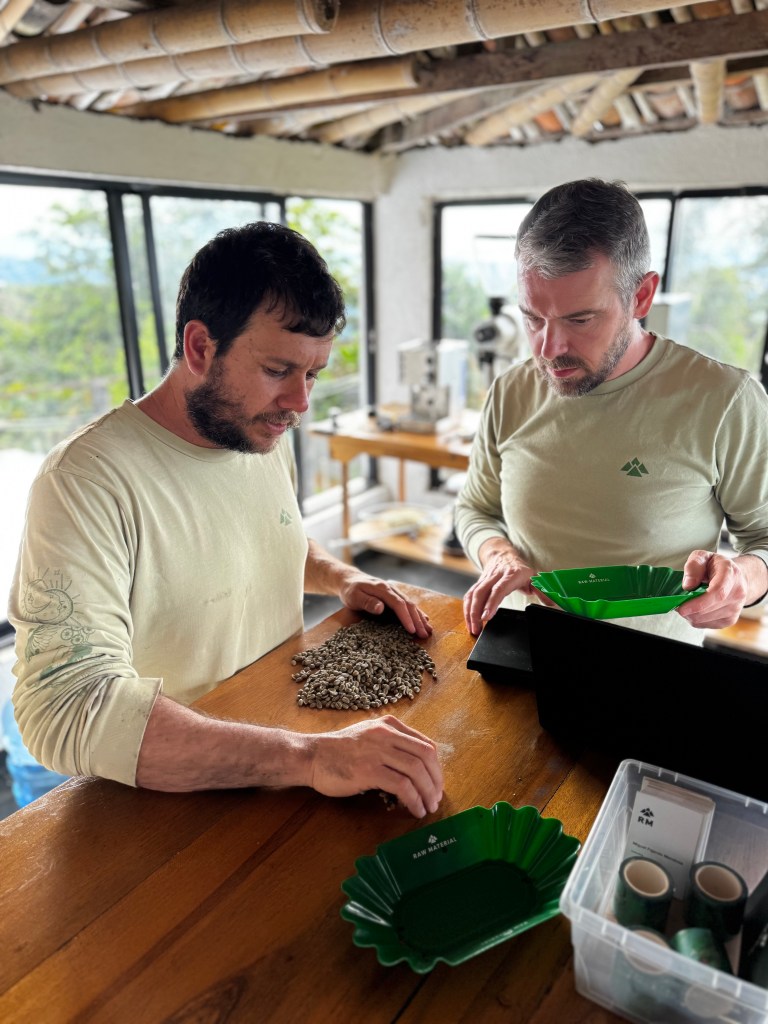
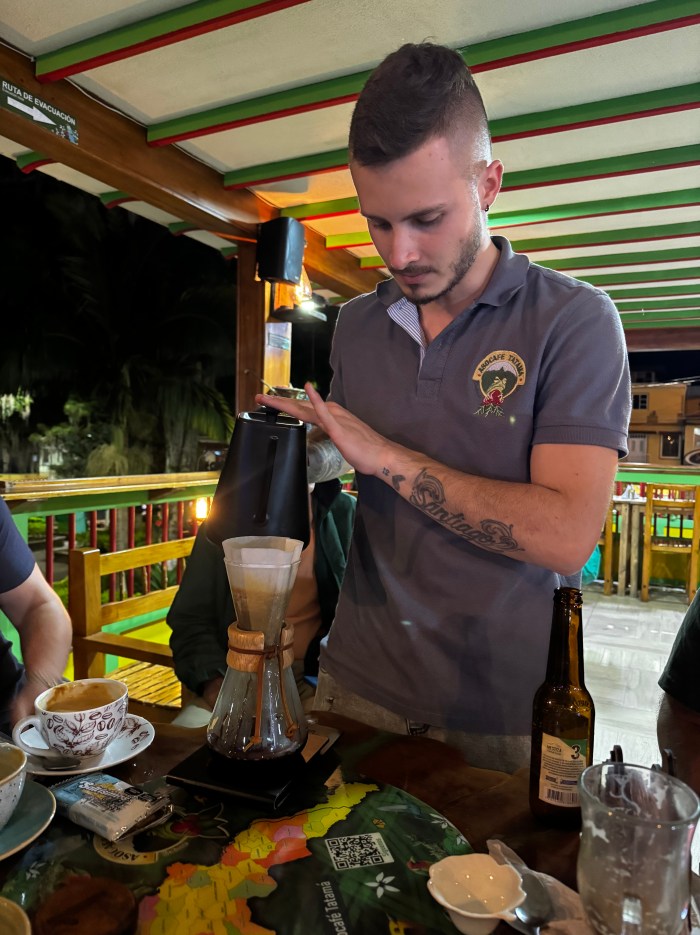
One of the things Miguel and I talked about at El Fénix was how well the water-pillow coffees had held as they cooled. We had been tasting them for around forty-five minutes; they were very cold by then, and still lovely. I wanted to understand what he was doing in fermentation that might help explain that, so our conversation moved from what we were tasting to what was happening beneath a sheet of plastic.
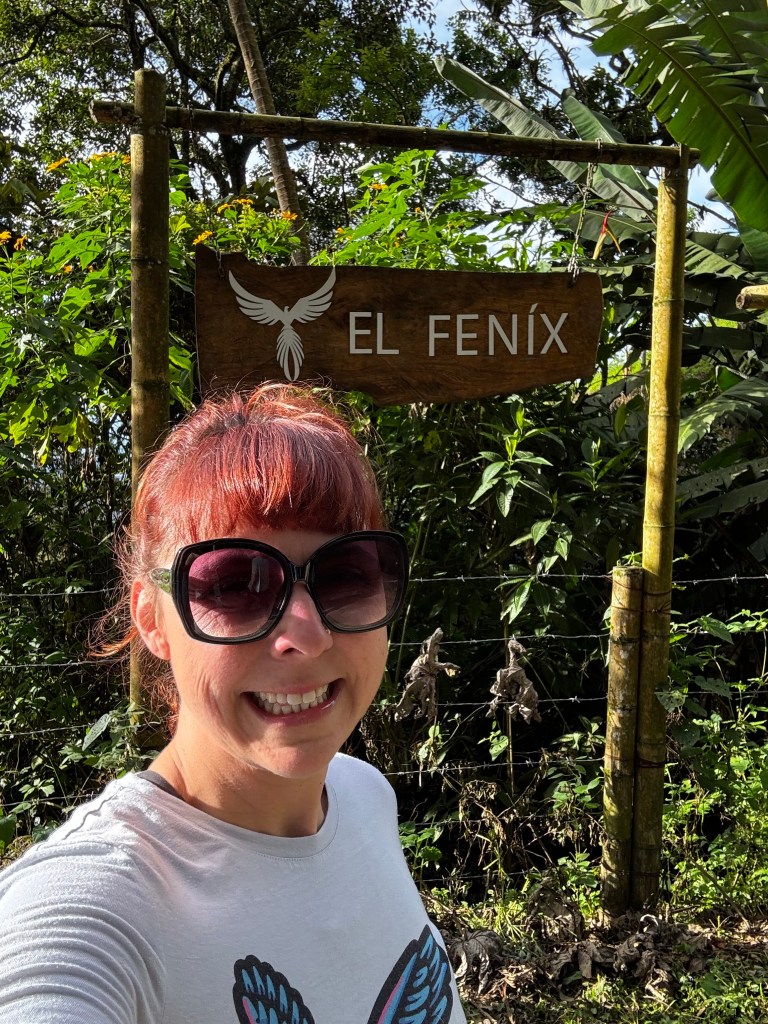
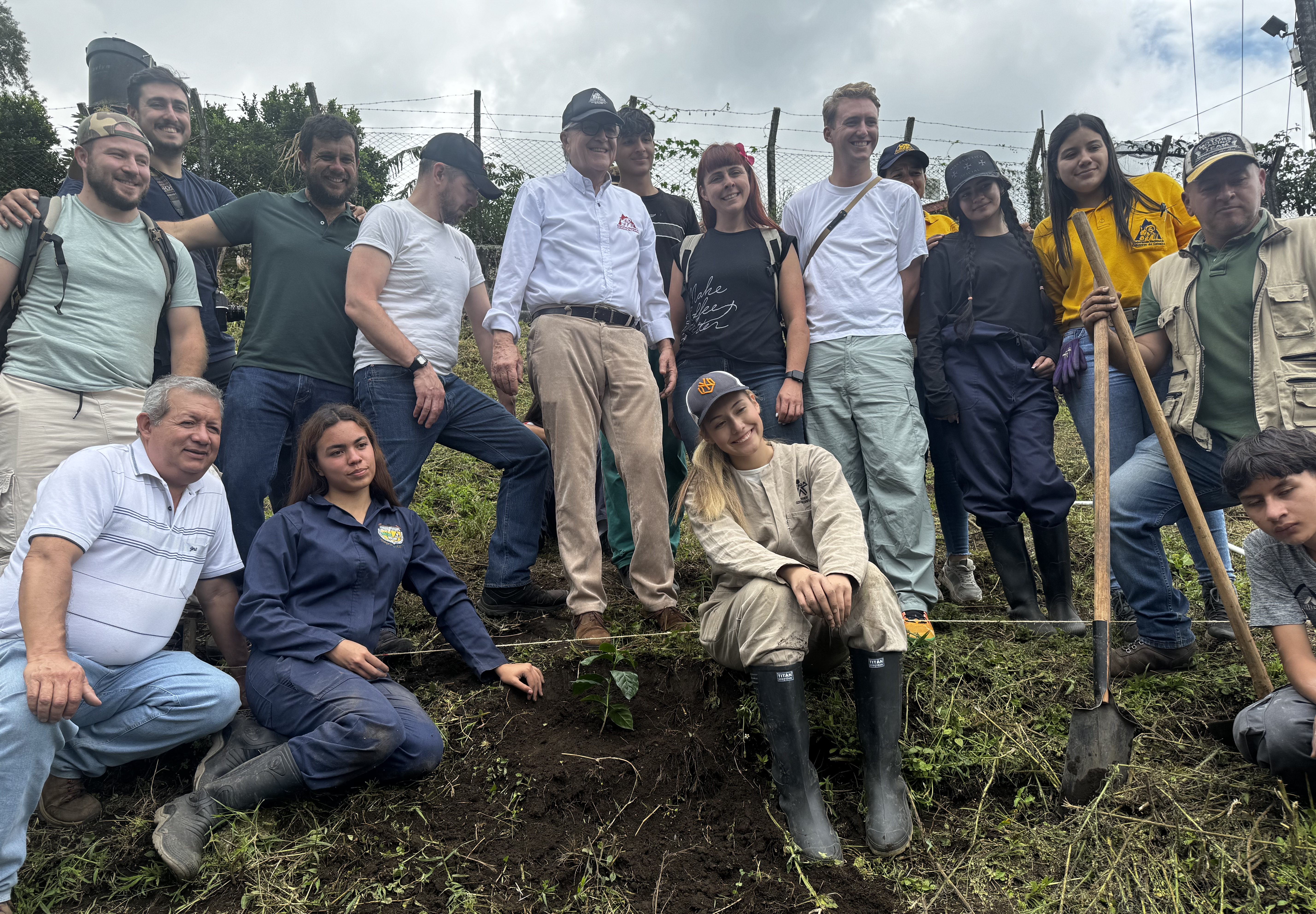
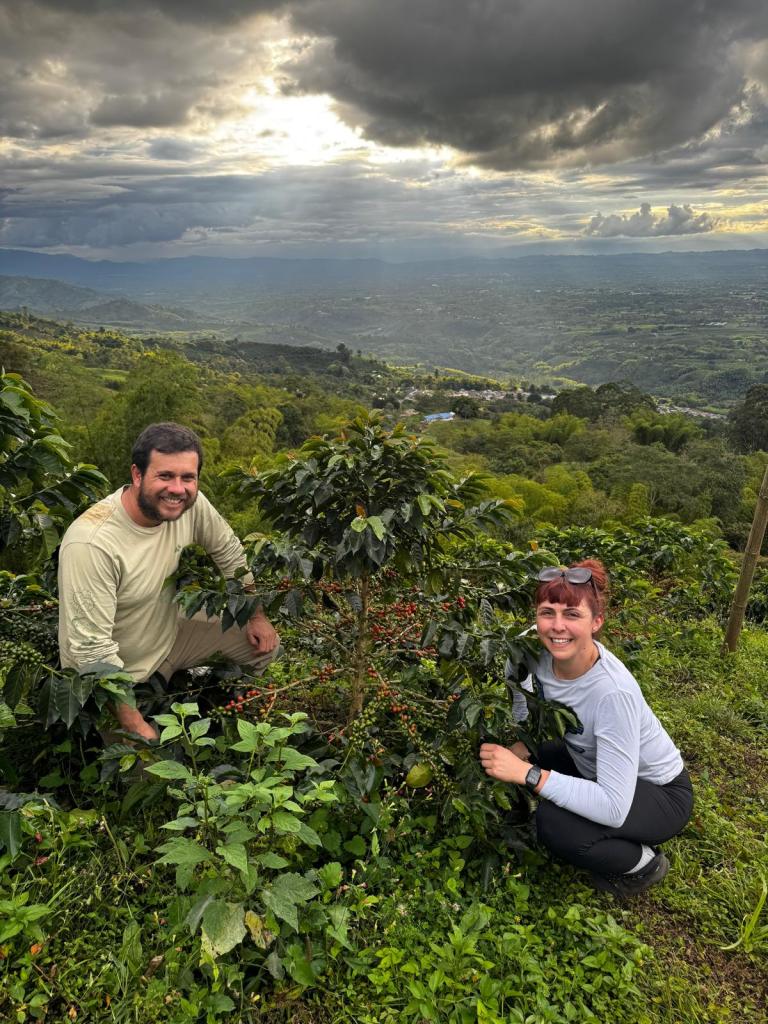
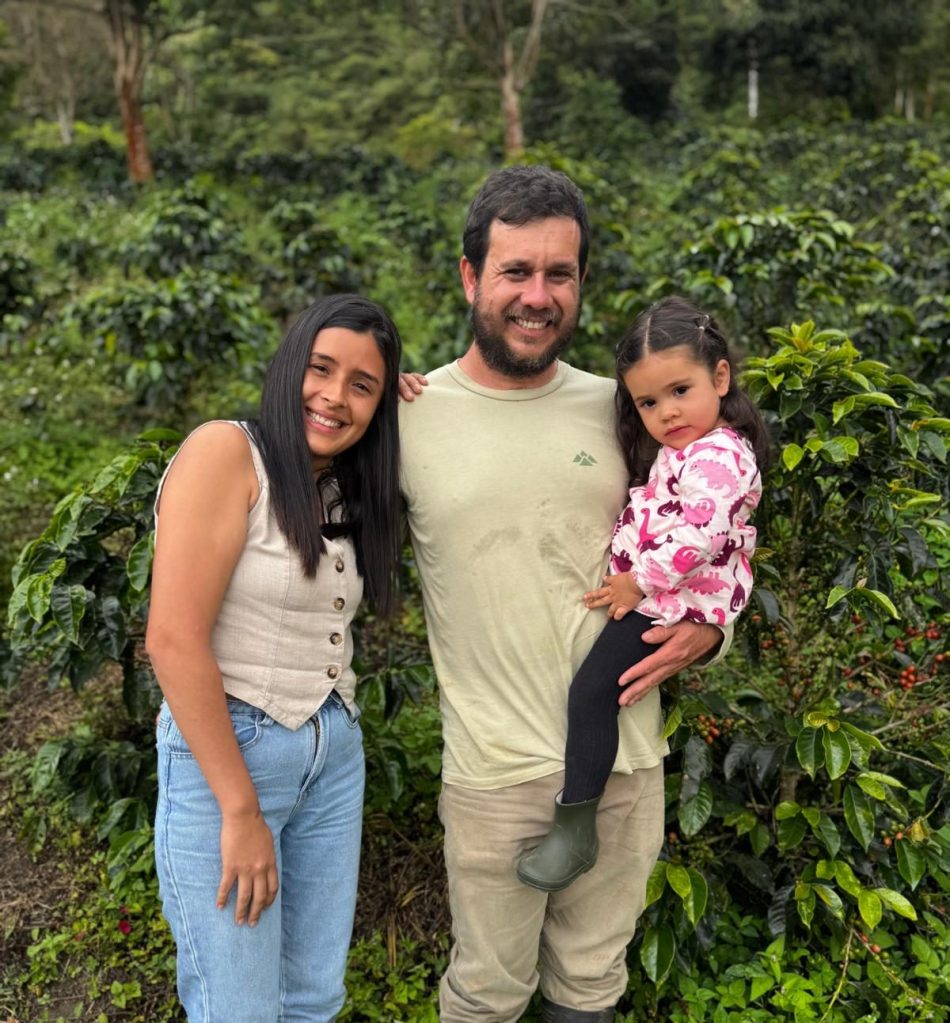
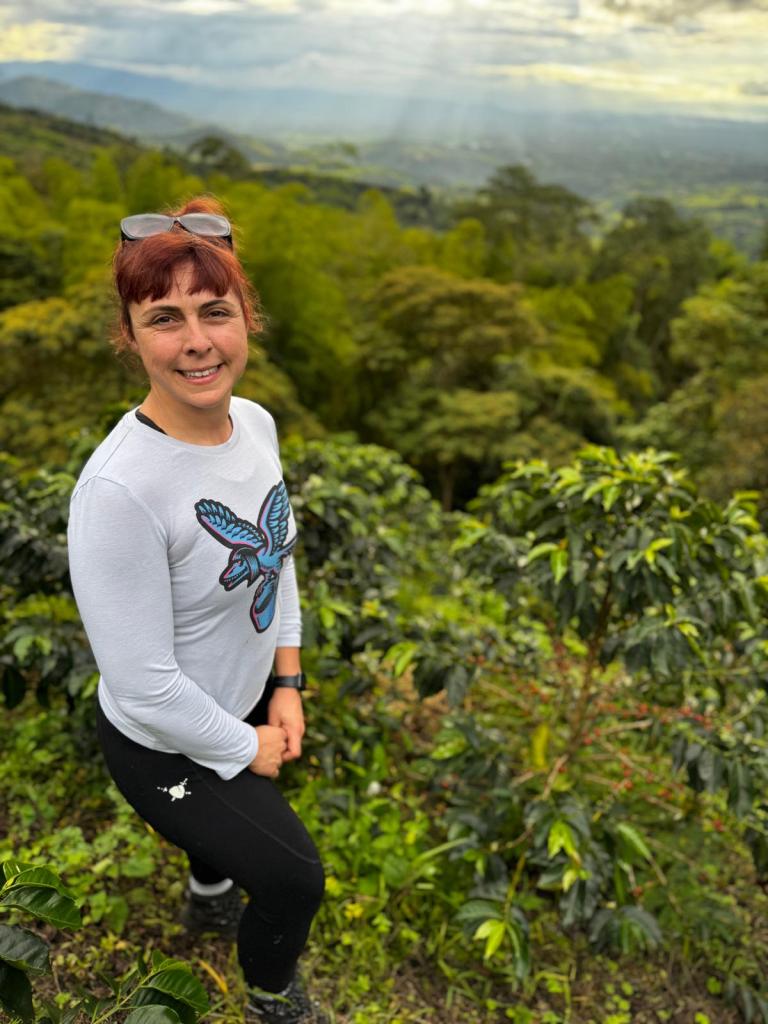
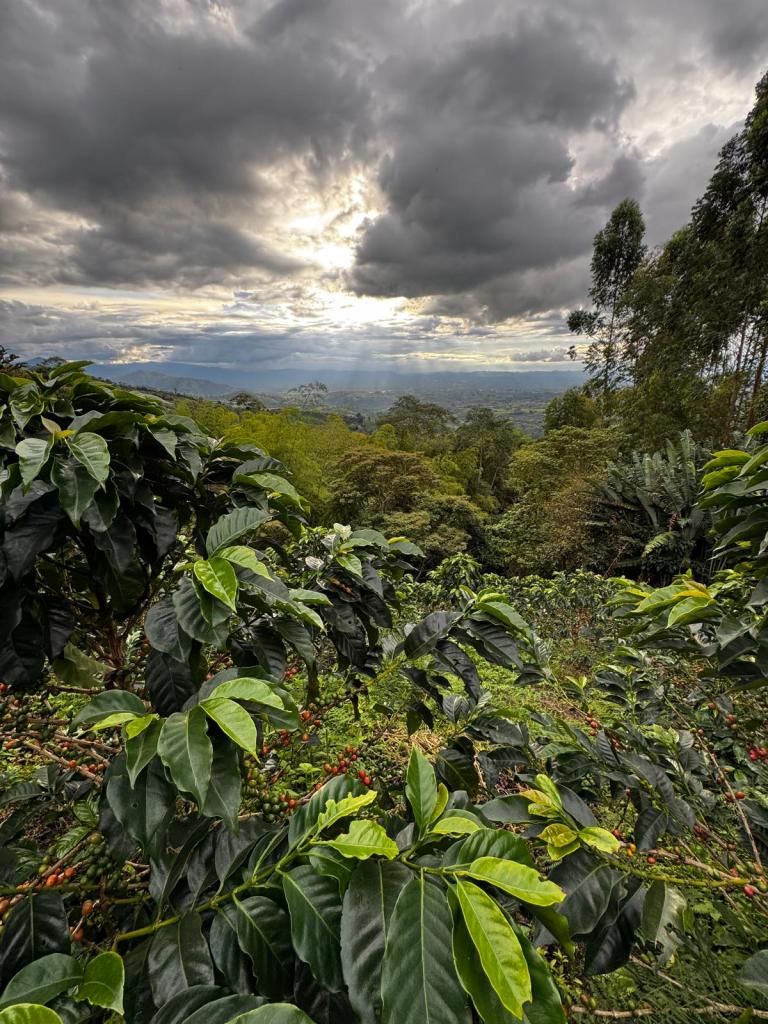
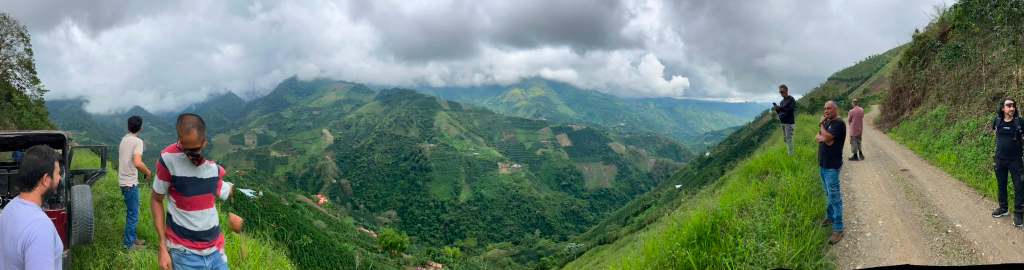
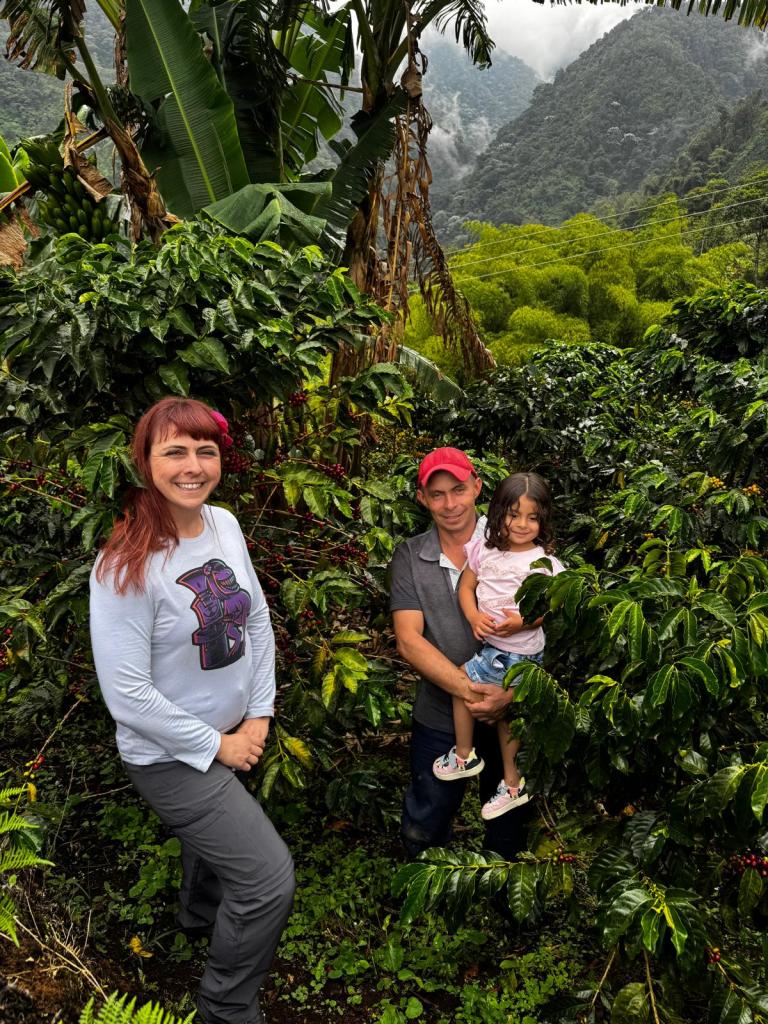
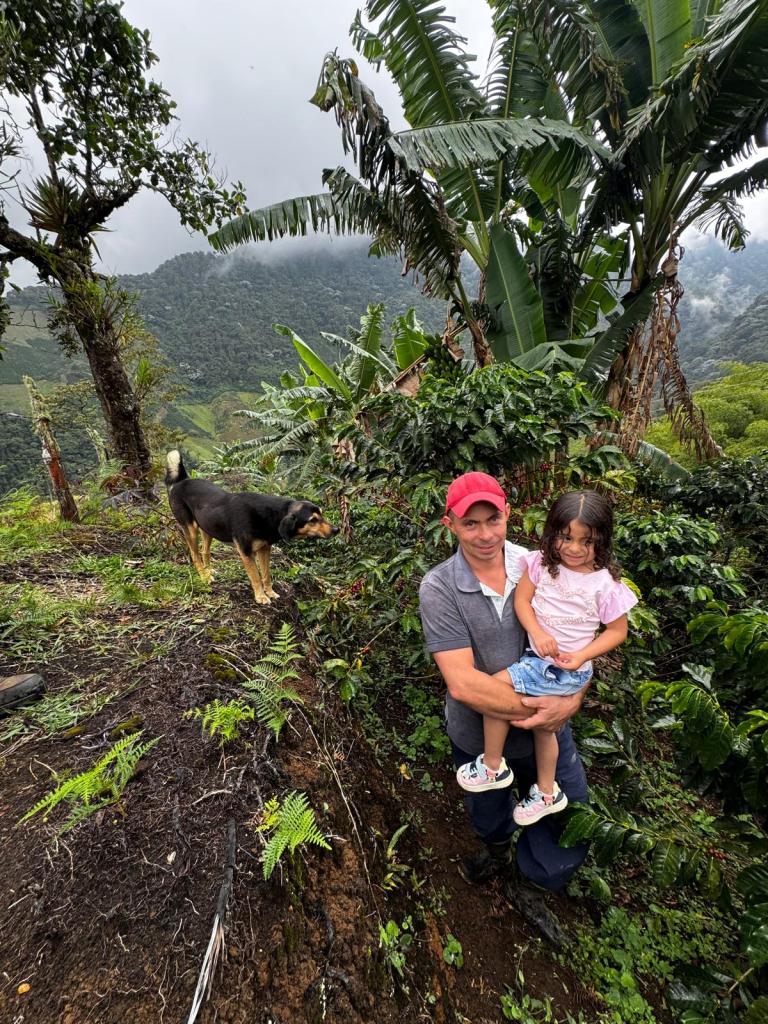
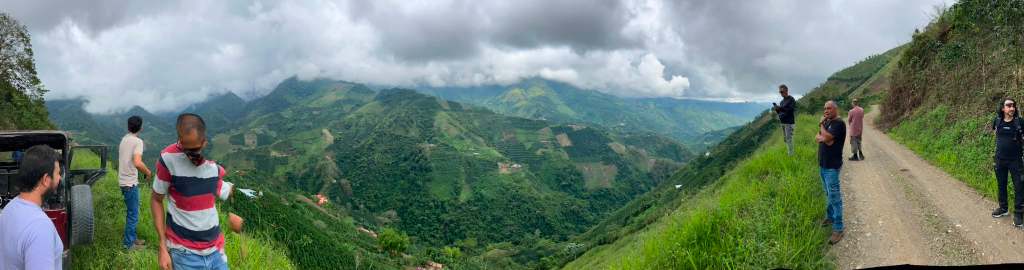
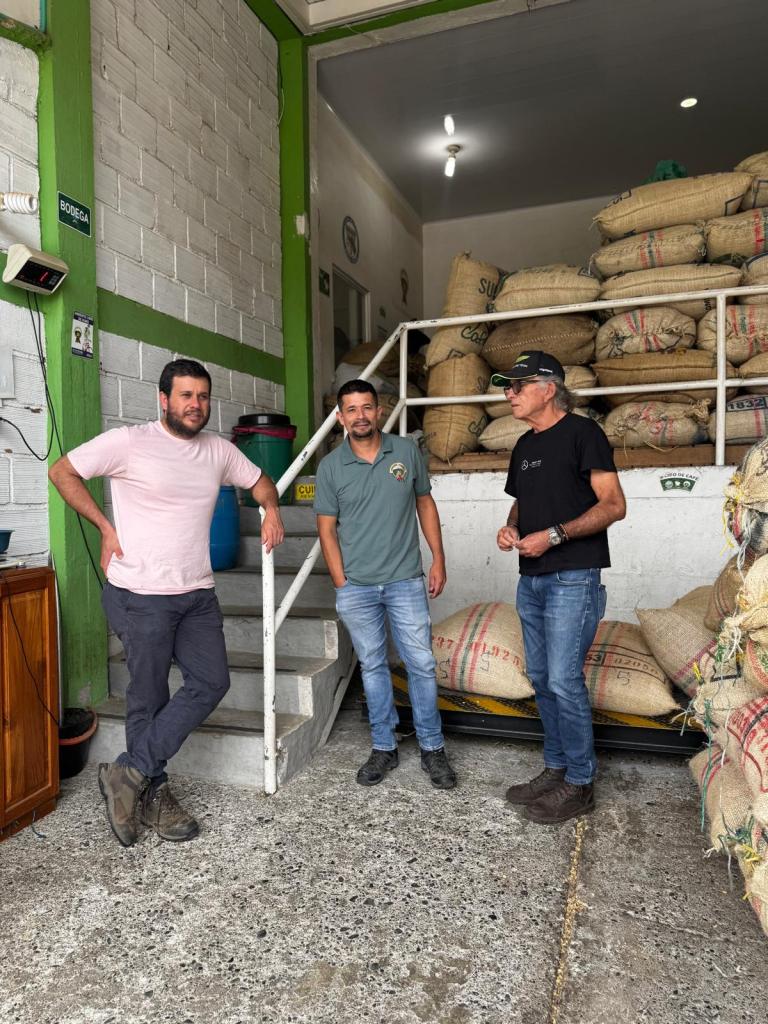
El Fénix, in Calarcá, Quindío, was our base for this part of my Colombia trip. I have written about arriving there after Santuario, but spending time with Miguel Fajardo Mendoza also gave me the opportunity to get into the detail of his work: what he chose to plant, what he wanted from the coffee, and how he worked towards it in processing. Sidra brought those conversations together, because his interest in it began well before there was anything to ferment.
Why He Planted Sidra
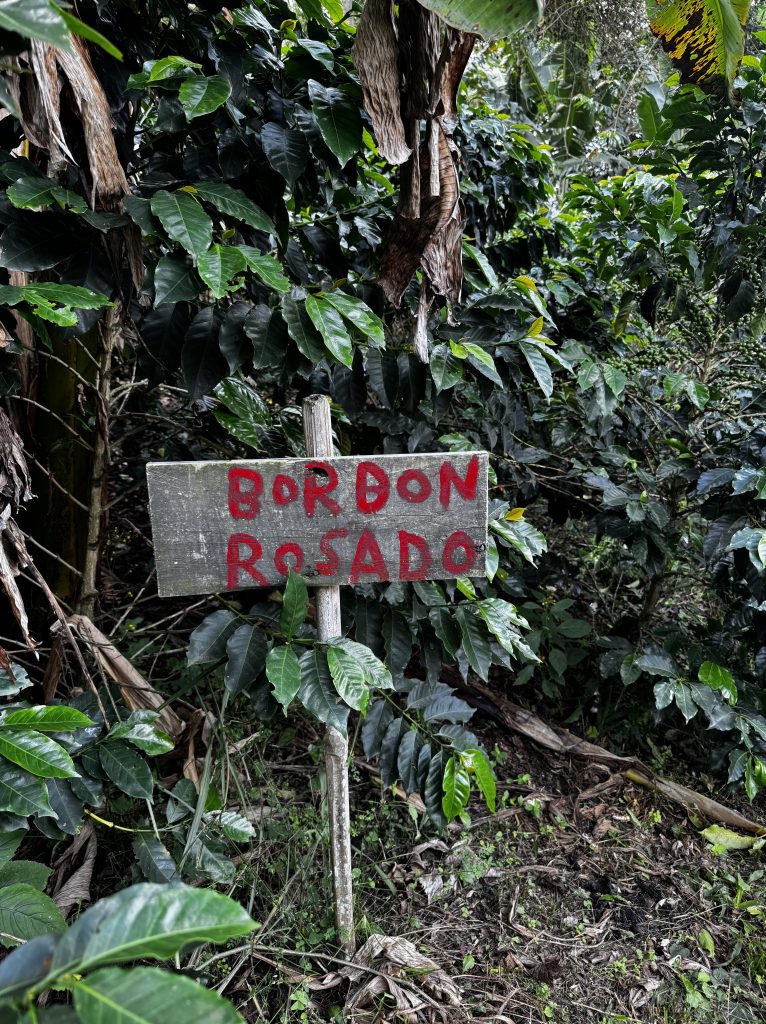
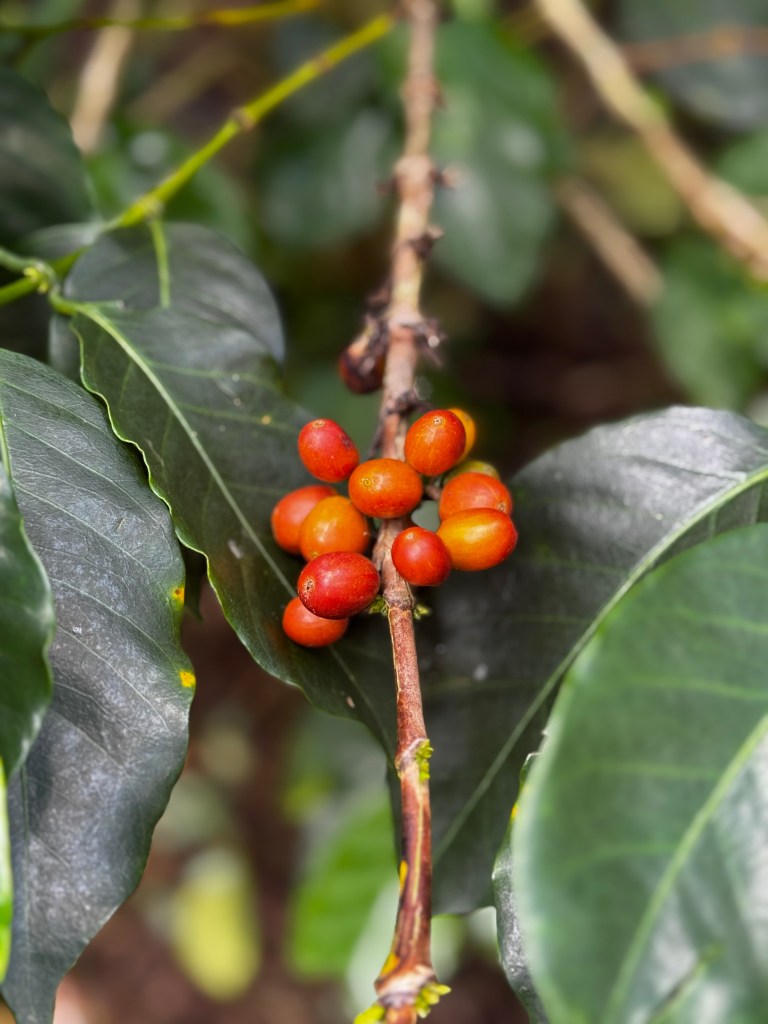
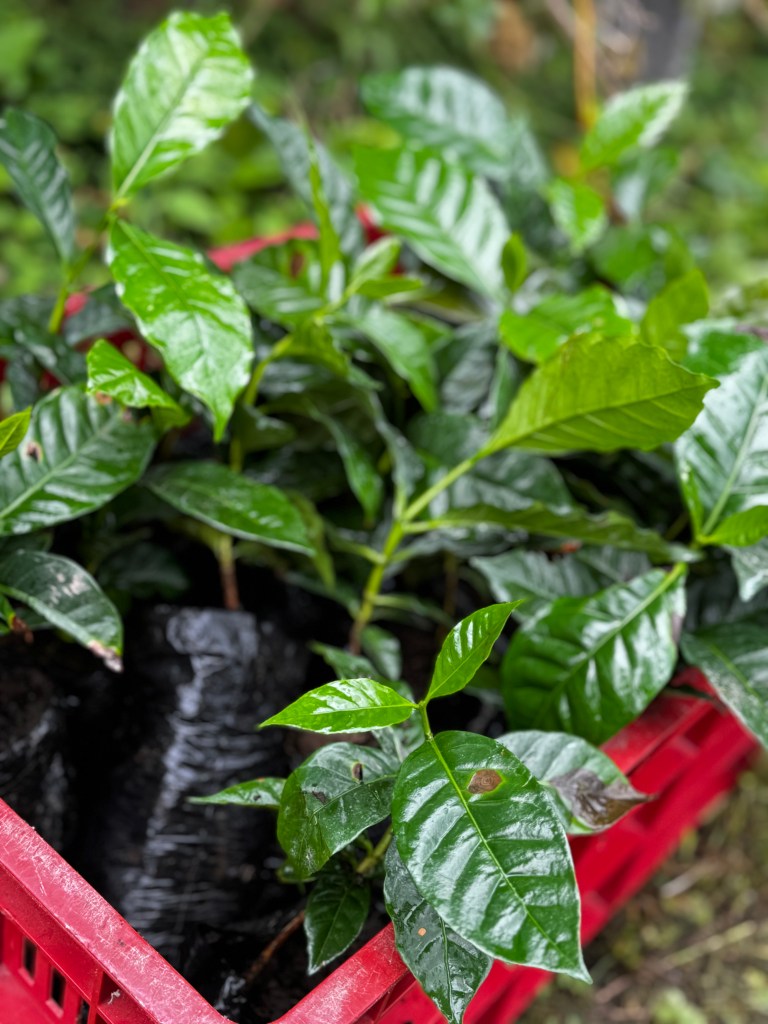
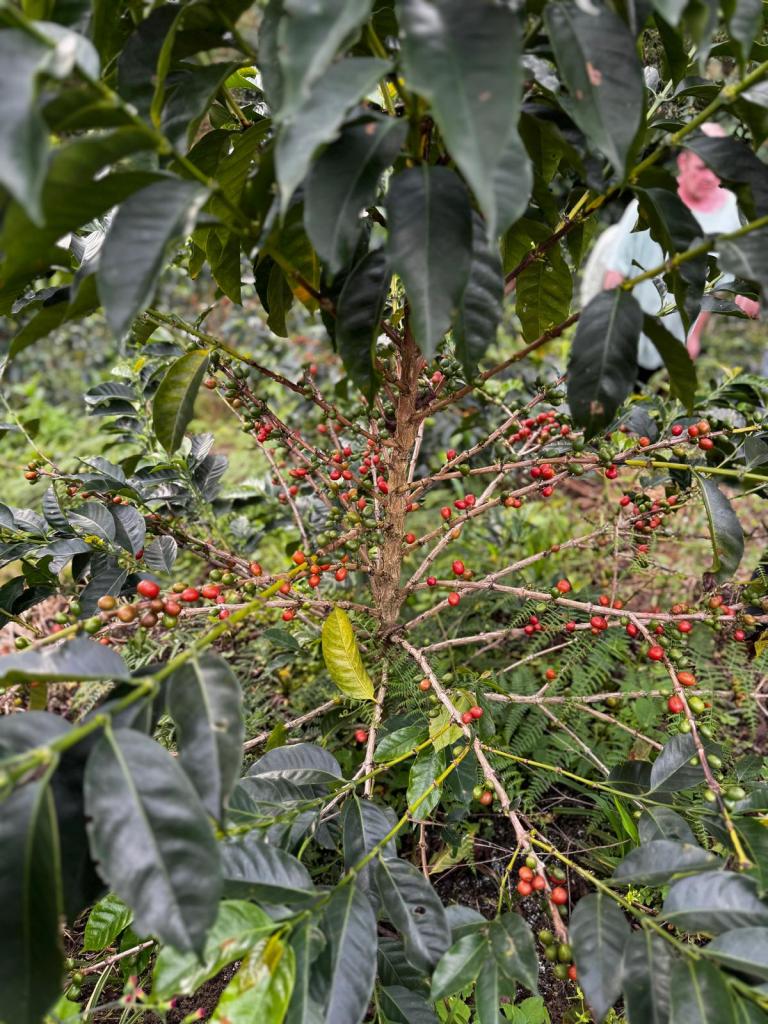
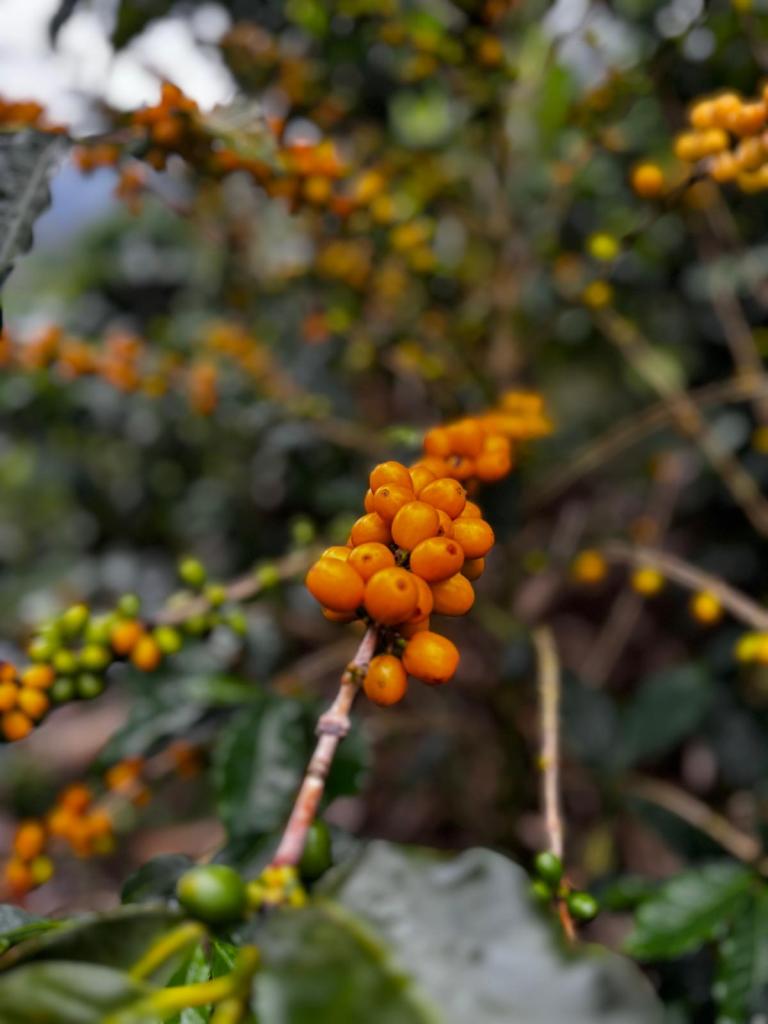
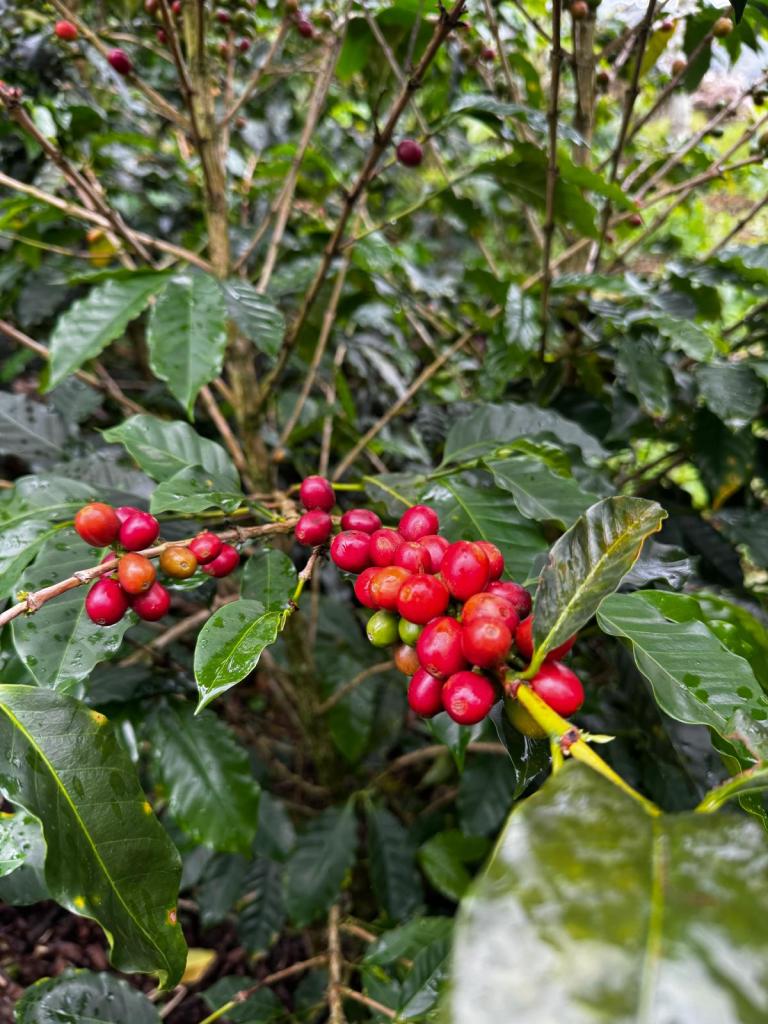
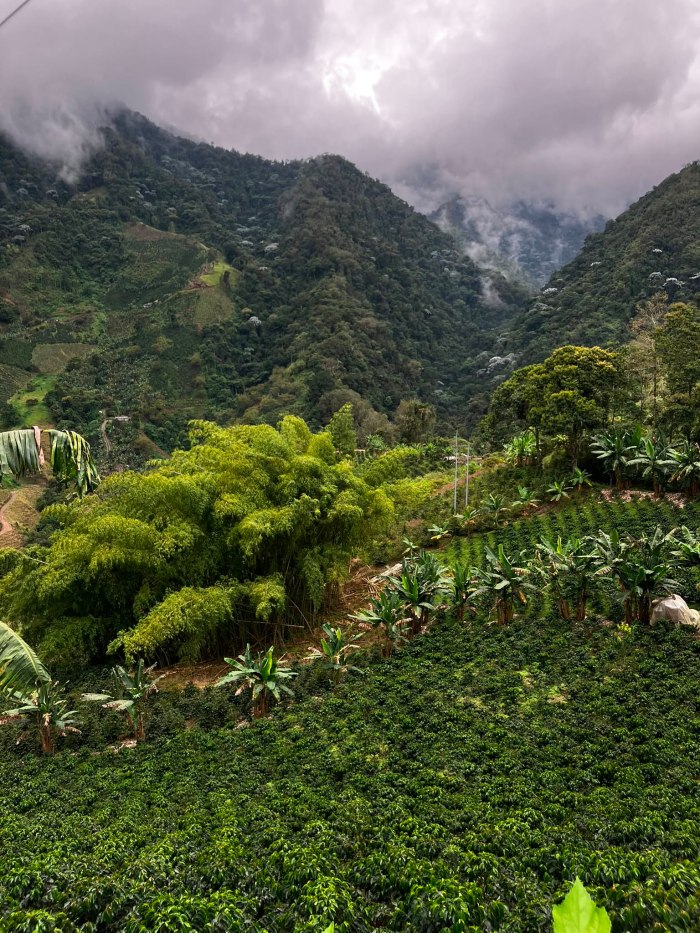
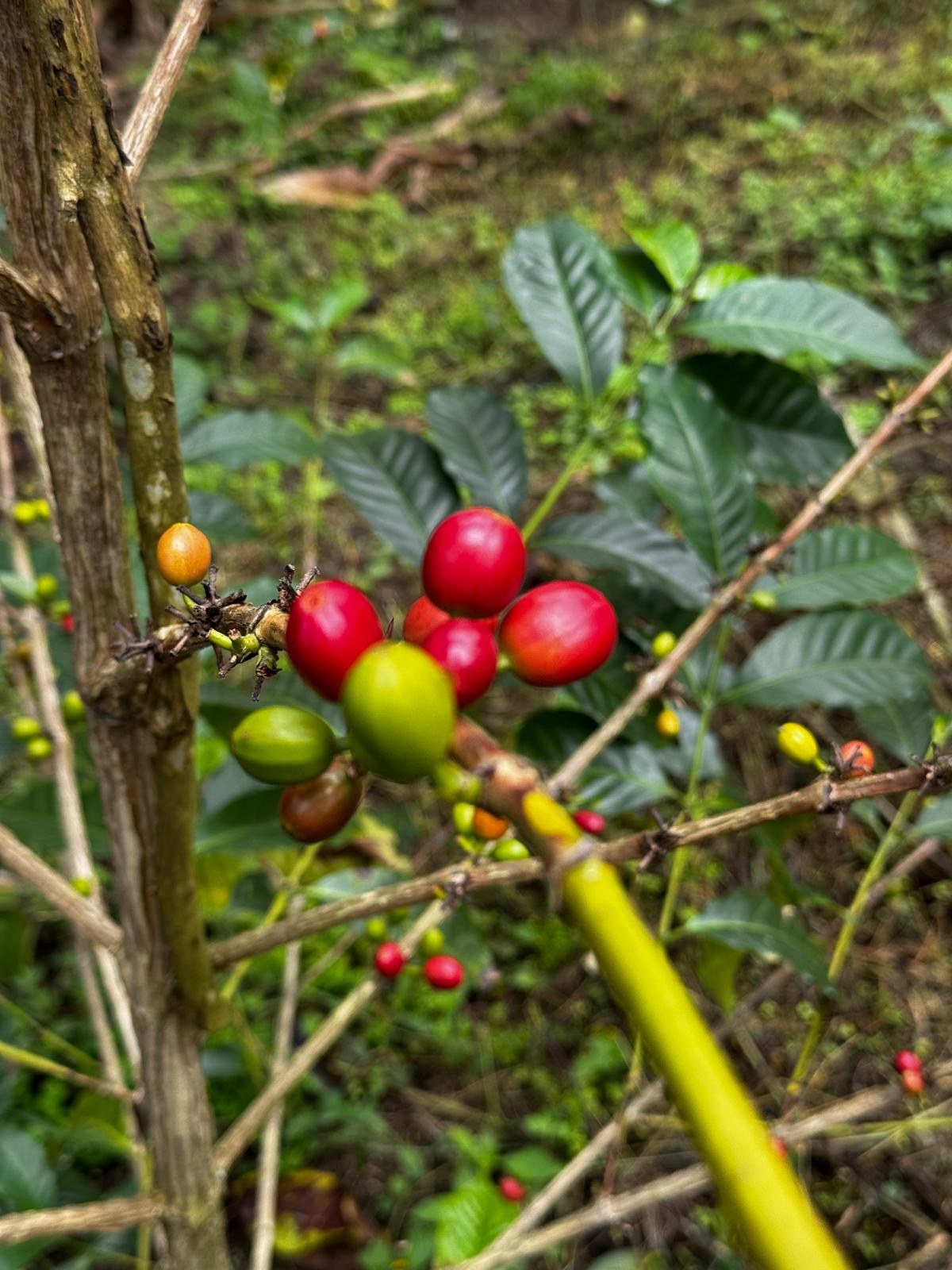
Miguel wanted to try a different variety at El Fénix, and the opportunity came through a seed exchange with a friend. Miguel had Wush Wush seed; his friend had Sidra seed brought from Ecuador. What interested him was the combination of an exciting cup profile and good productivity. That combination mattered because the Sidra was going into space previously planted with Geisha, and he had been thinking carefully about what he wanted that part of the farm to produce.
Geisha comes with quite a benchmark. As Miguel explained it, there was always the comparison with Panamanian Geisha, while El Fénix had different growing conditions and different resources. He wanted a coffee that suited the environment he was actually working in, with a flavour identity of its own and a yield that made sense for the farm. I liked hearing him talk about that choice. There is so much excitement around a variety’s name that it is easy to miss the much more interesting conversation about why someone has decided to grow it.
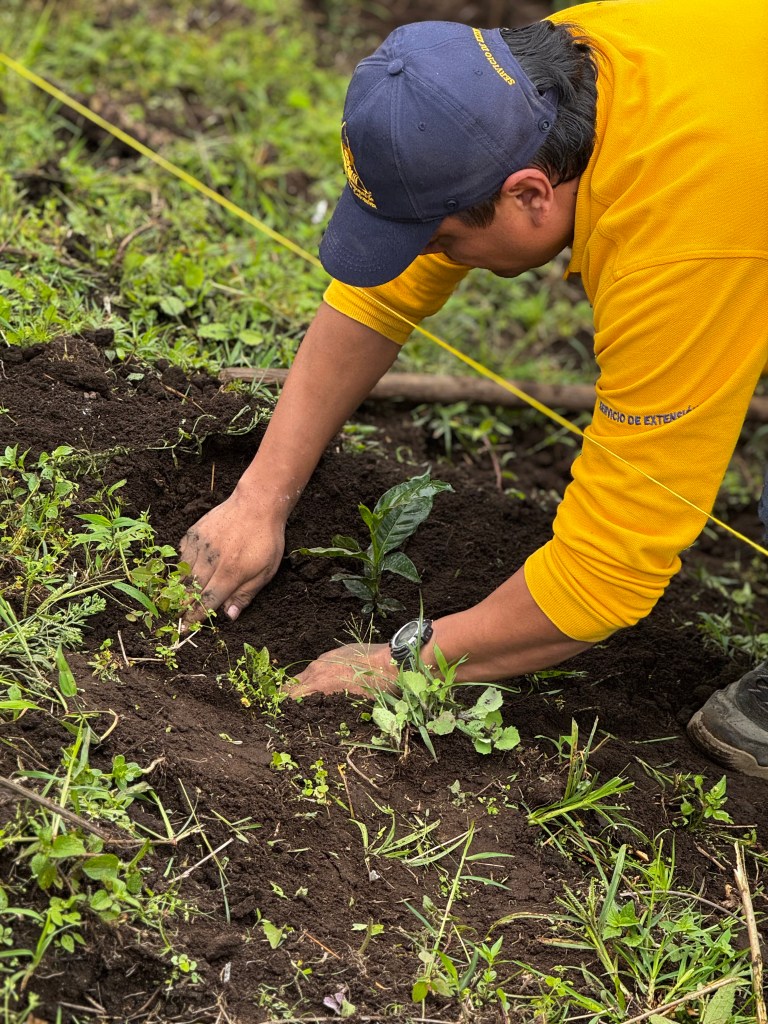
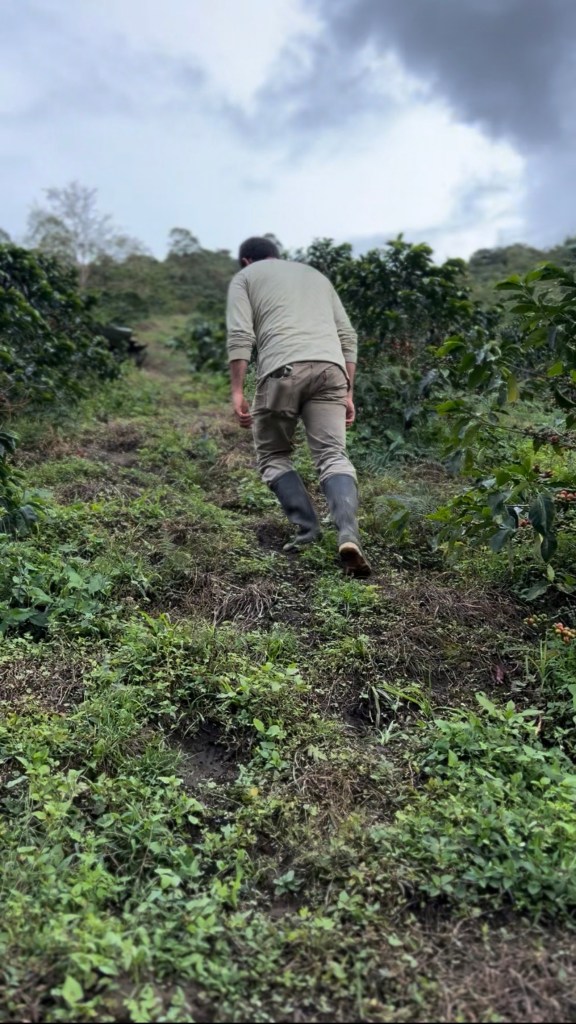
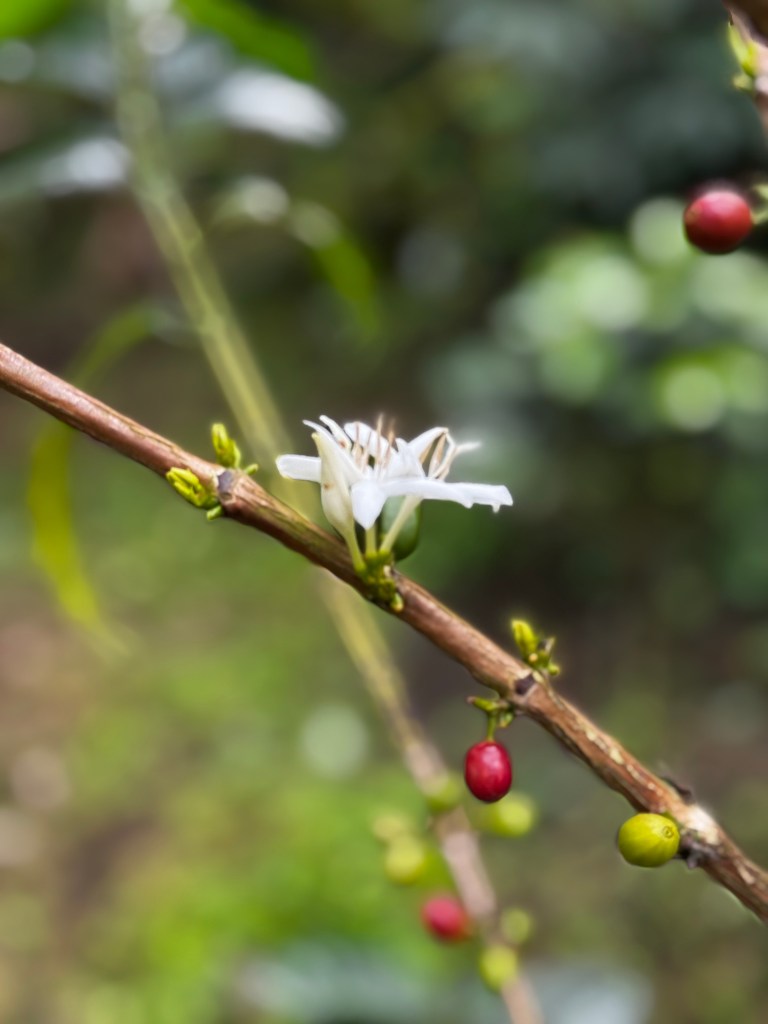
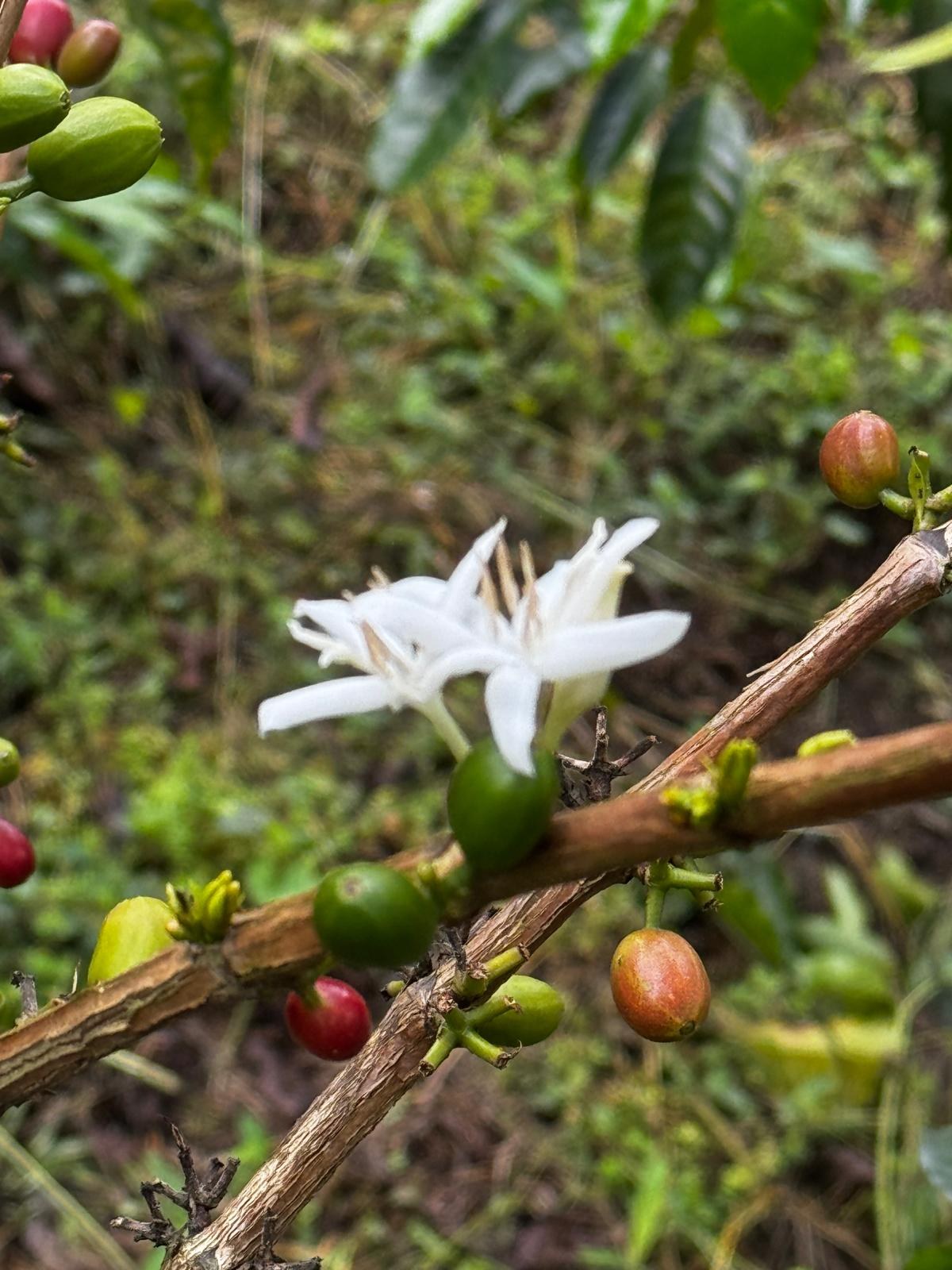
These were young Sidra plantings, and in our conversation Miguel described them going through their first harvest cycle. He talked about managing their height and branches, encouraging new growth and looking towards what they could produce as they developed. There was a lot of potential in those trees, but also a lot of care ahead of them. The cup was part of his reason for planting Sidra, and so was the possibility of continuing to produce it well, year after year.
Under the Sheet
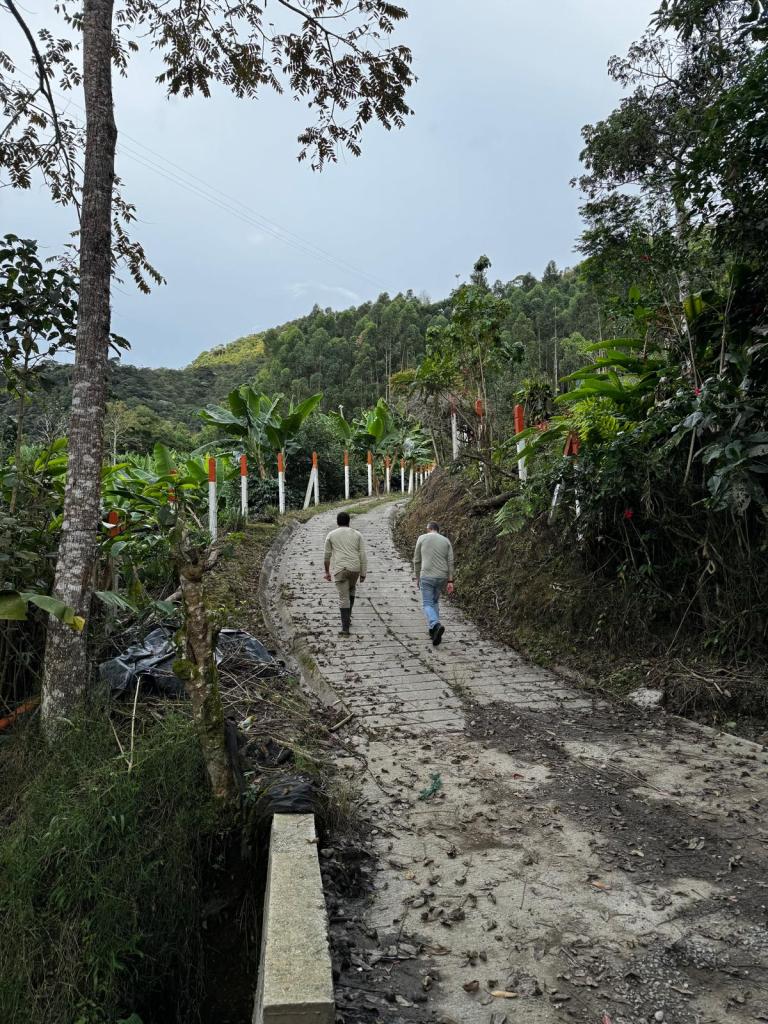
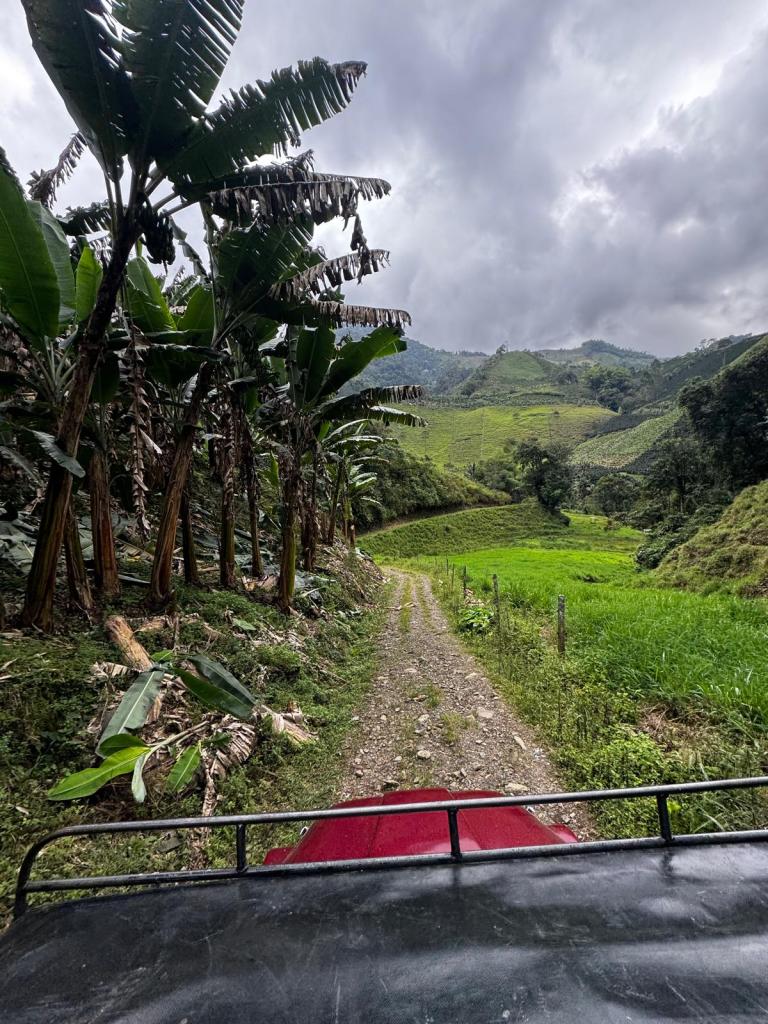
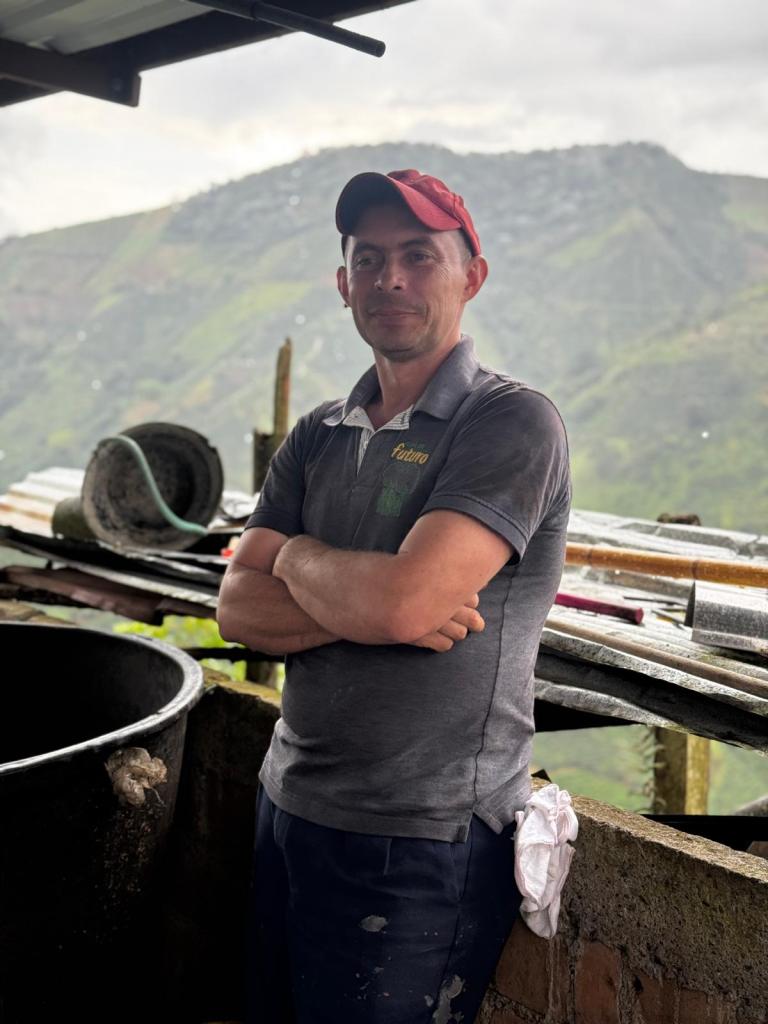
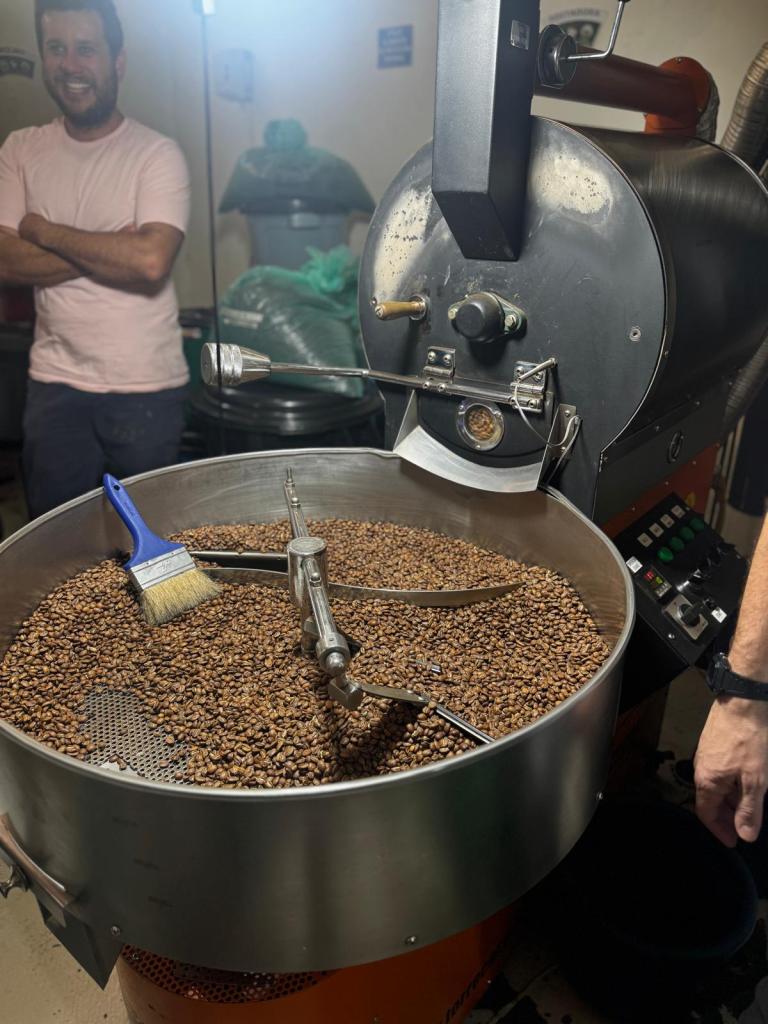
That practical thinking was there in the processing layout Mat showed us, too. He explained the way the terrain could be used to move coffee down through the system, from the upper receiving points towards the pulpers, taking advantage of gravity and keeping access from the plantation in mind. There was attention to what could be built with the materials available and how people would work around it. Miguel’s explanation of the water pillow had a similar directness: it was a method he wanted to be useful in different vessels and different places.
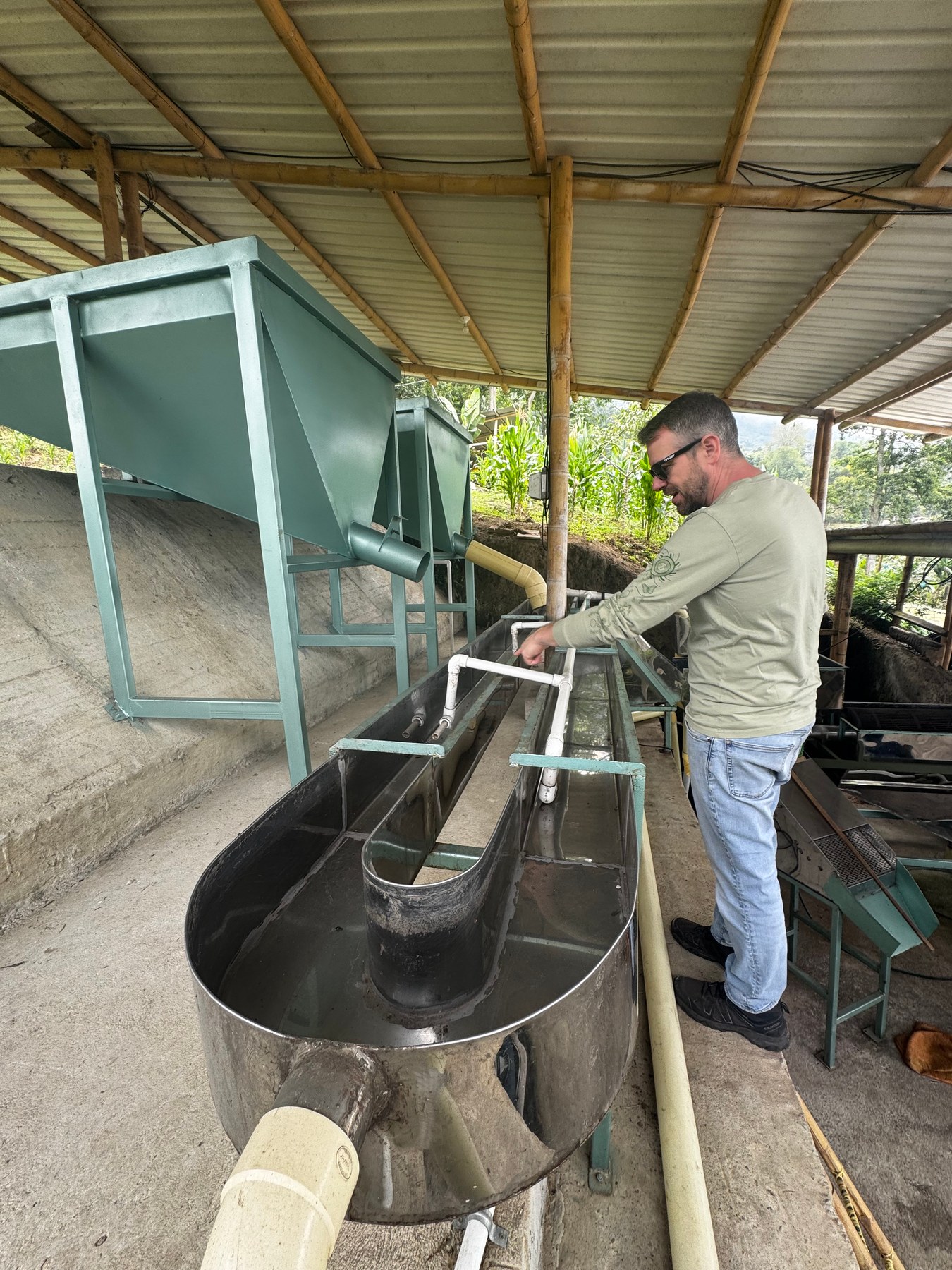
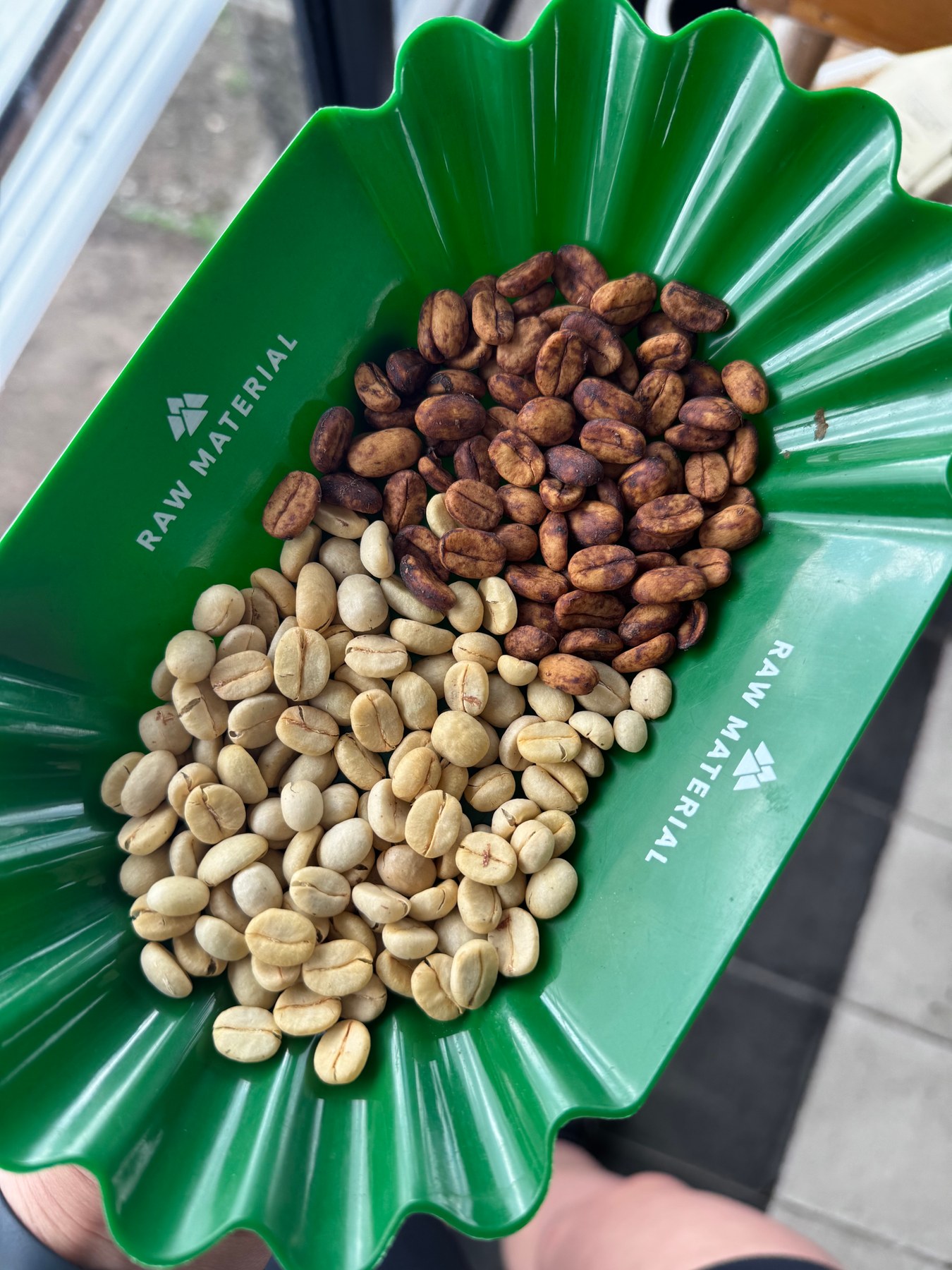
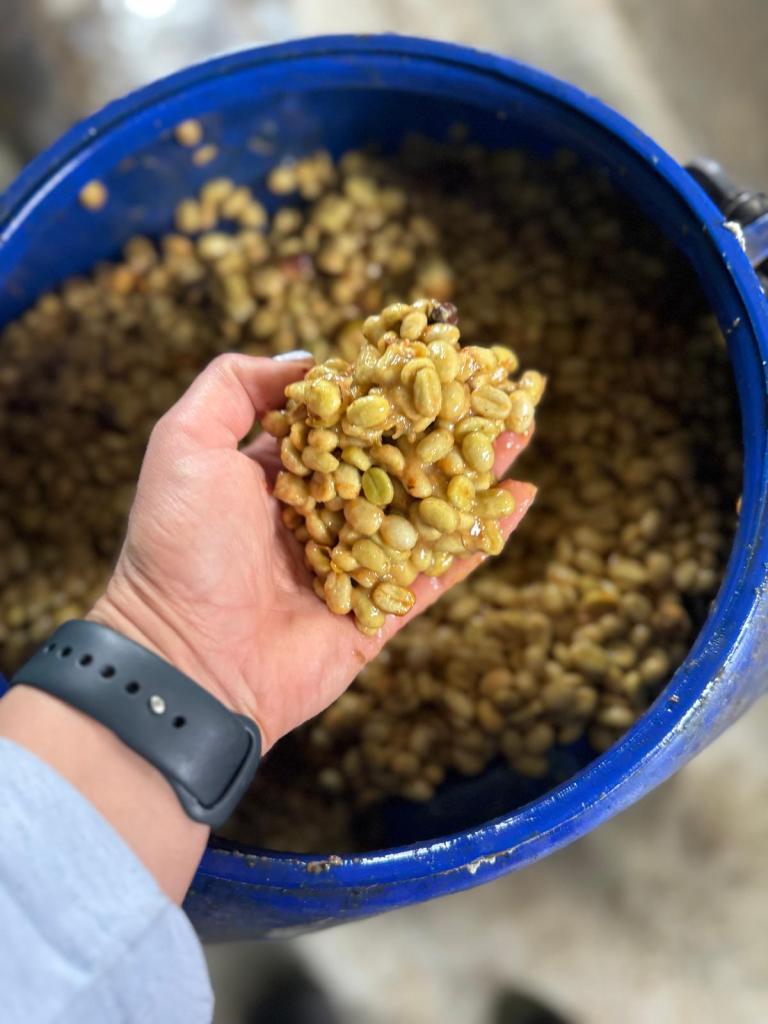
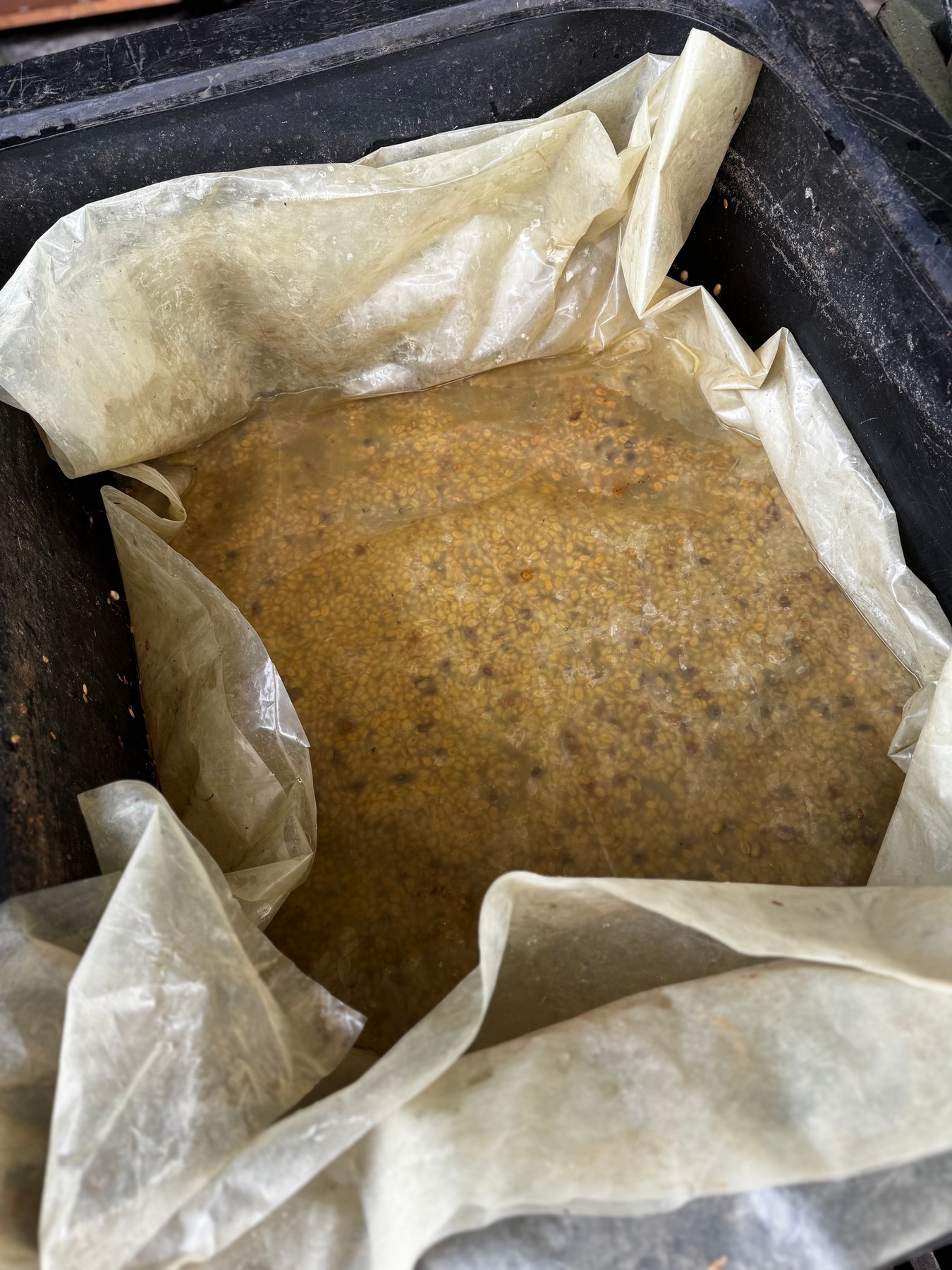
In his description, the coffee ferments with its mucilage beneath a plastic sheet, with roughly fifteen to twenty centimetres of water held above the sheet. Miguel explained that the water acts as a heat sink, helping to stabilise the fermentation temperature; he described an environment around twenty to twenty-two degrees Celsius in their conditions. The arrangement reduces the air available around the coffee while allowing fermentation gases to leave, creating what he calls an almost anaerobic environment. They also let the fermentation juices drain from the stationary tank, rather than leaving them collected at the bottom.
What he wants from that environment is a bright but delicate acidity, with complexity and enough balance for the variety to remain expressive. He spoke about being able to influence the fermentation without adding other ingredients, and about the usefulness of a setup that can be adapted to a cement tank or a plastic vessel. That helped me understand why he was interested in the method beyond any one coffee. He was looking for a way of working that could produce the kind of cup he wanted and be practical to repeat.
A Batch Still Has to Be Watched
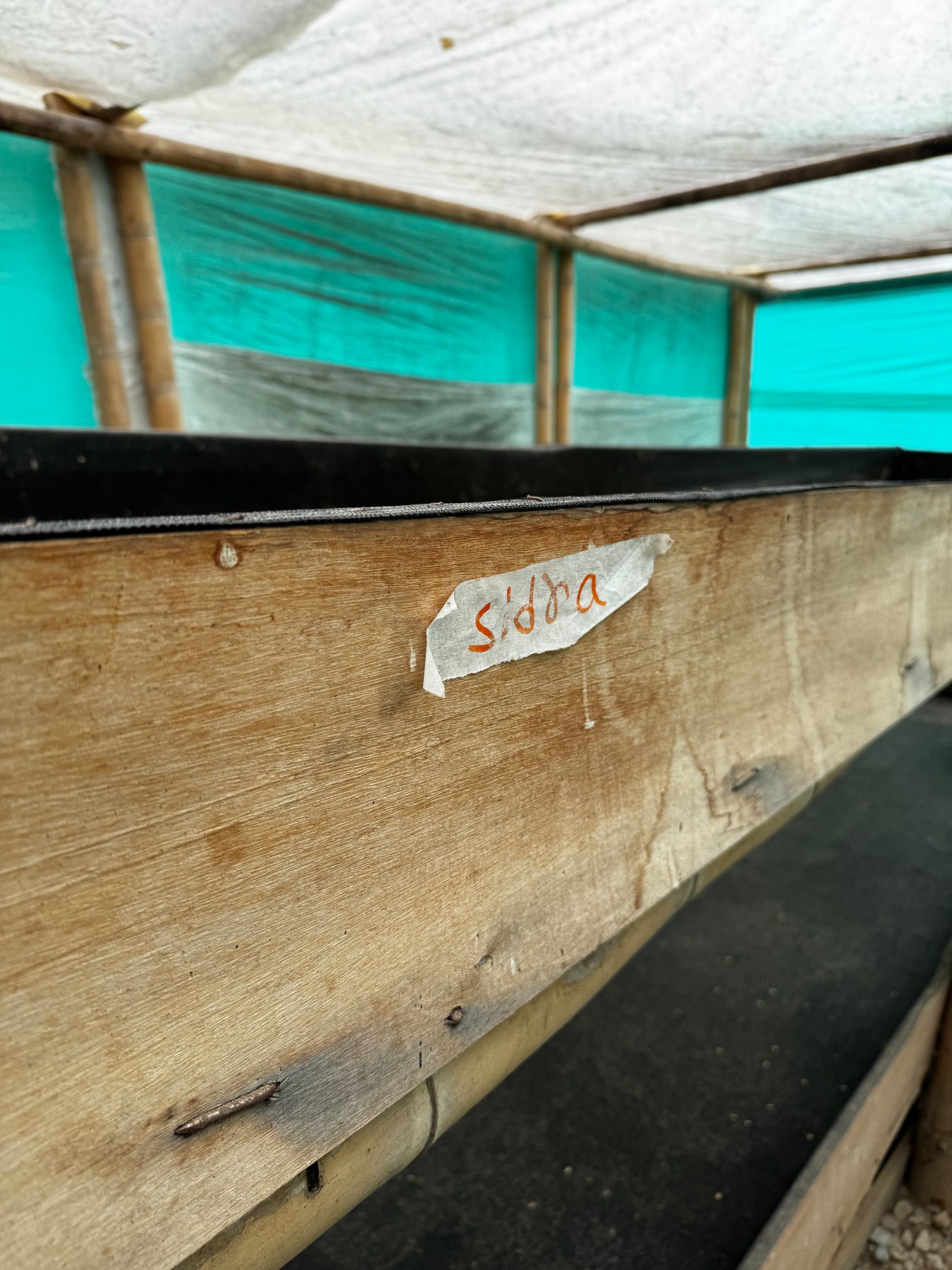
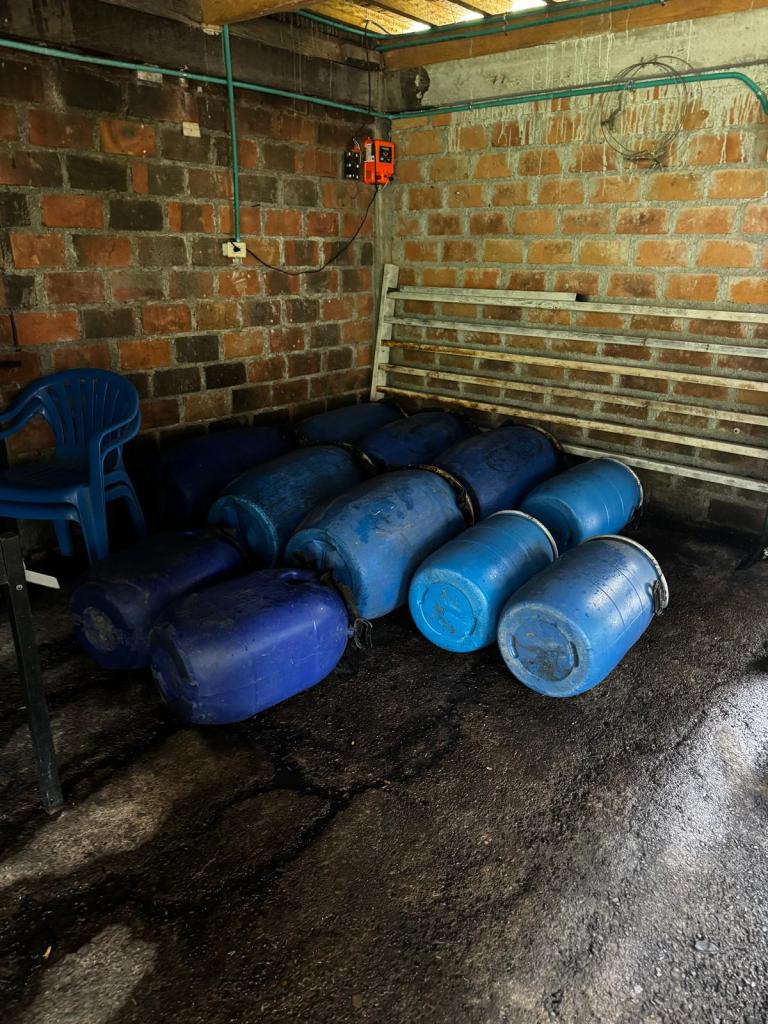
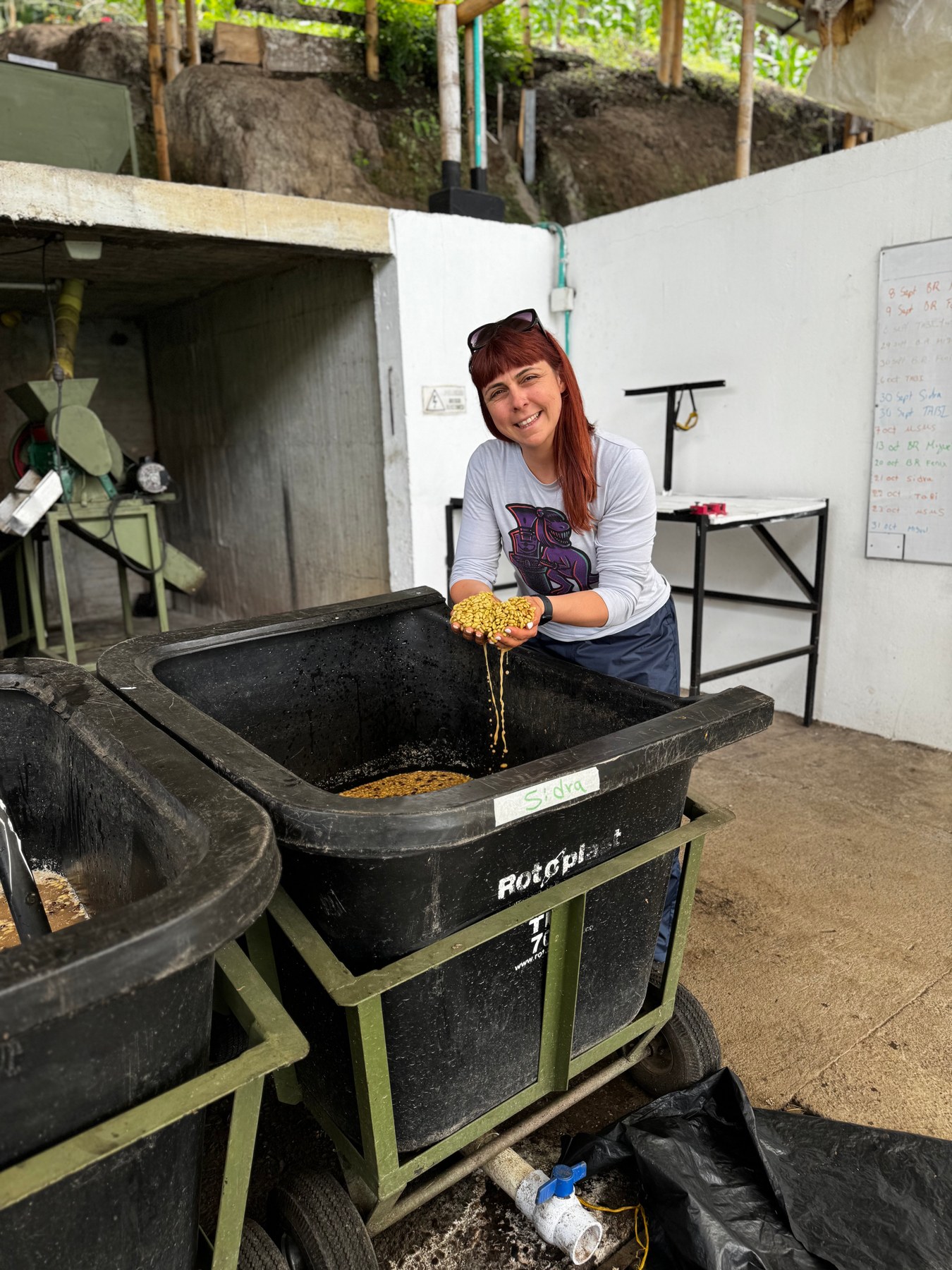
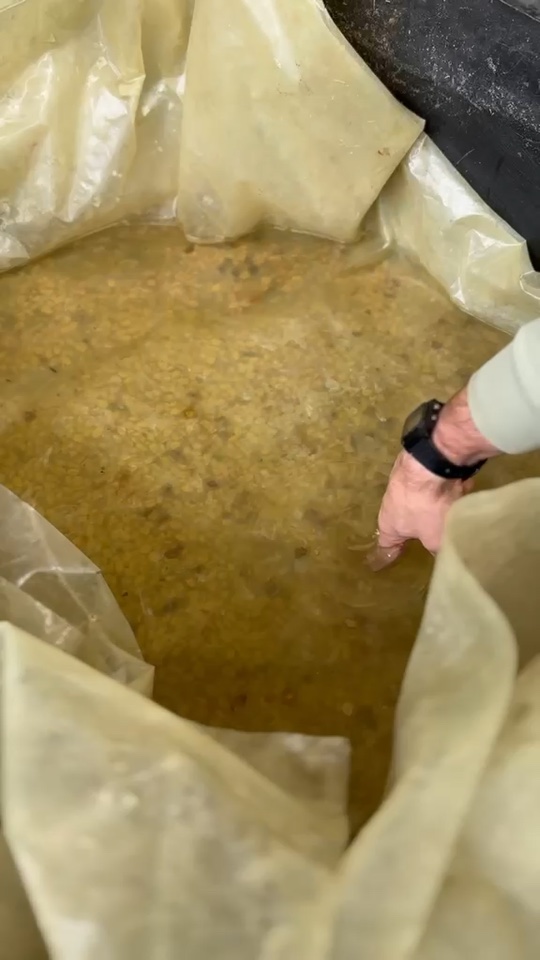
Of course, having a method doesn’t remove the decisions that come with each batch. In one of the tanks Miguel was showing us, water had been added to the coffee to cool and hold it ahead of washing the following day. This was a separate adjustment to that batch, rather than the water held above the plastic sheet. He talked us through the aromas and the activity still visible at the surface, explaining how he was judging its progress. Cooling it down had not made everything stop, and washing it and getting it out to dry still had to fit around the farm’s working week.
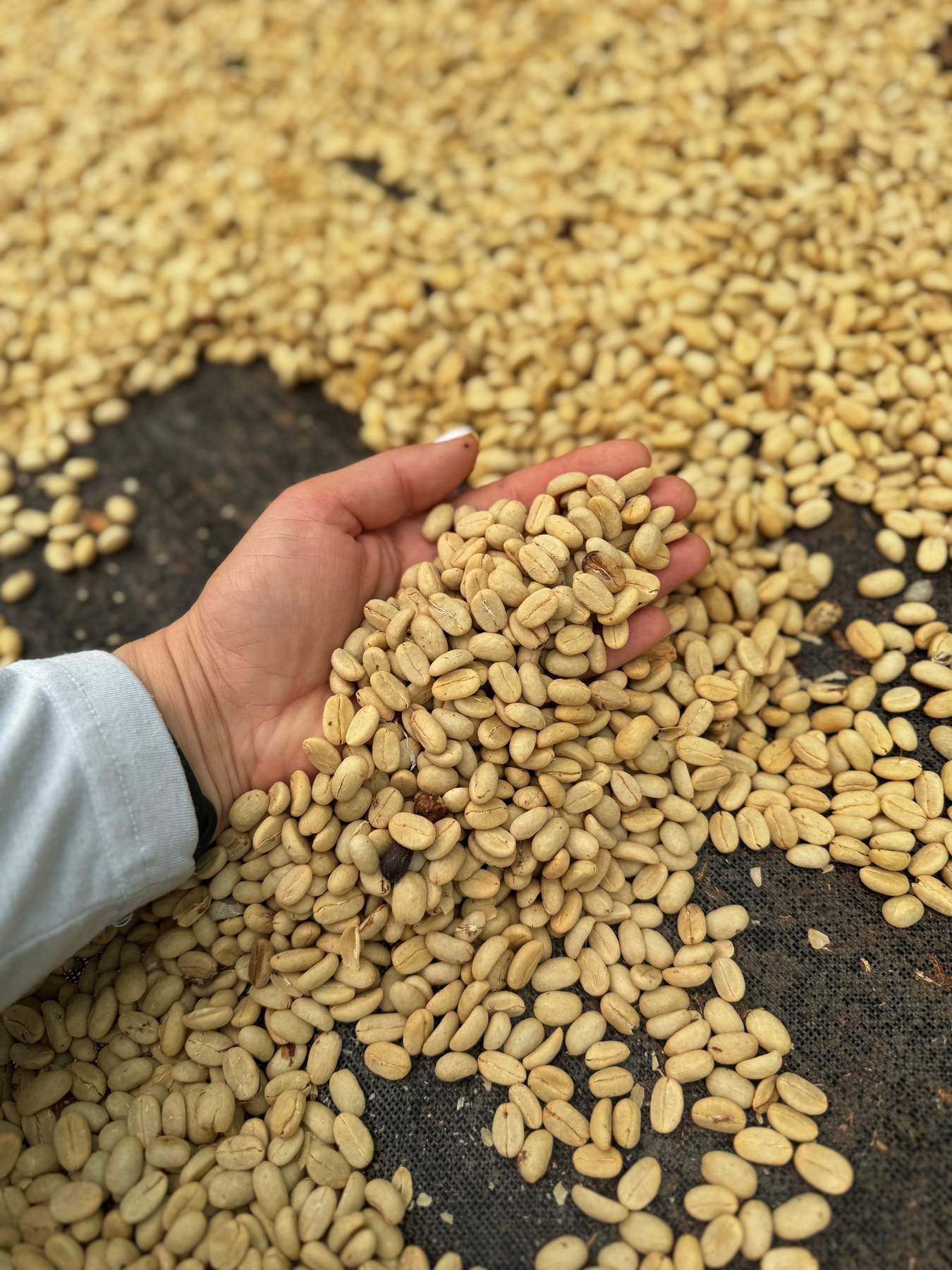
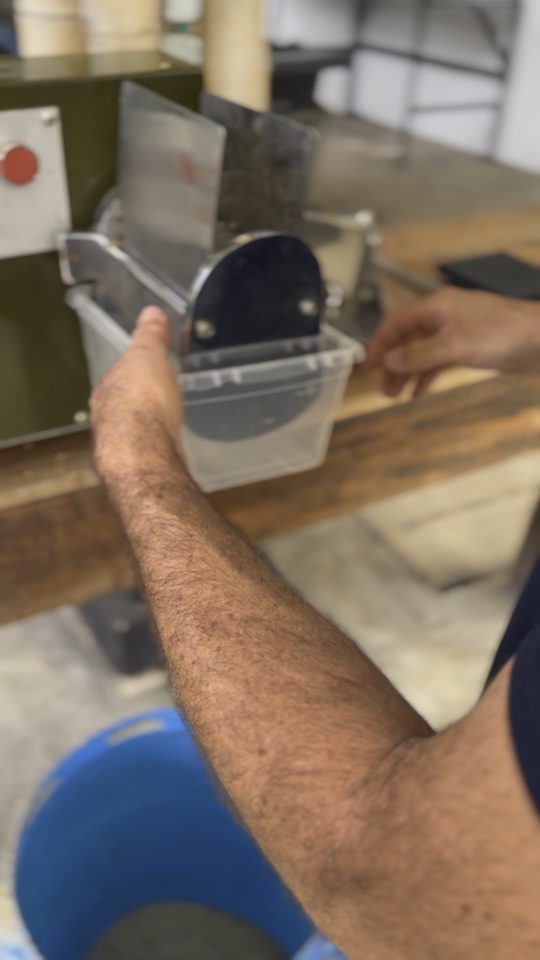
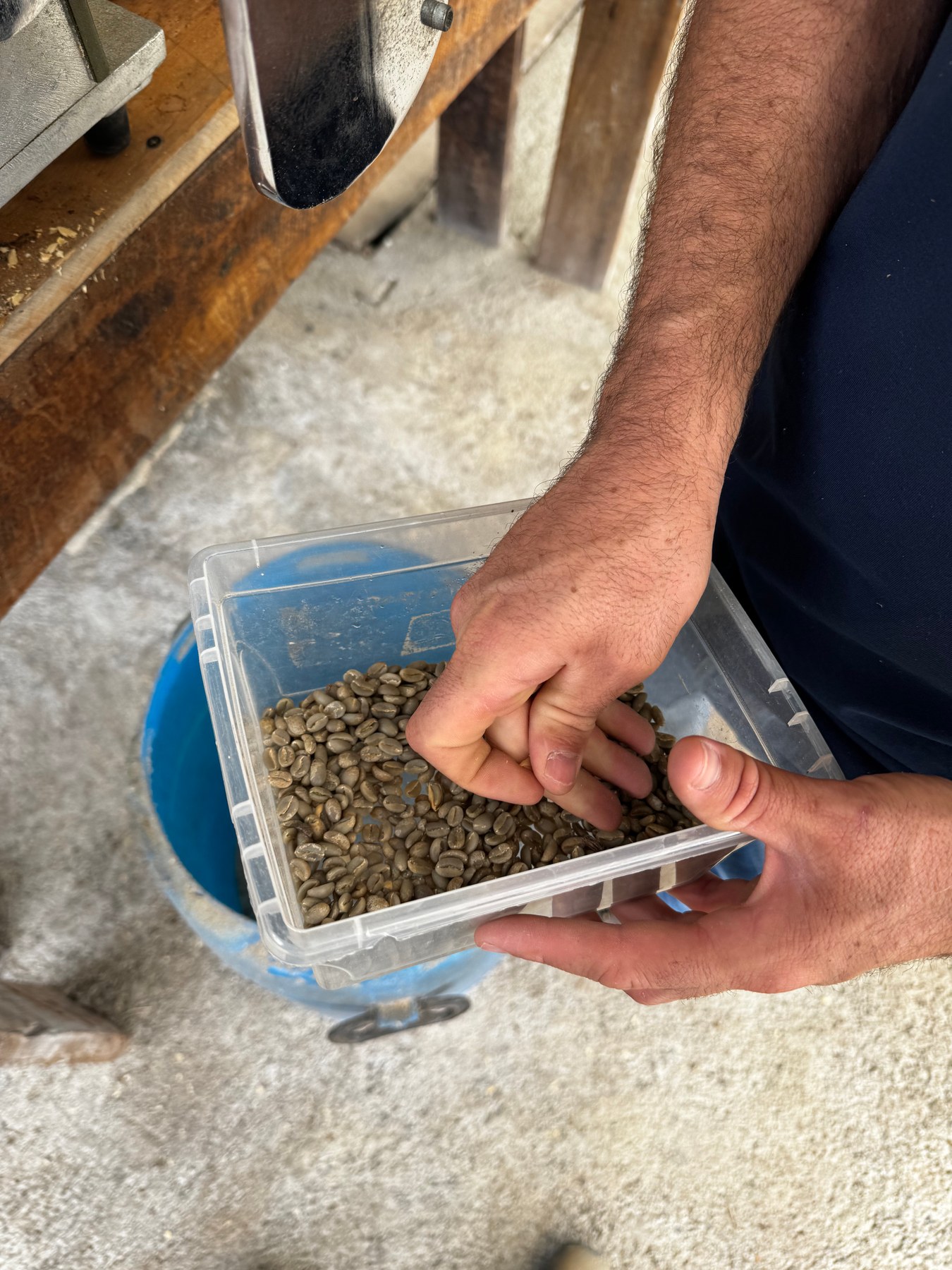
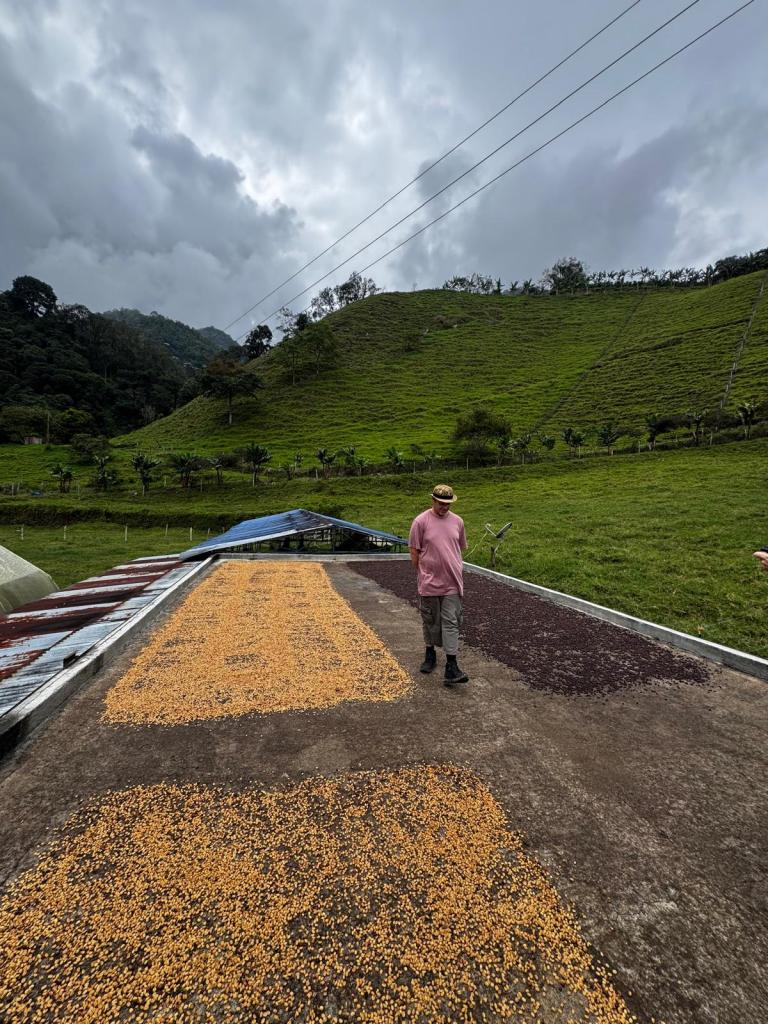
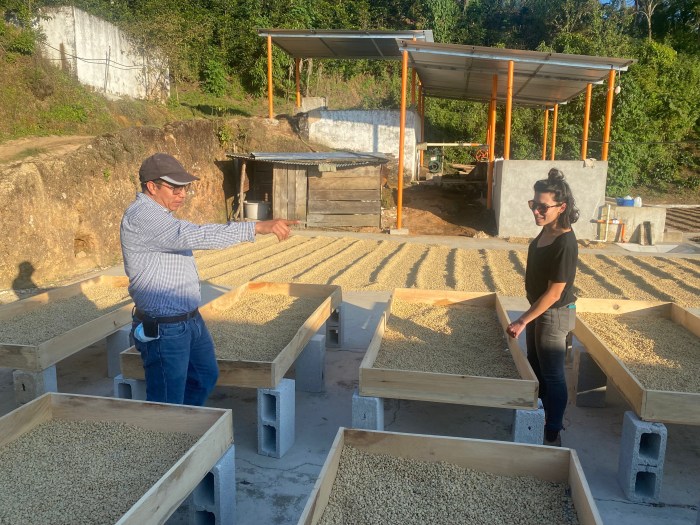
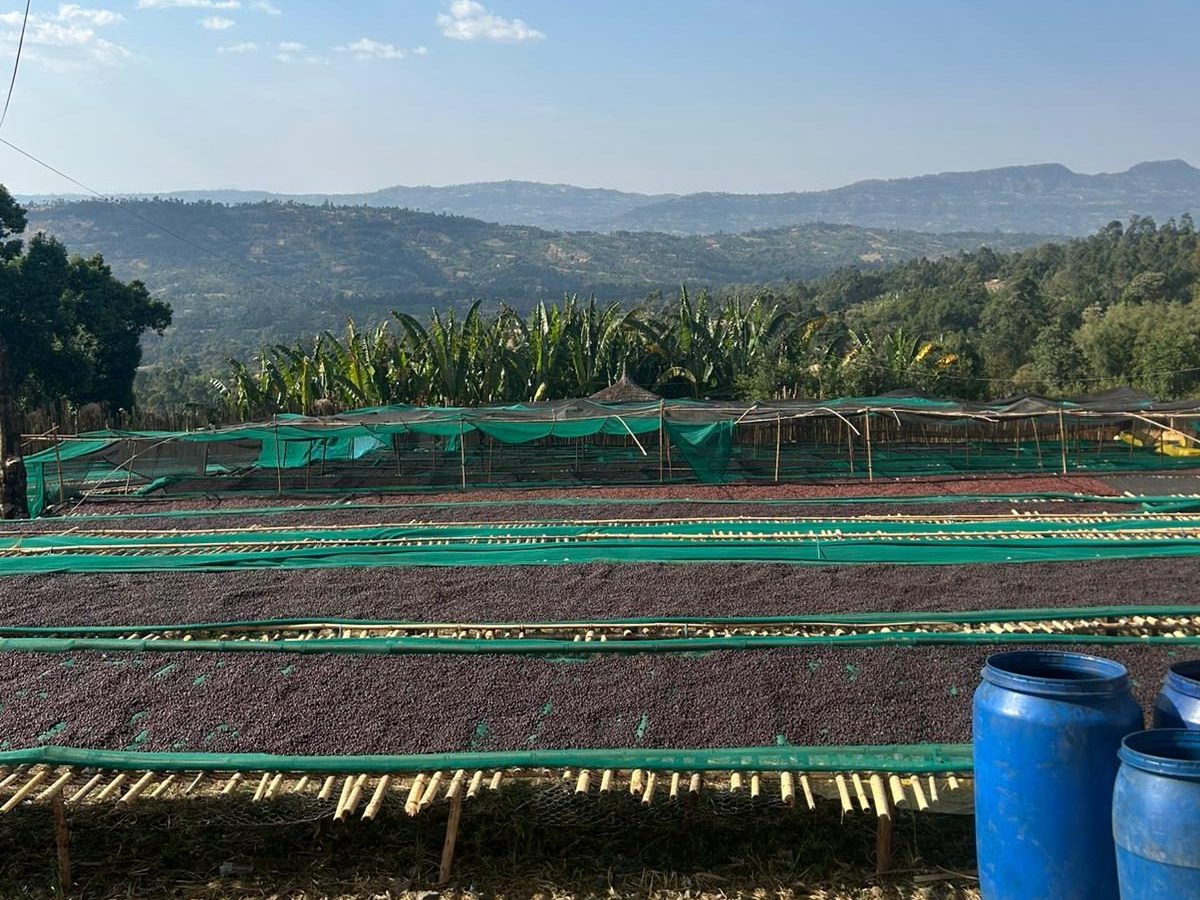
The same conversation carried on into drying. Miguel explained that the route could change with the amount of coffee moving through the farm and what needed to be delivered. Coffee might spend longer on the drying beds, or begin there and finish in the mechanical dryer when the flow of work or an order required it. He was describing decisions made around the coffee and the circumstances in front of him. Listening to him move between the batch, the drying space and the people doing the work gave me a much fuller picture than a fermentation time on its own could have done.
That was what I enjoyed about these conversations with Miguel: the detail of the cup stayed connected to the work needed to produce it. The Sidra had to make sense as a planting, the fermentation had to move towards the flavour he wanted, and there had to be a way to wash and dry the coffee with the people, space and time available. When we came back to those cups that had stayed so enjoyable as they cooled, there was all of that behind them. I wanted to understand the water pillow, and I came away understanding a good deal more about how Miguel thinks about his coffee.