
Hearthborn • Triceratops • Swoop
Steady and balanced. Built to endure.
The Triceratops in Jimma
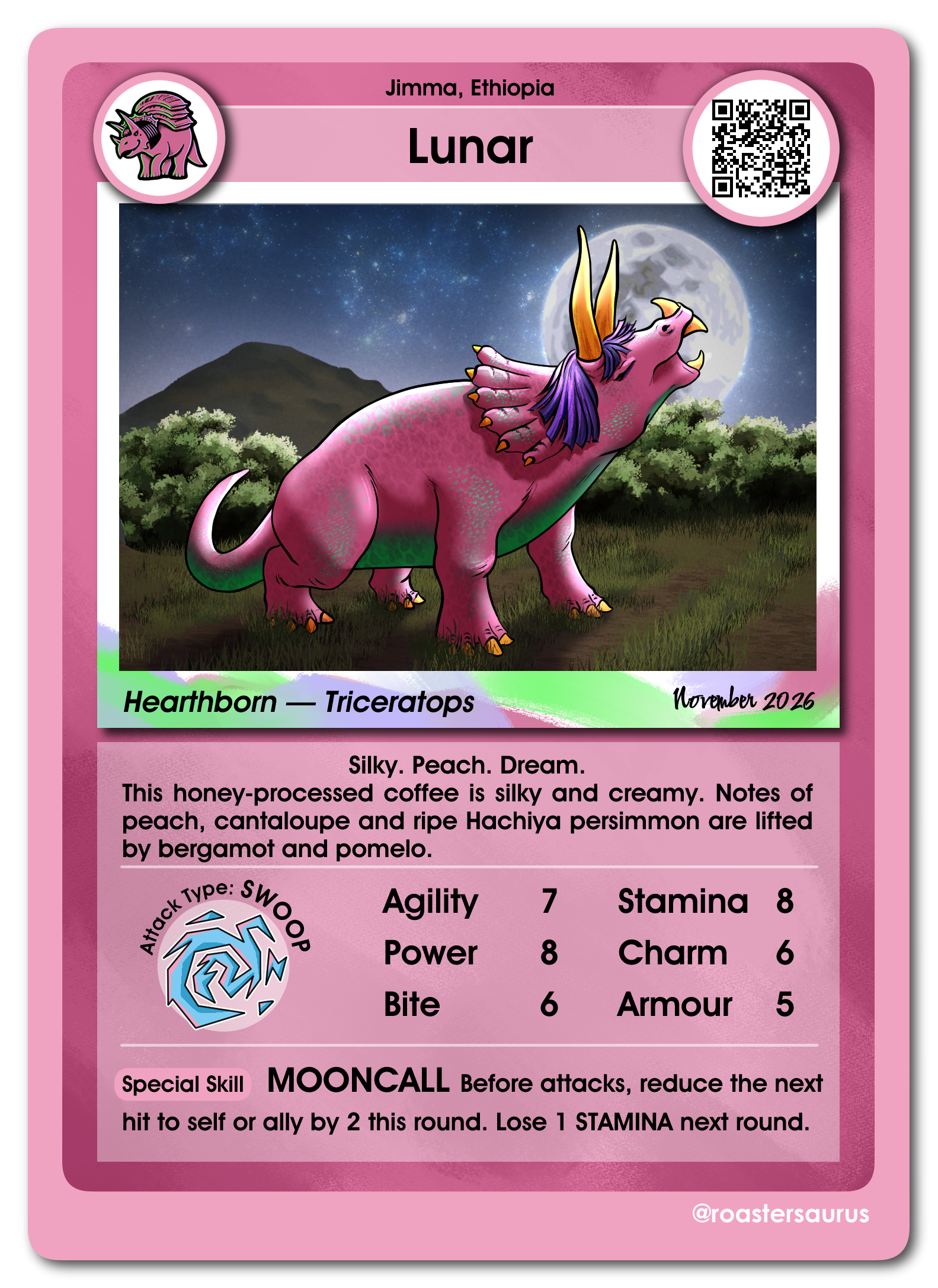
Under a sky full of stars, a pink Triceratops lifts its head towards the moon, the light catching its golden horns and spilling across its back. With all four feet planted in the grass and its mouth open to the night, you can almost hear the call.
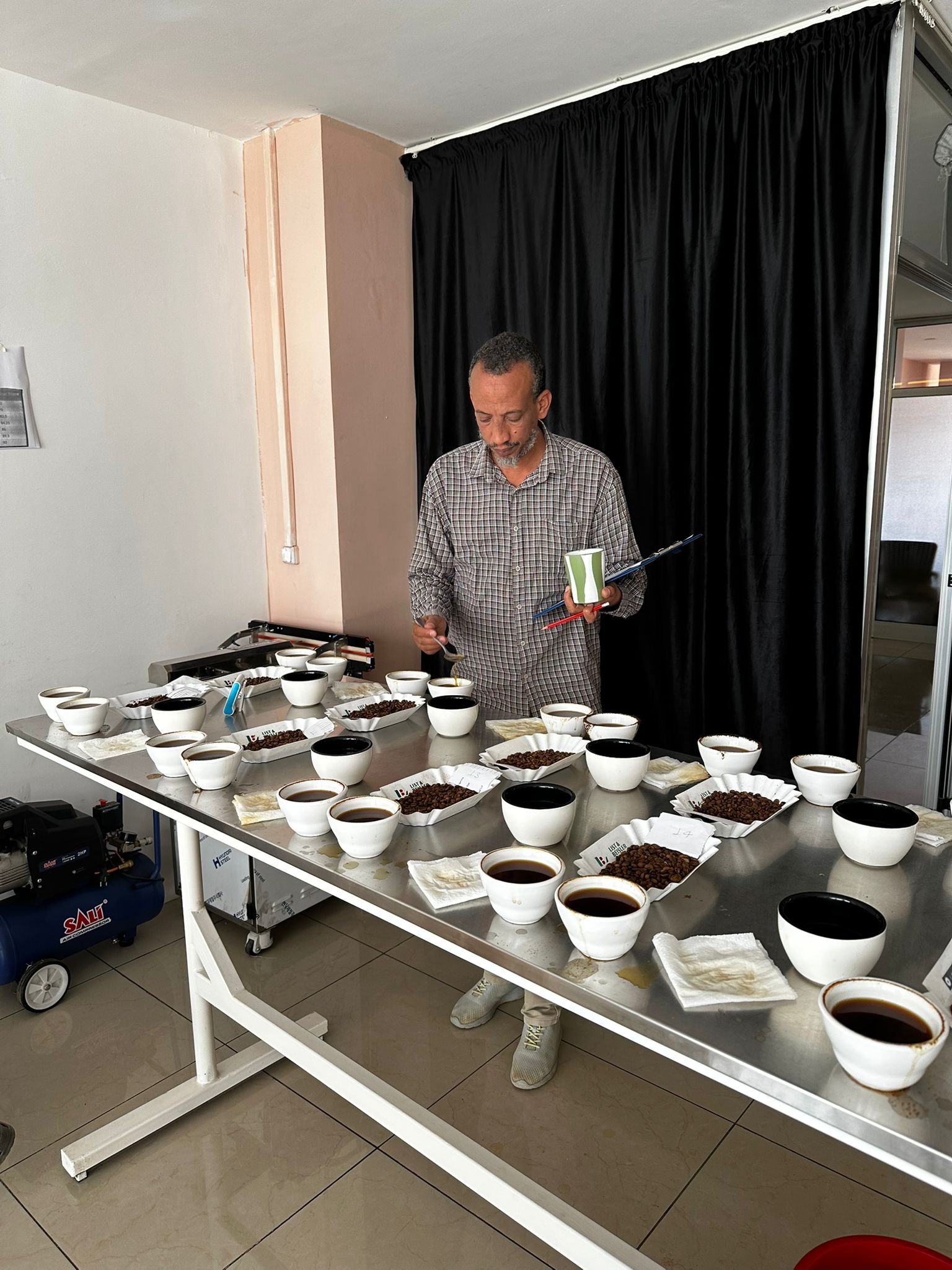
Lunar began with Moata Raya and a small honey-processing project in Jimma, Ethiopia, carrying a name borrowed from his daughter’s nickname at birth. When I first tasted it on a cupping table in Brussels, I knew none of that. I was following the peach and the silky sweetness, wanting another spoonful, and by the time the coffee became our Hearthborn Triceratops, that softness had found its way into the moonlight. There is plenty of presence in those horns and planted feet, but something tender about the way this creature calls into the night.
Meeting Mo
Omwani had invited me over to taste their coffees at World of Coffee in Brussels. Having bought Basha Bekele the year before, I was looking for another producer to share through Roastersaurus, and Lunar was the coffee I particularly wanted to ask about. Finding out it was Mo’s first harvest, and being introduced to him there at the table, made the whole thing even lovelier. I had already fallen for the cup; now I was meeting the person who had put so much into making it.
I told the team I wanted it, although with such a small production they needed to check what was left. When they got in touch later to say they had one bag available, I bought it. I wish I had taken a photograph with Mo, but somewhere in the busyness of World of Coffee that moment passed us by. Something for next time.
Mo’s full name is Moata Raya, and through Mecota Trading he helps connect Ethiopian farmers with buyers and handles the bureaucracy and logistics of exporting their coffee. Lunar brought him into the story in a more personal way, with a processing project of his own in the region he comes from.
Jimma, and the Coffee Behind the Name
Jimma lies in southwestern Ethiopia, where coffee grows within a landscape of highland forests. Its coffee history reaches much further back than its recognition on specialty menus, and for years the name was familiar to buyers through commercial, dry-processed coffees sold as Djimma Grade 5. That reputation often obscured the quality the region could offer. Investment in wet mills, processing skills and producer cooperatives helped bring more of that quality into view, with coffees from around Agaro finding an enthusiastic specialty audience. Sources: TechnoServe’s forest coffee guide and Coffee Initiative report.
That gives Lunar a little more context. This is a Grade 1 honey-processed coffee from a region whose commercial reputation once rested heavily on lower-grade naturals, but which has long since shown how beautiful its specialty coffees can be. Mo’s project adds a small, personal honey-processed lot to that wider story, with its own approach to the fruit and the drying.
For this coffee, we go closer than the Jimma name on the card, to Chewa village in Gomma district, near Agaro. A friend offered Mo the use of his family’s farm, where Mo installed a small two-disc pulper and trained his friend’s parents to carry out the processing. The family picked the cherries and looked after the coffee as it dried, following the approach he had set out.
The Coffee: Honey Process
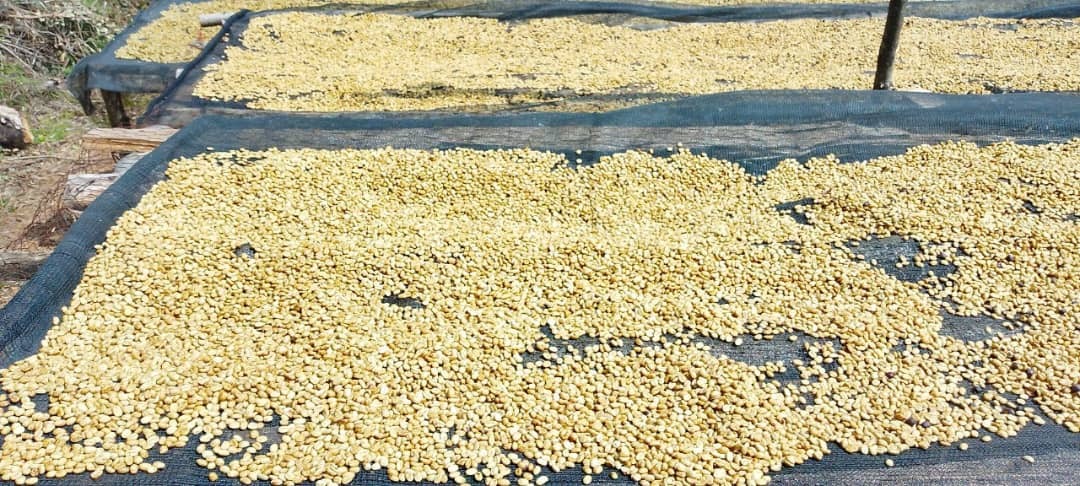
The work began with ripe red cherries, pulped about eight hours after picking. Removing the outer fruit left most of the sticky mucilage around the seeds, which stayed there during drying. That retained layer is what the honey process refers to; the sweetness comes from the coffee, with no honey added.
The pulped coffee went onto raised beds in the evening, then needed regular attention through the following days. It was spread and turned every two hours during the day, with shade nets brought into use during the hottest conditions and air moving through the beds. Drying took ten to twelve days, without permanent overhead shade. It is easy to fit “honey process” onto a label, but Mo’s account lets us see the work inside those two words, from choosing the fruit to keeping the coffee moving on the beds.
The Art

With a name like Lunar, we kept coming back to the moon and that familiar image of a wolf howling into the night. Caitlin has given the pose to a Triceratops, stretching its neck towards the full moon until the great golden horns reach up into the sky. The feet are still firmly in the grass, giving the whole picture a steadiness beneath that upward movement. It is a wonderfully committed howl from a creature you would have considerable trouble shifting.
The pink catches your eye against the blue night, while the green underside, purple around the face and warm gold of the horns give you more to discover as you look. Behind Lunar, the trees and dark hill settle into the landscape beneath the stars. I love the way the moonlight runs along the back and frill, picking out the scales and giving a soft edge to a creature with rather a lot of sharp points. It feels close to what drew me to the coffee: plenty of presence, carried with softness.
Knowing that the name comes from Mo’s daughter gives me another way into the picture. I like imagining the call reaching someone beyond the frame, which is where the protective side of MOONCALL feels at home. Lunar can use that skill for an ally as well as itself, and the image of this sturdy creature calling out into the night holds a little of that warmth for me.
Cup Character
Silky. Peach. Dream.
My brewing notes kept returning to peach, with cantaloupe and persimmon becoming clearer as I spent more time with the coffee. For the persimmon, Hachiya was the closer fit: that soft, almost custardy sweetness of the properly ripe fruit. Bergamot brings perfume around it, while pomelo gives the cup a citrus lift that keeps the mellow fruit lively.
The silky texture is what holds all of that together. There is a creaminess to it, with enough presence for Power 8, though “full” would suggest more heaviness than I find when drinking it. Lunar feels comfortable as a Hearthborn because the fruit, brightness and texture stay so well connected, carrying their balance through the sip and into the lingering sweetness.
Stat Breakdown
- Agility 7: Bergamot and pomelo keep the silky cup moving.
- Power 8: Plenty of peach and flavour presence, carried without heaviness.
- Bite 6: A clear citrus edge within the softer fruit.
- Stamina 8: Fruit and sweetness that stay with you after the sip.
- Charm 6: Fragrant bergamot and inviting, ripe-fruit sweetness.
- Armour 5: Enough creamy texture to cushion that brightness while leaving the fruit clear.
Special Skill: Mooncall
MOONCALL carries that protective feeling into the game, letting Lunar soften an incoming hit for itself or an ally. It suits the steadiness of a Hearthborn, with a cost that asks you to think about how much endurance you can spare in the following round.
MOONCALL: Before attacks, reduce the next hit to self or ally by 2 this round. Lose 1 STAMINA next round.
The reduction applies to the next hit this round, while the Stamina cost follows next round. Choosing when to use it means weighing the protection you need now against the endurance you will want afterwards.
Through the Card
If you arrived here through your card, welcome. That pink Triceratops belongs to a honey-processed coffee from Chewa, and to Mo’s first project carrying his daughter’s nickname. I found it on a cupping table in Brussels; the card gives you a way to follow it back a little further.
Keep it as your collection grows. Once the last peach-filled cup is gone, Lunar will still be here, head raised towards the moon, with Mo’s story behind it.

