Two coffees on a blind table in Santuario
I met these coffees before I met Avelino.
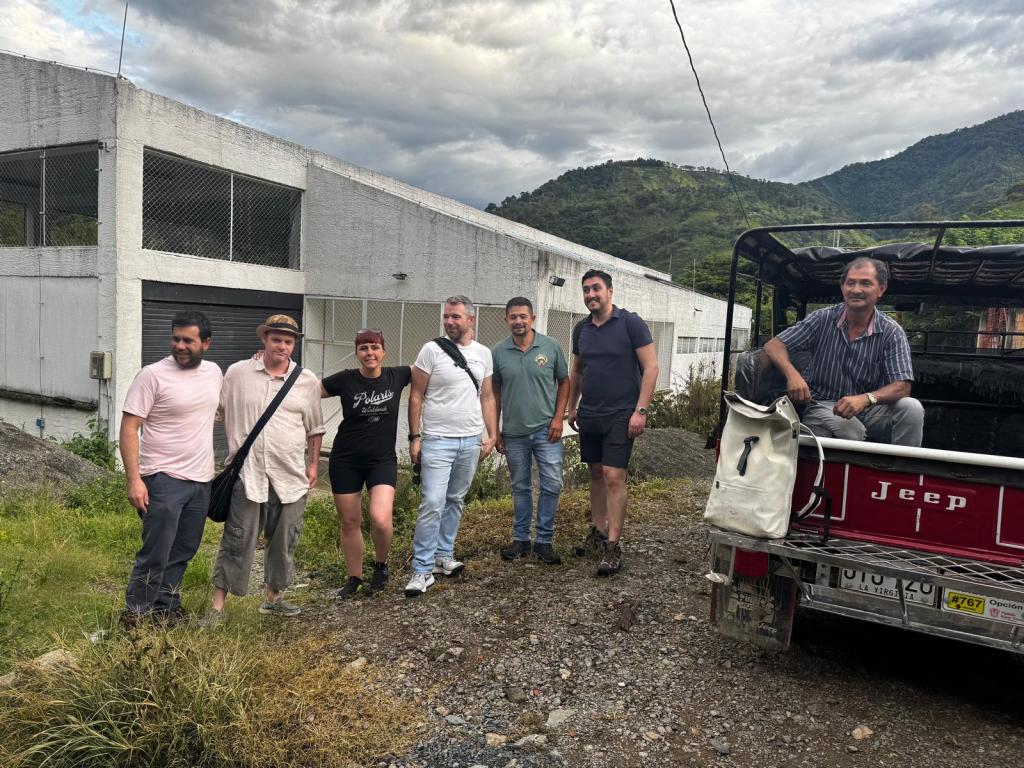
That feels like the right place to start, because the whole release began with taste before it had a name, a farm, a face, or a story attached to it. I was in Santuario, Colombia, cupping coffees from the region after travelling there with Raw Material, and at that point I was just following the table. No producer reveal, no card idea fully formed, no neat little narrative handed over with the samples. Just bowls, spoons, and the question I always come back to with Roastersaurus: is there something here that can become part of the world?
I never wrote one big blog about my Colombia trip, partly because the trip was too full to flatten into one neat travel post. Instead, I think the story is going to come out through the coffees themselves. Each release opens a different part of the trip, and this one starts in Santuario, before I met Avelino.
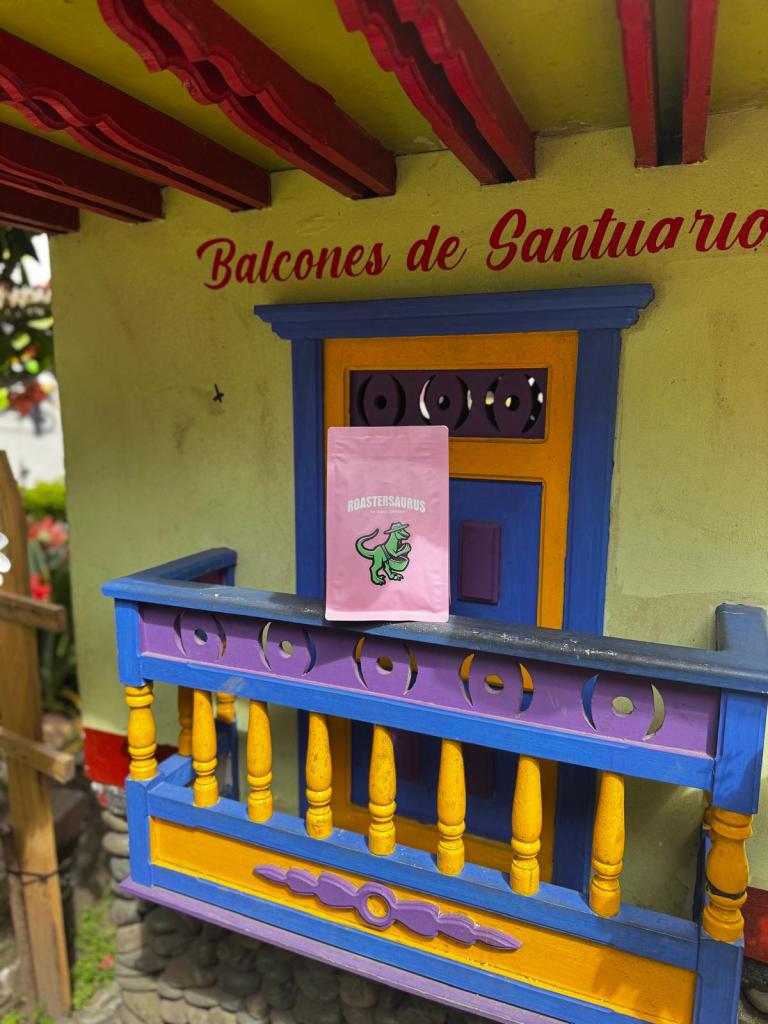
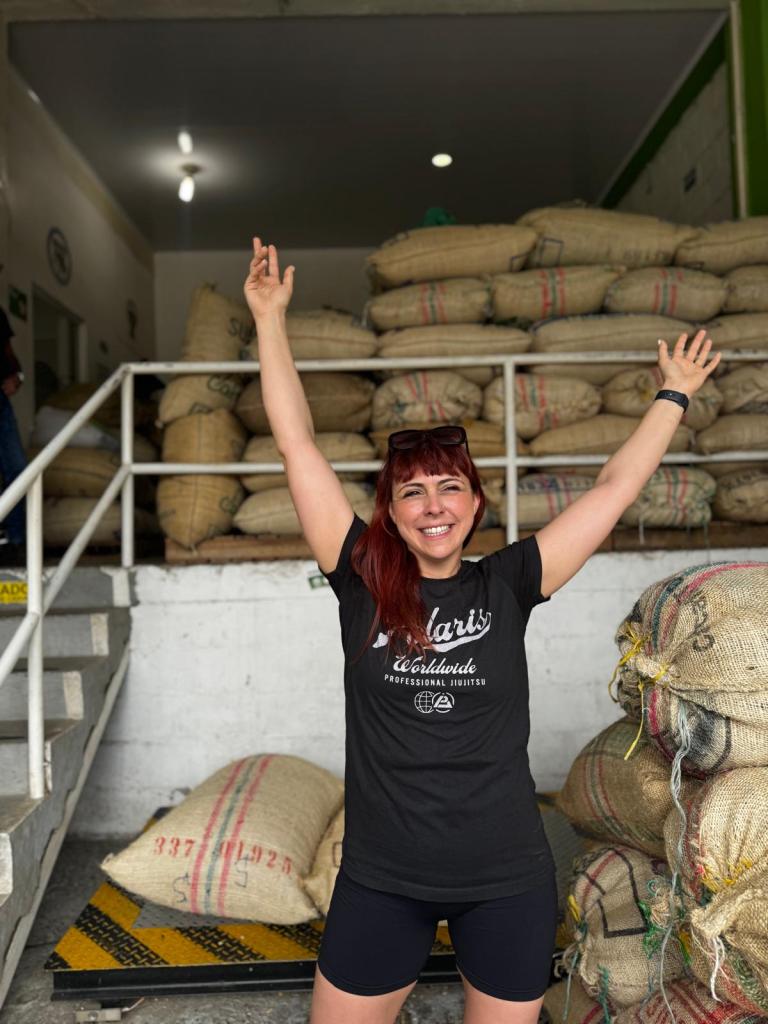
This trip was not only about buying coffee. It was about understanding where these coffees come from, how they are being produced, and what kind of stories are sitting behind them before they ever land in the UK. I was also wearing more than one hat. Saint Espresso and Roastersaurus are different brands with different needs, and I do not choose coffees for them in the same way. Saint has its own structure, tone, and customer base. Roastersaurus gives me another kind of freedom: to follow curiosity, character, strangeness, play, and those sensory moments that feel like they could turn into a creature.
That does not always mean choosing the loudest coffee on the table. It does not mean chasing the wildest fermentation, the most expensive variety, or the cup that shouts the hardest. Sometimes the right coffee is the one that keeps making you go back to it because there is something there: a shape, a movement, a feeling, a little hook in the cup.
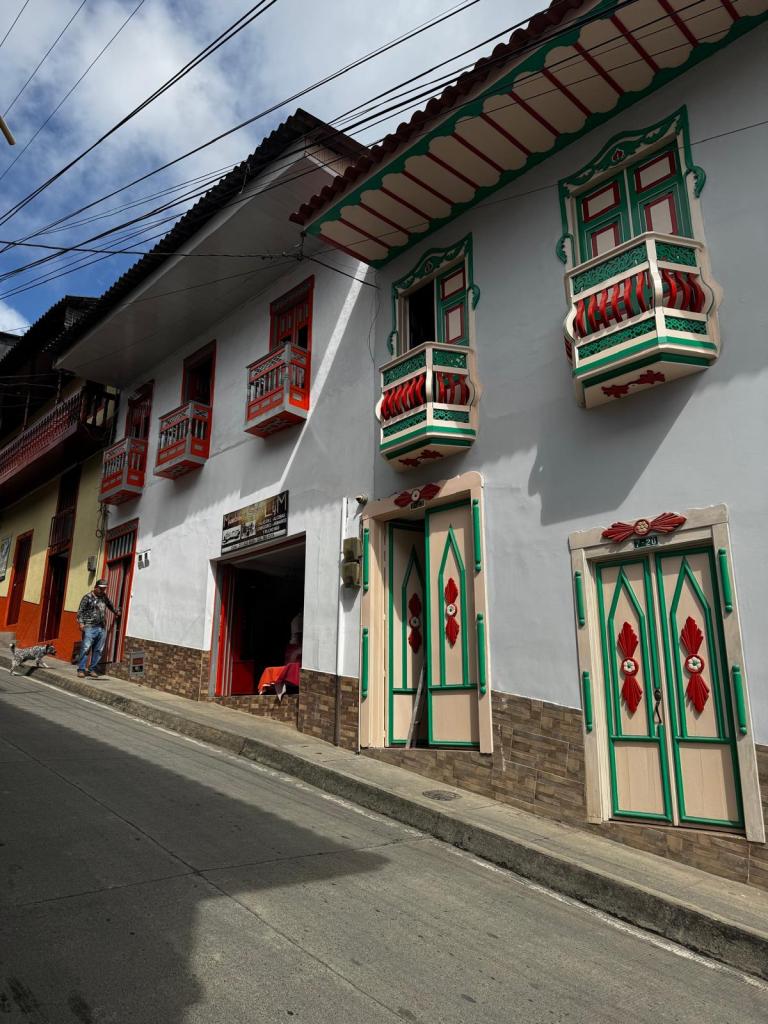
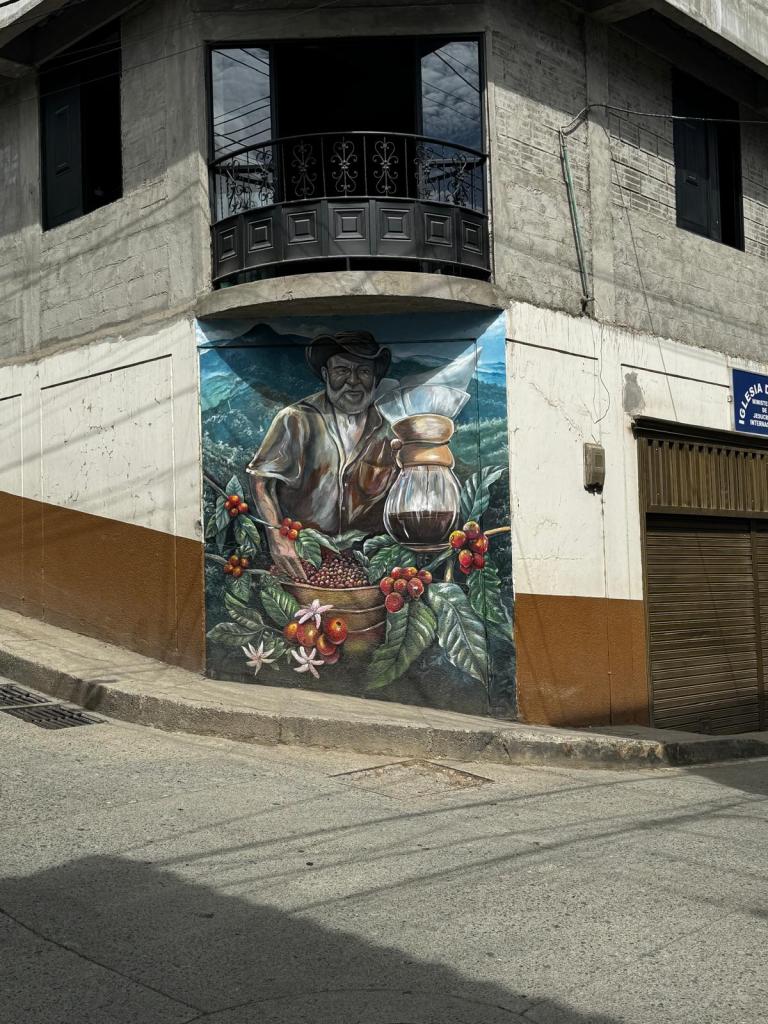
Santuario had that feeling.
La Perla de Tatamá
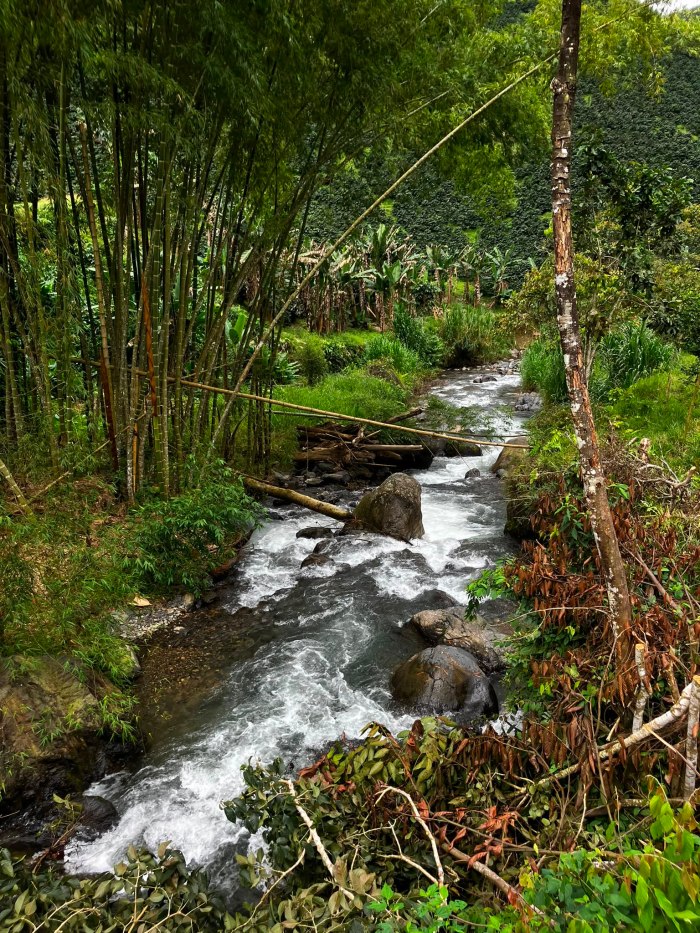
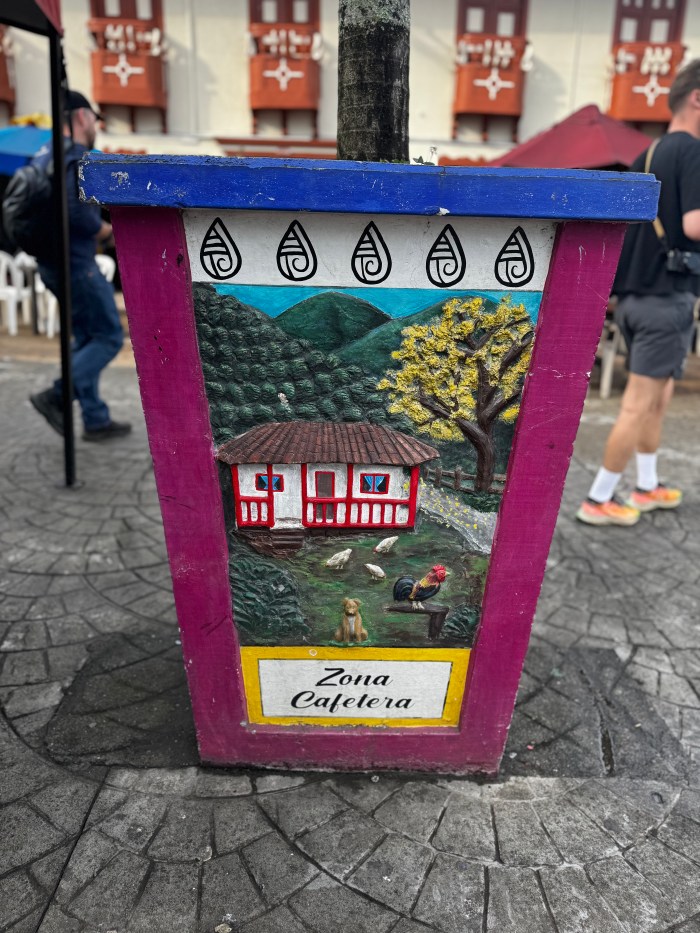
Santuario is known as La Perla de Tatamá, and once you start hearing the story of the place, that name begins to make sense. The municipality sits in the influence of Tatamá National Natural Park, a protected area of around 48,000 hectares that stretches across three departments. Tatamá was described to us as a kind of green lung for the region, connected to the waters that feed towards both the Atlantic and the Pacific.
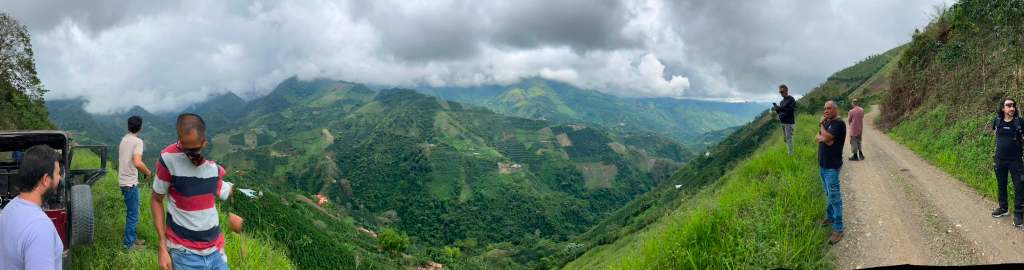
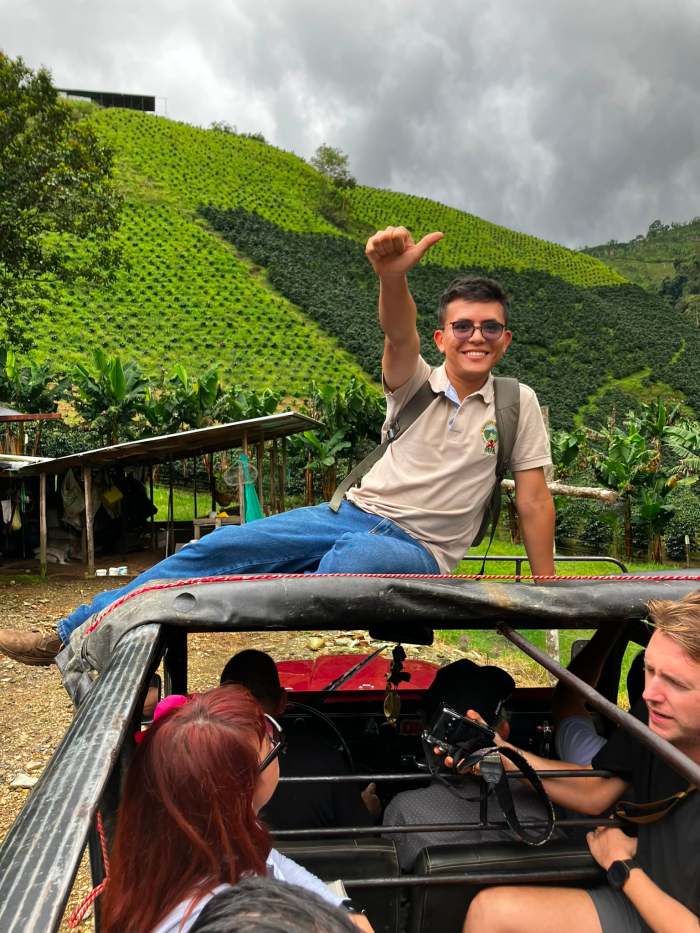
Coffee is not a small side detail in Santuario. It is the main economy of the municipality, with around 5,800 hectares planted in coffee, and Santuario is one of the major coffee-producing municipalities in the department. Most of the municipality is rural, and that matters because coffee here is not separate from daily life. The town, the surrounding farms, the association, the café, the buying station, the conversations, they all sit together.
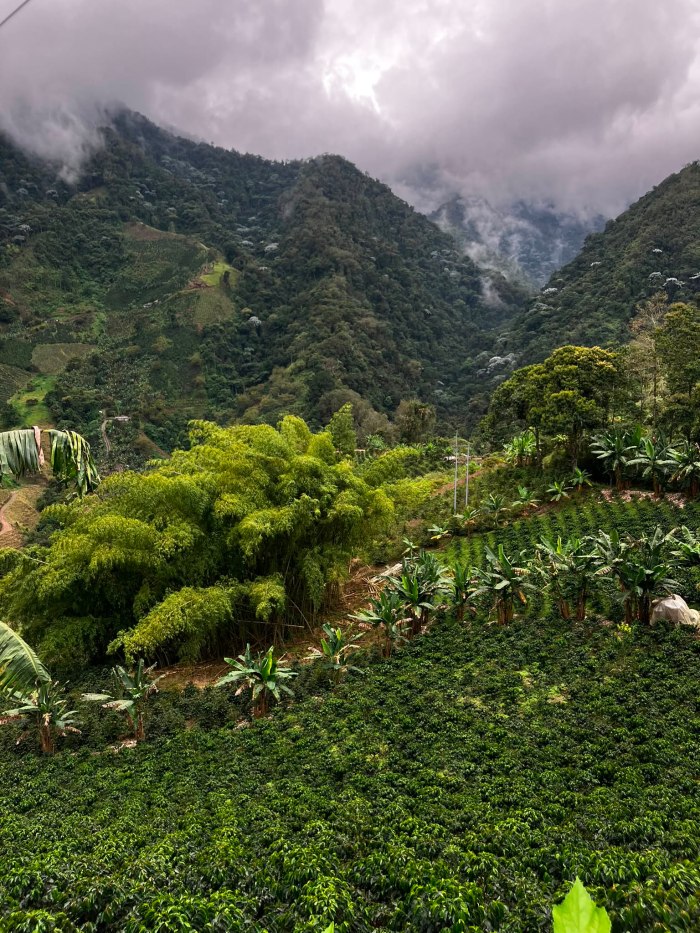
That wider context helped me understand why Asocafé Tatamá exists in the way it does. Their logo itself pays homage to the park, with the mountains behind it and an endemic frog holding coffee beans. I loved that detail because it says a lot about what the association is trying to hold together: environmental sustainability on one side, and economic sustainability for coffee-producing families on the other.
That balance became one of the threads of the visit. Santuario is beautiful, but this is not a postcard story. It is a coffee town, inside a protected landscape, trying to build something that allows small producers to create more value from the coffee they grow.
Asocafé Tatamá
Asocafé Tatamá began in 2012, partly as a response to the difficulties producers were facing in the coffee sector: low prices, uncertainty in agriculture, and the feeling that coffee was not always working as a profitable industry for the families producing it.
At first, from around 2012 to 2015, the association was focused more on projects that could bring direct support to producers on farm. But the lesson they described was very clear: direct help on its own was not enough to solve the deeper problem. If producers were going to build a more dignified and sustainable life through coffee, the answer had to involve added value and fairer payment for the coffee itself.
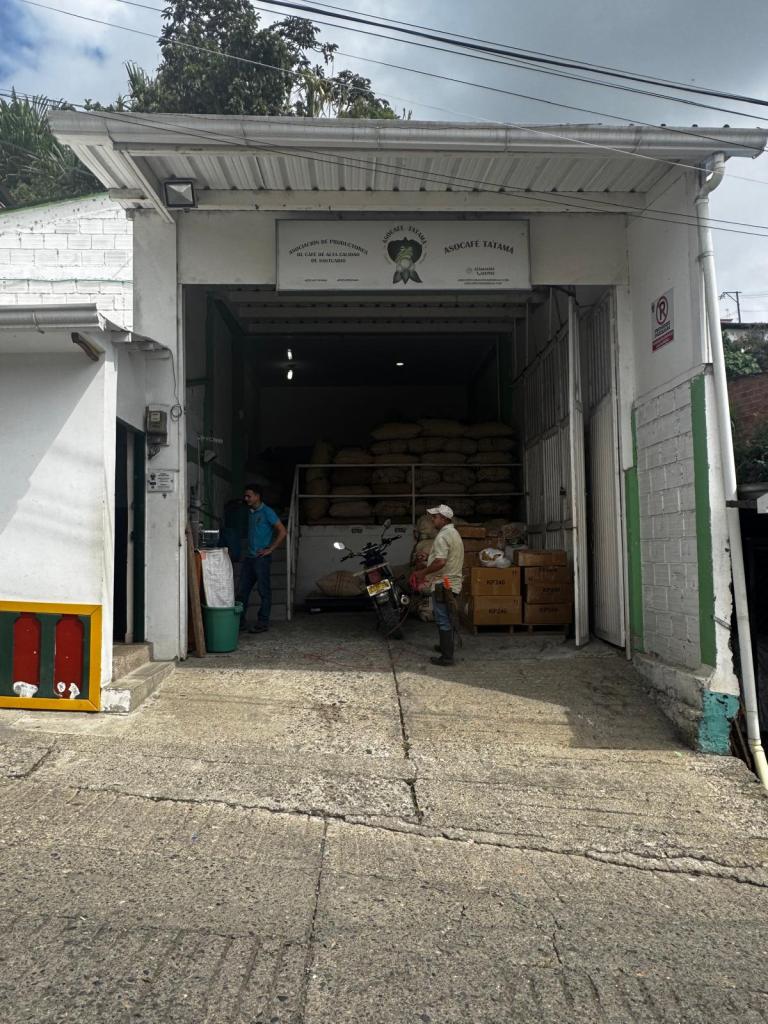
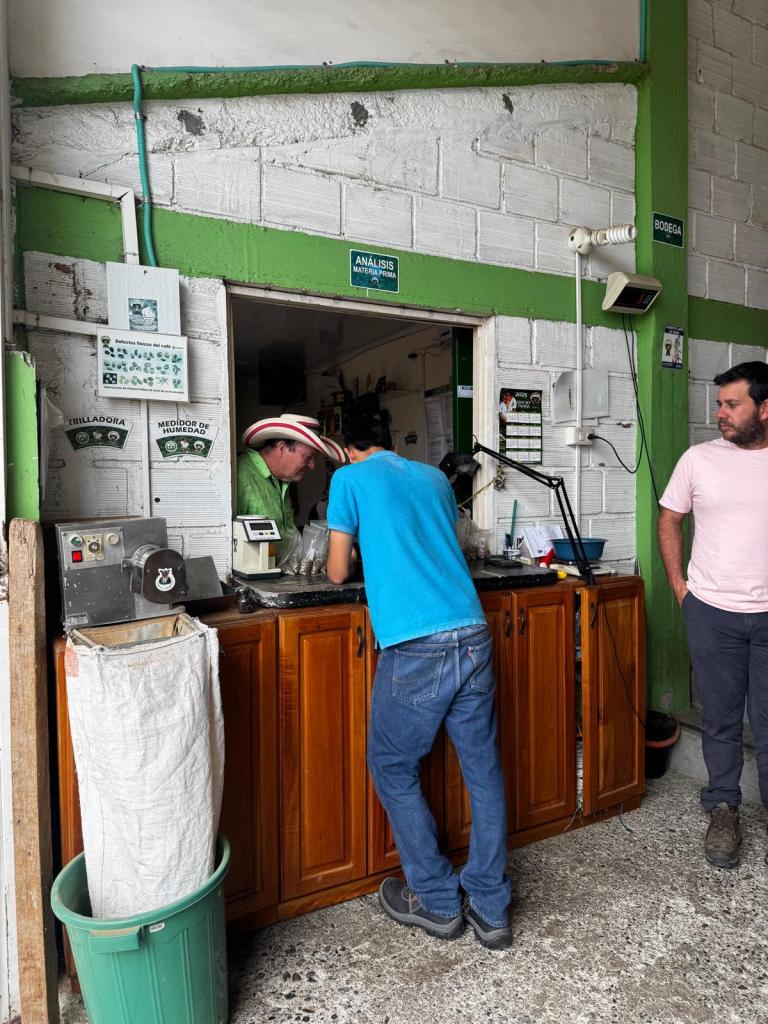
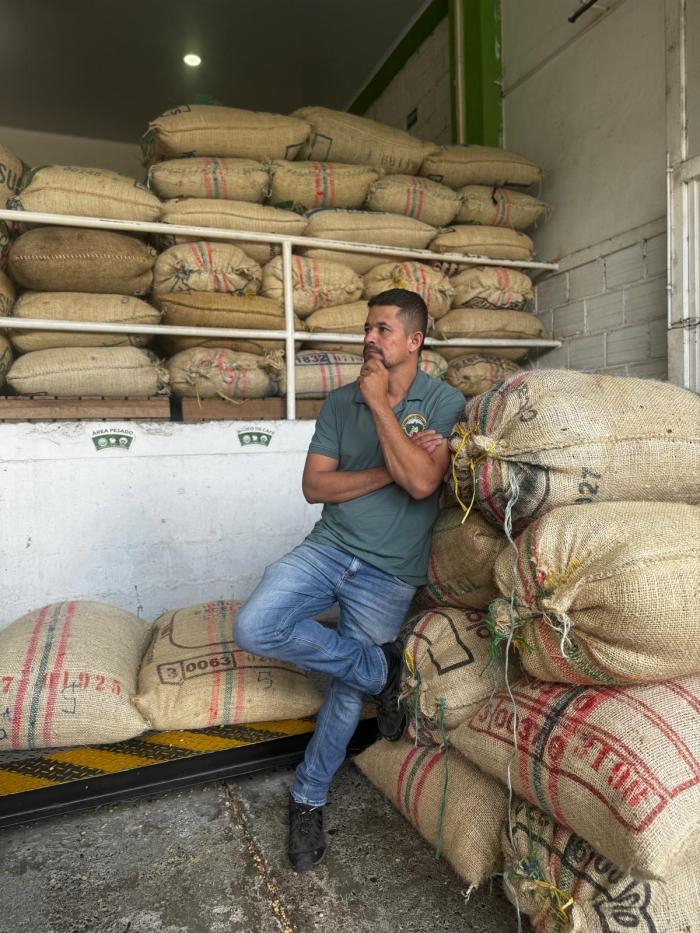
So the association started shifting into something more commercial and quality-focused. They built out collection, a basic cupping lab, training, and a structure that could help producers understand coffee beyond the farm gate: processing, cupping, quality, and commercialisation. In 2016, they began collecting coffee and operating with a basic cupping laboratory. Around 2017 to 2018, their relationship with Raw Material helped consolidate larger-volume direct sales and a more stable commercial route.
That matters because the coffees I tasted in Santuario were not sitting on a random table. They were part of a local structure that has been built, step by step, to help producers access feedback, quality assessment, and better routes to market.
A café owned by producers
One of the parts I loved most was the café in town.
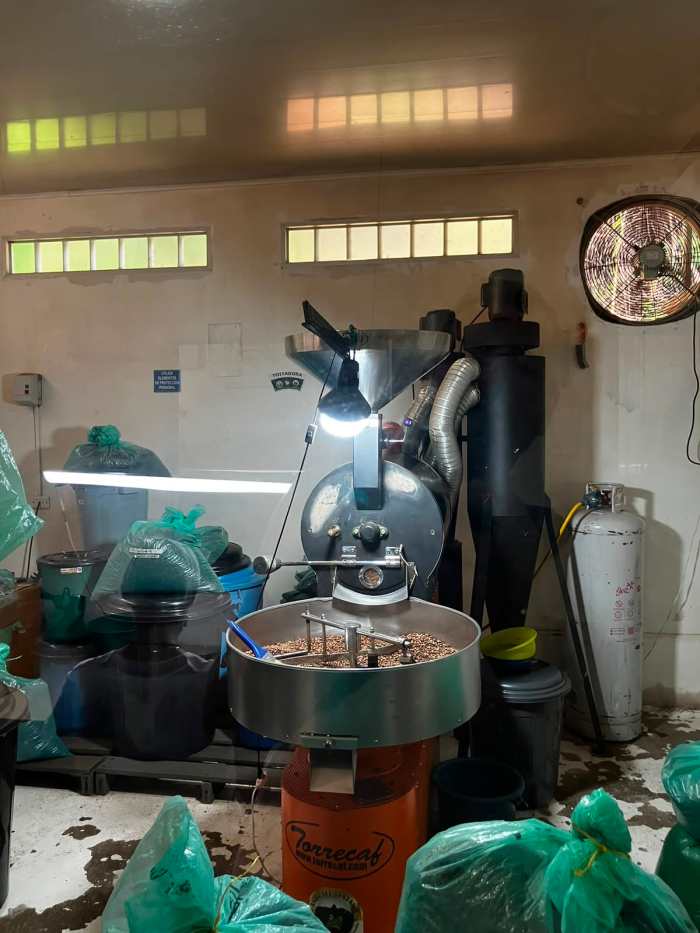
Asocafé Tatamá began exploring roasting in 2019, partly because there was not really a local option for producers to roast their own coffee in the municipality. Many producers were used to drinking commercial coffee brands, rather than being able to roast and drink the coffee they had grown themselves.
So the association started roasting. They began with around 500 pounds of coffee, and now roast significantly more for the local market. That step alone feels important, because it gives producers a chance to taste their own work as a finished product, not only as parchment that leaves the farm.
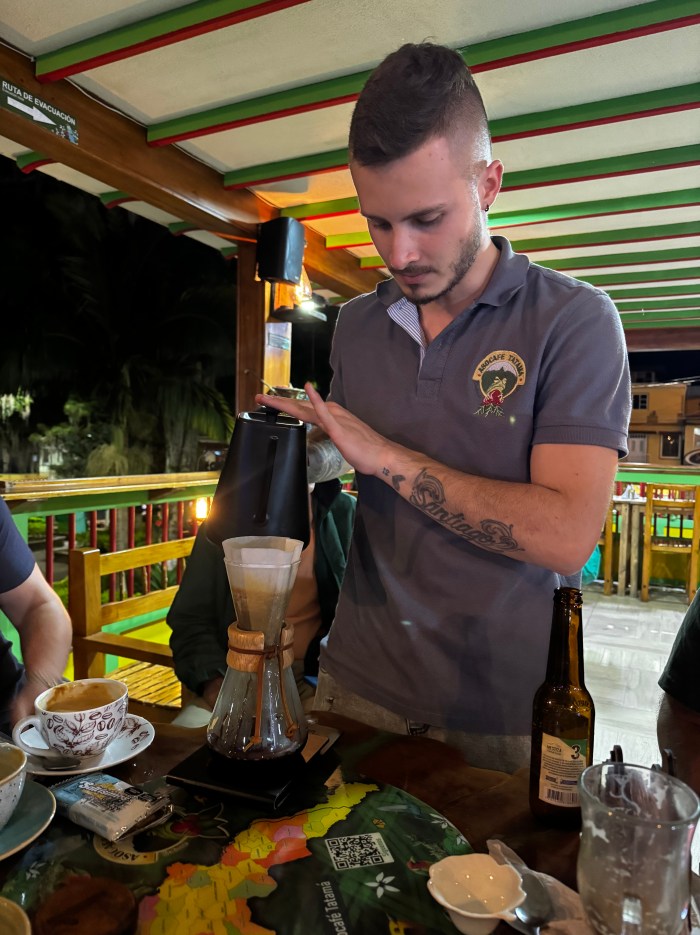
Then they went further and opened a café in Santuario, around 2021 to 2022, with the support of the local government. The idea was to create a coffee shop owned by producers, where the town could taste the best coffees being produced around them.
That is a bigger thing than it sounds.
For people on the consuming side of specialty coffee, tasting origin coffees in a café can feel normal. For producers, especially smallholders, that is not always the case. The coffee can leave the farm as parchment and become something else somewhere far away, tasted by people the producer may never meet. In Santuario, that loop becomes a little shorter. The coffee comes back into the cup, in the town where it was grown.
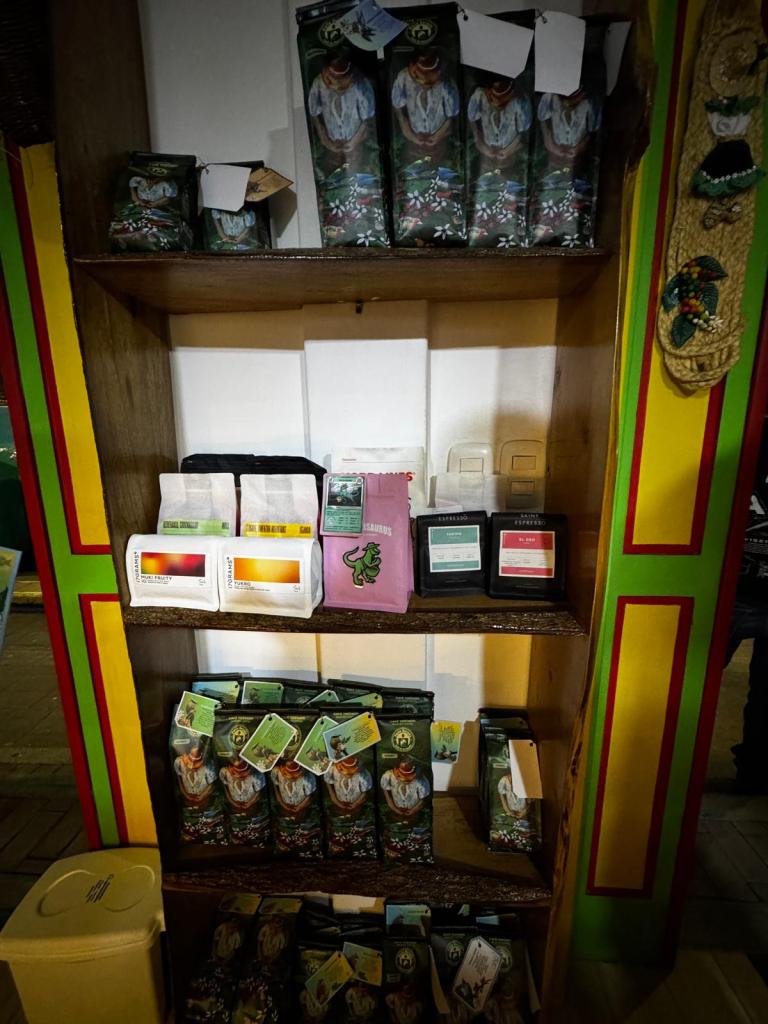
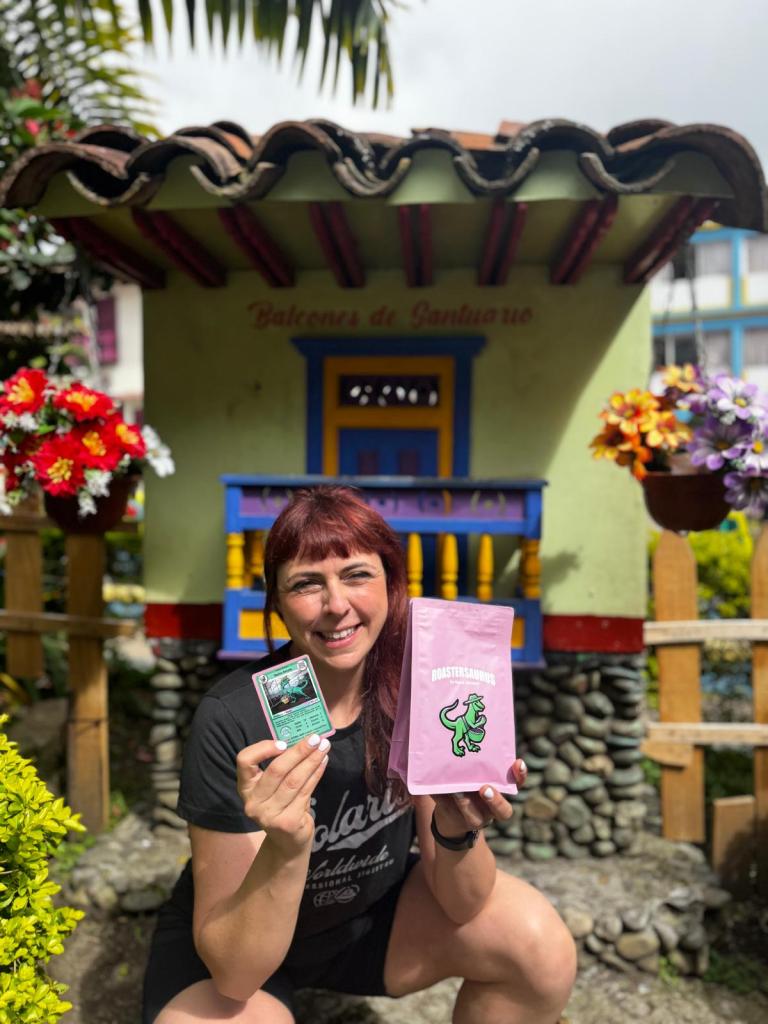
I had also been asked to bring a coffee from another country, so I brought Basha Bekele from Ethiopia, one of my Roastersaurus releases. It was brewed in the café, and local customers, producers, and producer families tasted it. There was something very special about that: an Ethiopian coffee from my world being tasted in a Colombian coffee town, by people whose own coffees were also being tasted and shared in that same space.
That is exactly the kind of exchange that makes coffee feel bigger than buying and selling. It becomes a way of expanding reference points, sharing quality, and letting people taste beyond the borders of their own production.
Building the value chain locally
The association has kept building from there. They have moved into small-lot export, helping coffees from the region reach clients in different parts of the world, especially where smaller lots and microlots need a more direct route. They have exported containers, but their strength seems to sit especially in smaller lots, the kind of coffees that can be difficult to move through more conventional structures.
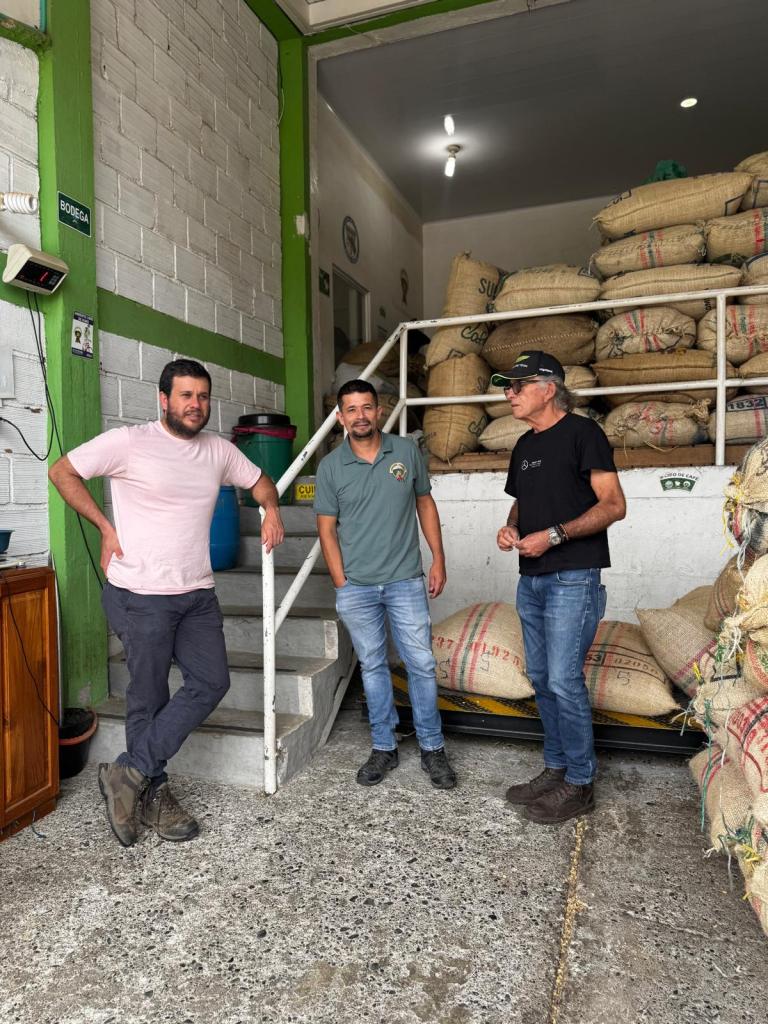
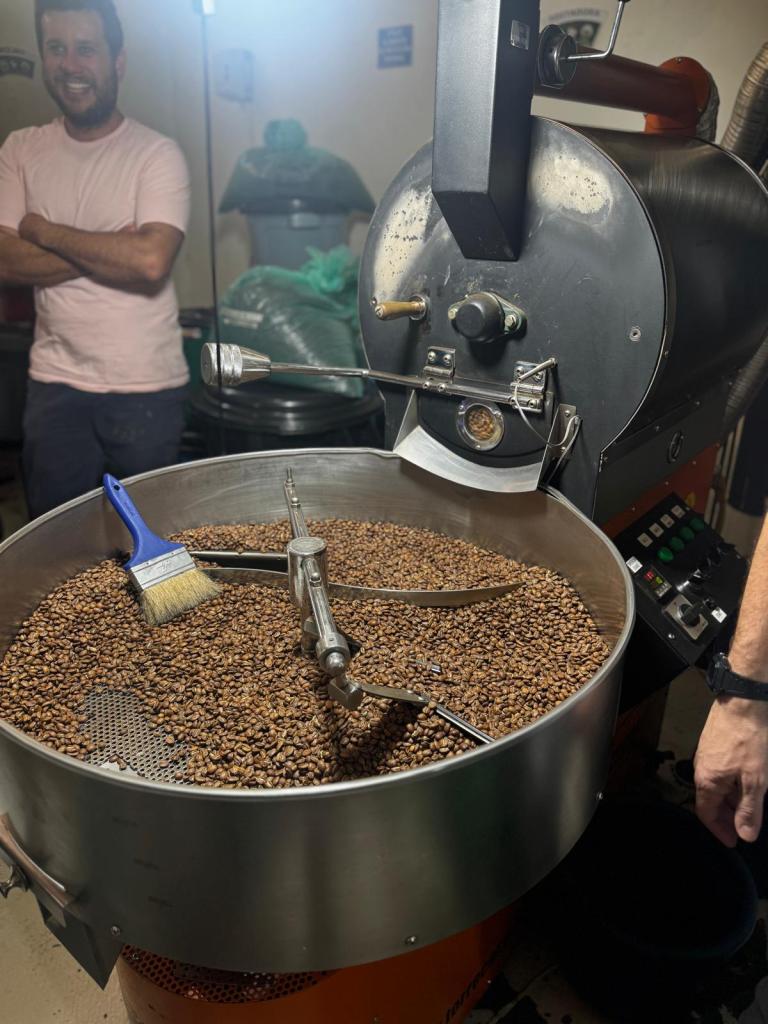
They are also investing in more infrastructure: dry milling, roasting, and a fuller processing line that can keep more of the value chain connected to Santuario. I do not want this blog to become a machinery catalogue, but it matters because it shows the direction of travel. This is not an association sitting still. It is trying to build a fuller ecosystem around coffee: collection, quality control, roasting, café culture, export, and now more infrastructure to support that growth.
That was the world around the table when I cupped Avelino’s coffees.
Back on the sample roaster
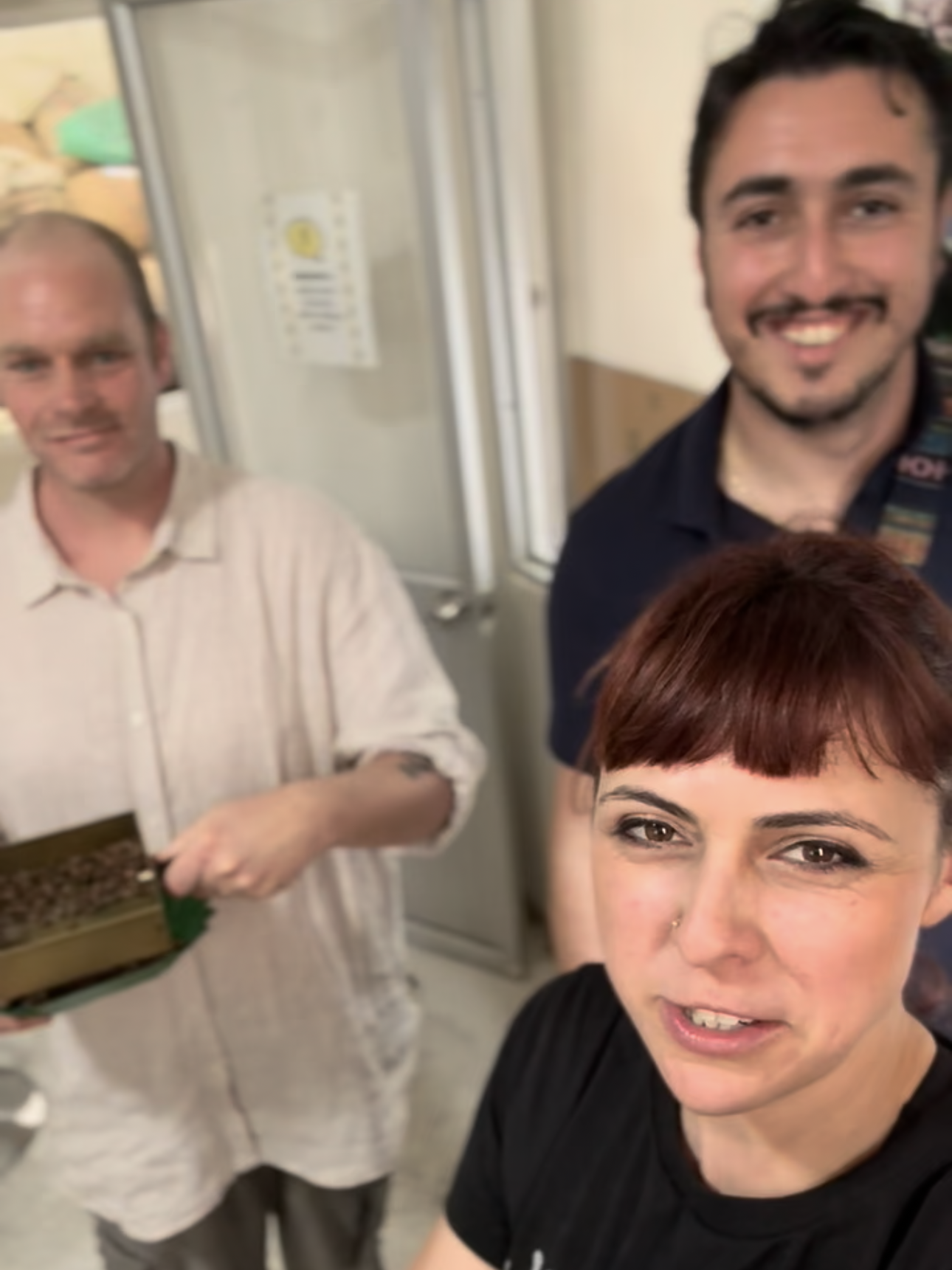
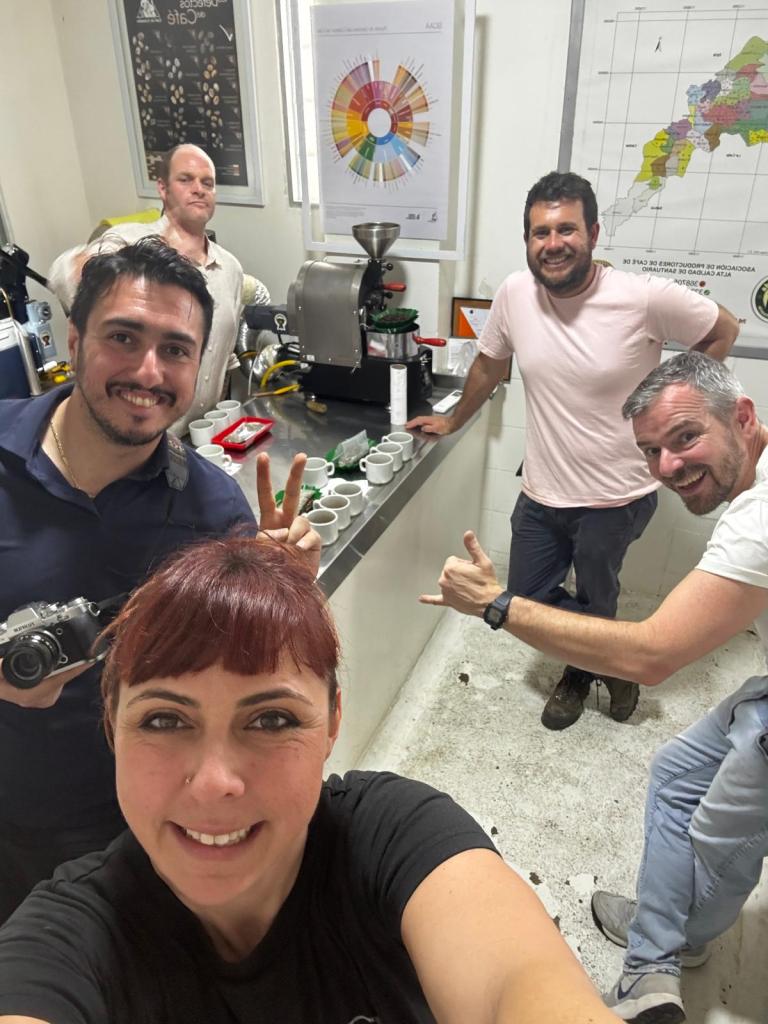
After visiting the space and seeing more of how the buying station works, we were given a group of green samples to roast and cup. This was also a little personal joy for me, because before Saint and before Roastersaurus, I spent almost five years working in green coffee. A big part of my job was tasting and evaluating coffees, and another big part was roasting those coffees so they could be assessed properly.
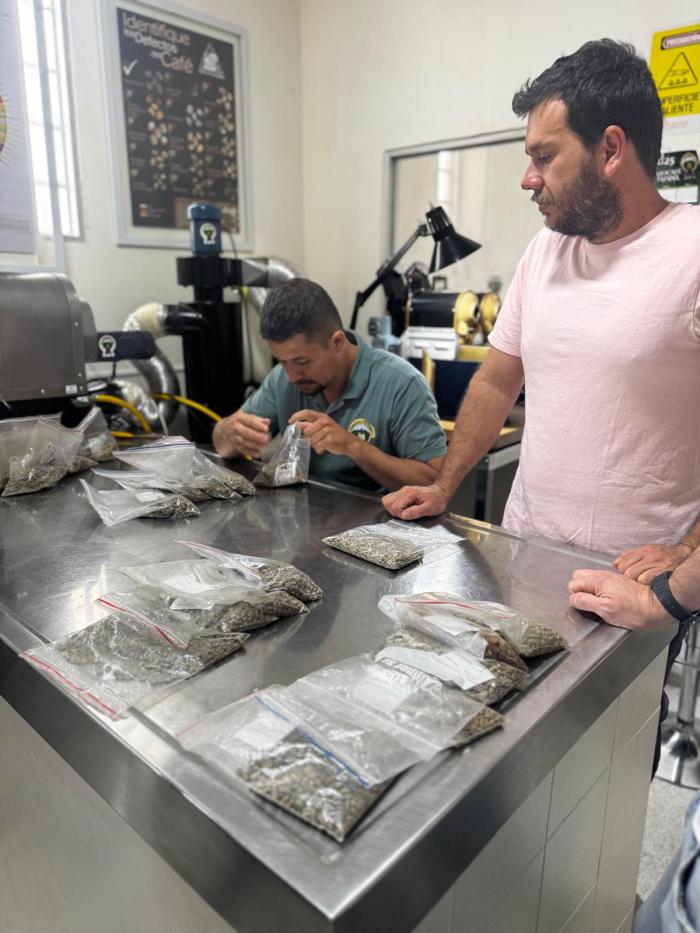
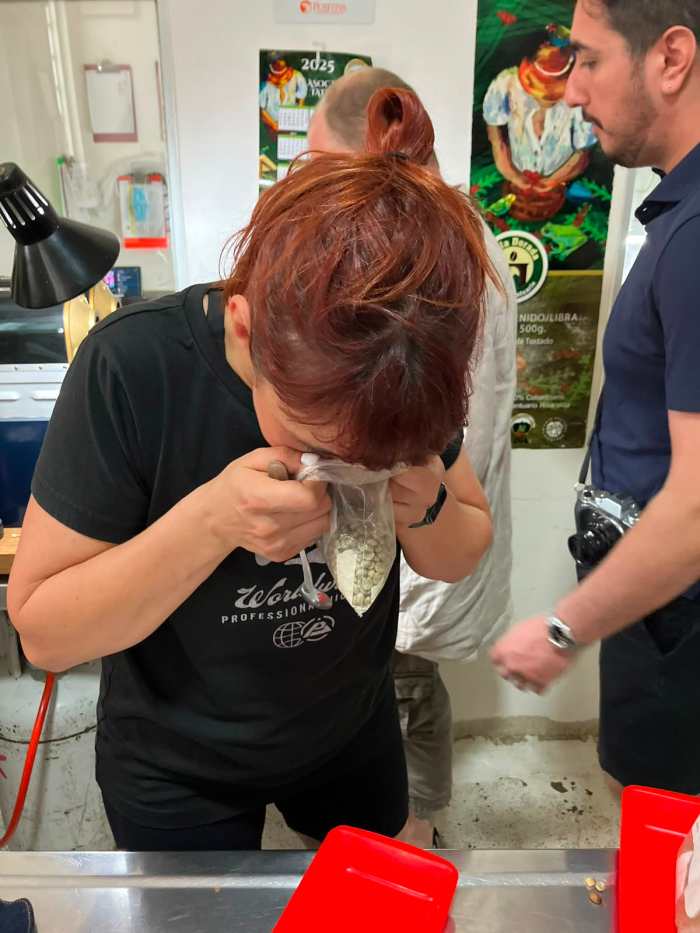
So being handed samples in Santuario and getting to sample roast again felt like stepping back into an old rhythm, but in a completely different setting.
Most of the other roasters I was with had not sample roasted on a small sample barrel roaster before, so I got to show them how I approach that style of sample roasting while we roasted through the coffees for the table. It was one of those small trip moments that probably sounds very simple from the outside, but felt genuinely fun: a bit of practical knowledge, a bit of shared curiosity, and the build-up before everyone gets their spoons into the bowls.
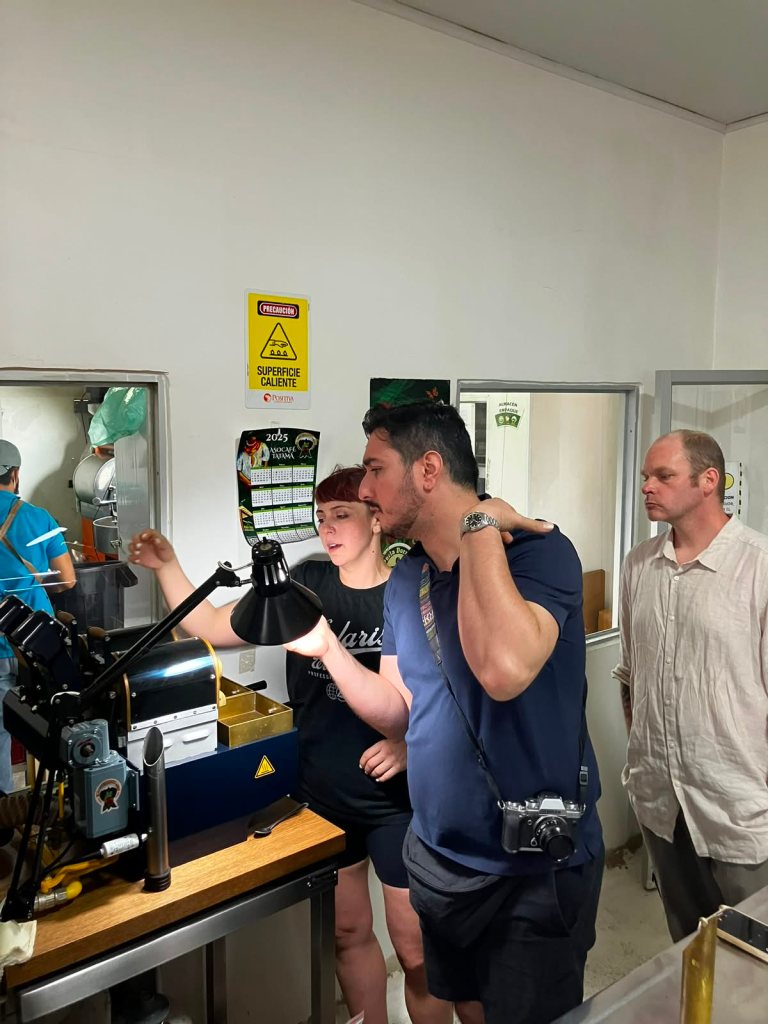
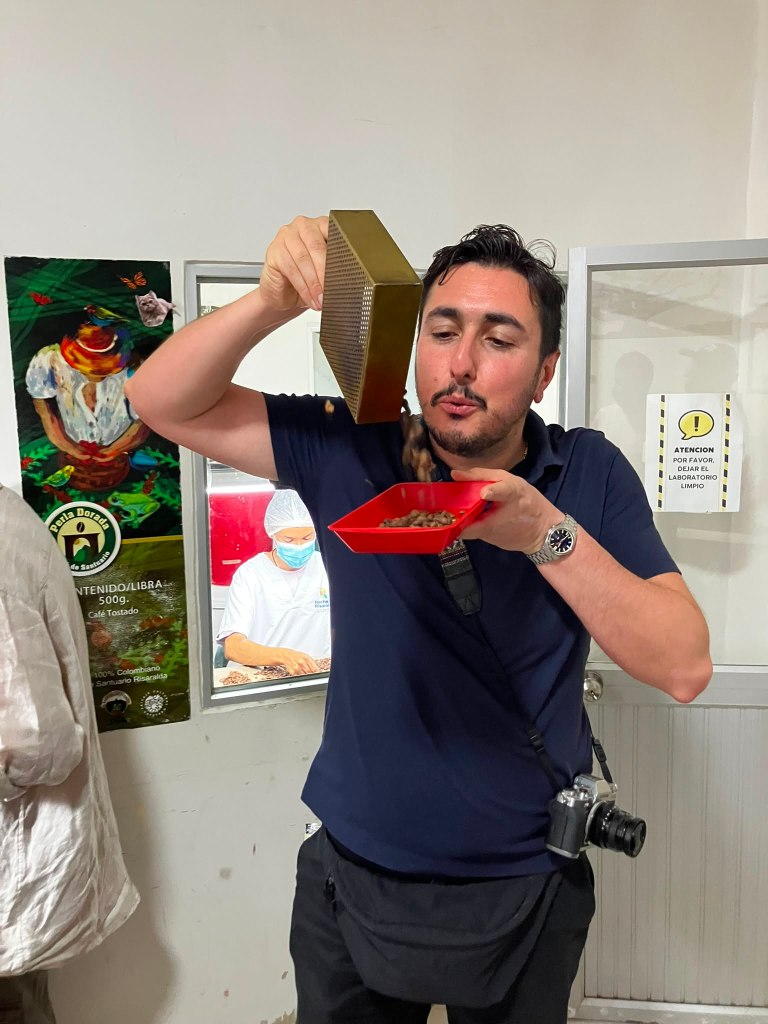
Then we cupped.
There were a lot of coffees on the table, and of course there were several that people liked. That is always the strange little social theatre of sourcing: everyone quietly finding what they love, hoping no one else has fallen in love with the exact same thing, trying to work out what is possible, what is available, and what makes sense.
For Roastersaurus, I also had another thought in mind. I did not want to split a microlot if I could avoid it. I wanted to bring back something that would be unique to my customers, something that would not simply appear in several other places at the same time. That meant I did not necessarily chase every coffee that scored well or attracted attention. I was looking for the ones that felt right, and that I could actually keep whole for this release.
Two coffees kept pulling me back.
One was bright, juicy, fresh, and full of energy. It had this red fruit brightness, a clean lift, and a kind of speed in the cup that immediately made me think Raptor. The other was still fruity, but deeper. More cola-like, more pulled into sweetness, with something darker and more grounded. That one felt like it was moving toward T-Rex.
At the time, I did not know they were connected. I only knew I wanted both.
The reveal
The reveal
When I asked about the coffees, the whole thing suddenly became much more interesting.
Both were from the same producer: Avelino Mena. They came from the same farm, through the same remonta washed process, but they did not feel the same in the cup. The difference was time.
At that moment, the cards did not exist yet. The mirror artwork did not exist yet. The Raptor and the T-Rex were only just starting to form in my head from the way the coffees moved on the table.
That is one of my favourite parts of Roastersaurus. The dinosaurs are not assigned afterwards as decoration. They have to come from the coffee. The class, the stats, the skill, the artwork, all of it needs to make sense from what is happening in the cup and from the story around it.
At that stage, all I really knew was that I had found two coffees I could not leave behind.
The rest came later, at Avelino’s farm.