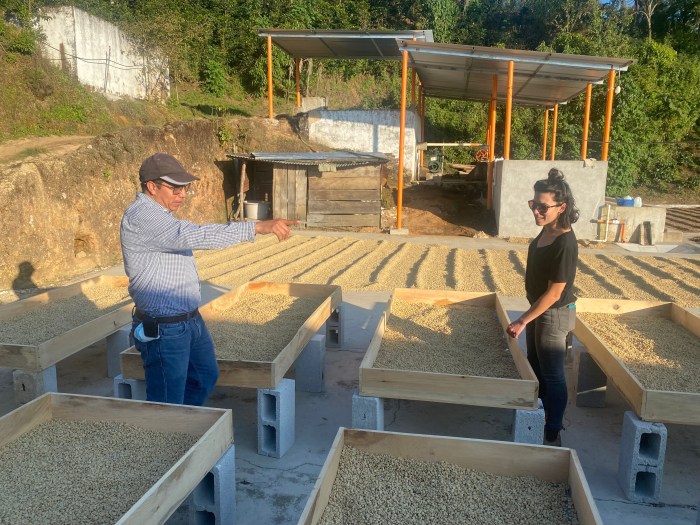
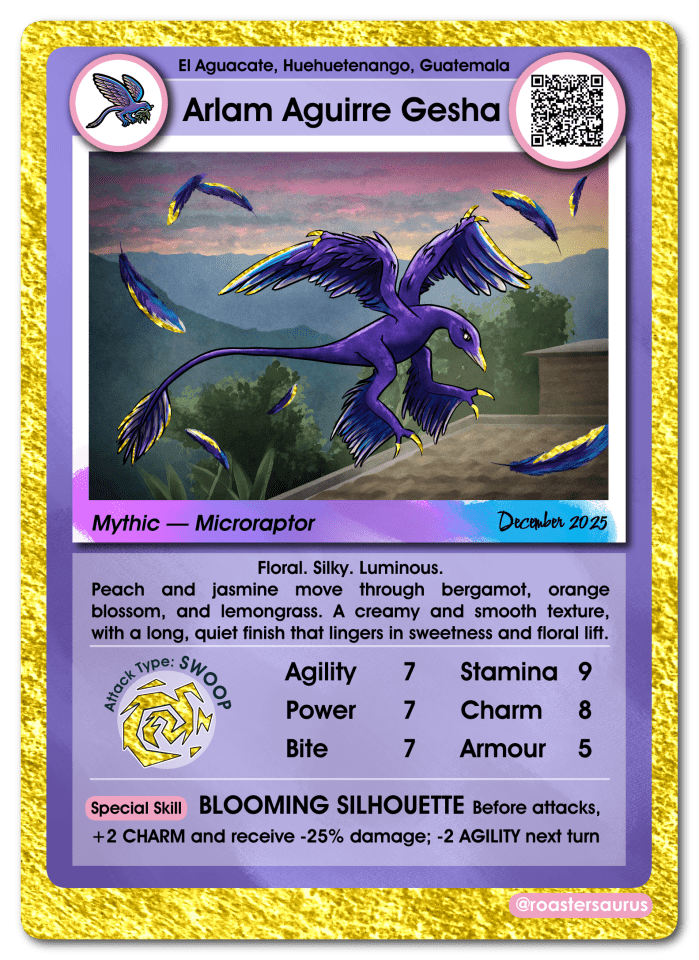
After Santuario, the road carried us into Quindío.
The Avelino coffees had already opened one part of the Colombia trip for Roastersaurus: the blind table at Santuario, the blue barrels, the small farm, and the strange little magic of two coffees from the same producer becoming two completely different creatures. Those stories are there if you want to follow the path back, but this one begins where that chapter leaves us, with the trip still moving and the next coffee starting to gather itself long before I knew what card it would become.
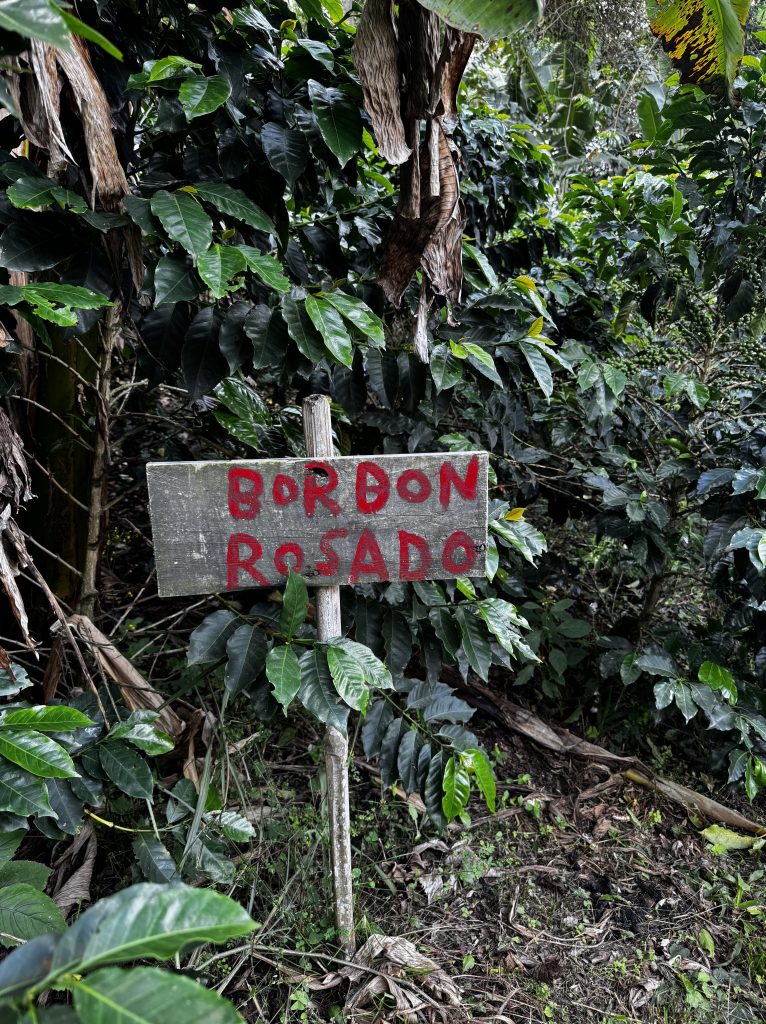
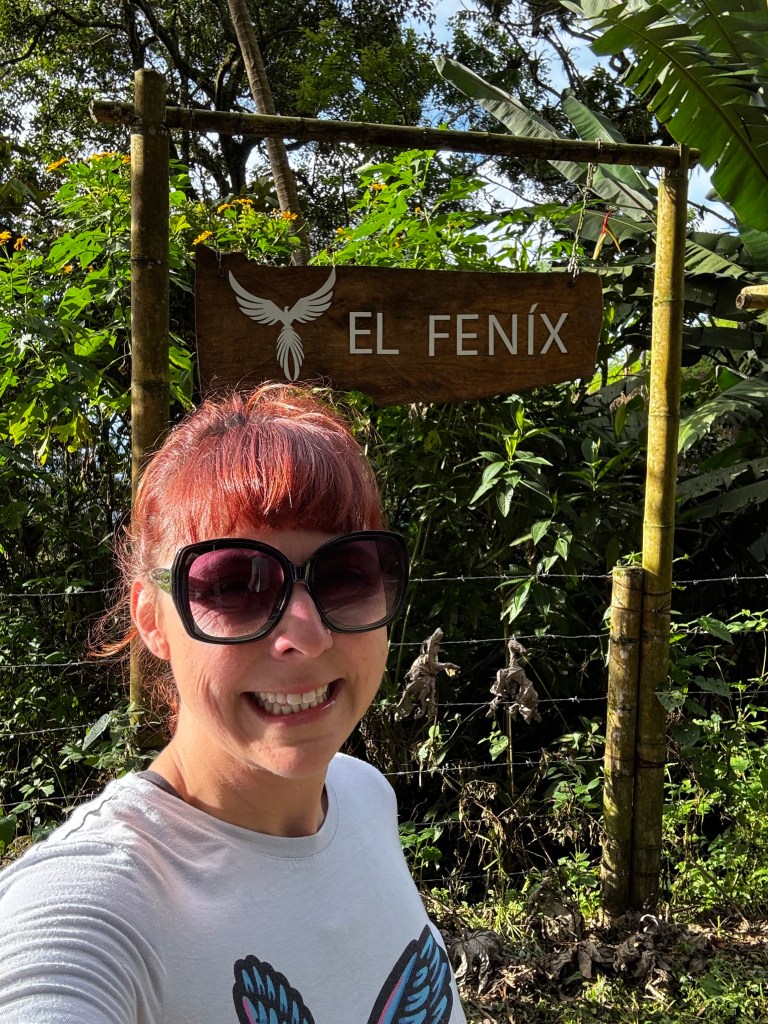
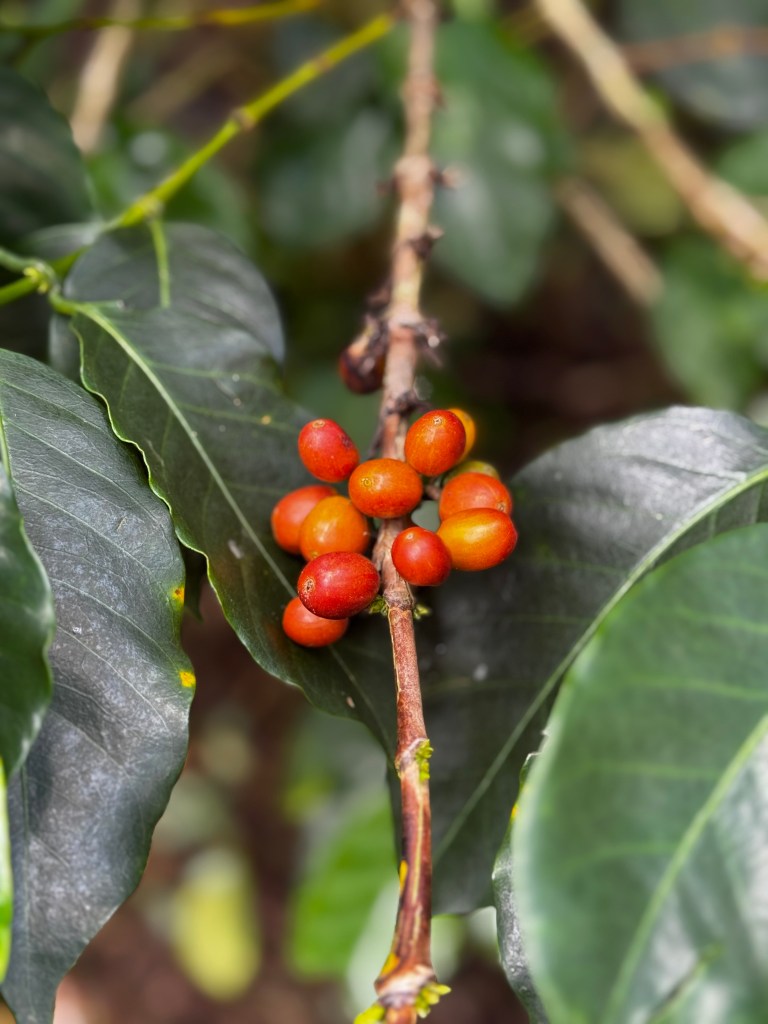
At that point, Quindío meant El Fénix to me, or at least that was the name I had in my head before I arrived. I knew it through Raw Material Colombia, through coffees that had crossed cupping tables, and through Mat North talking about the place, the people, and especially Miguel Fajardo Mendoza. There is a difference between hearing a name often enough that it becomes familiar and finally arriving somewhere with your own body, seeing the slope of it, the texture of it, the way people move through it, and realising that the name was only ever the outside edge of the thing.
El Fénix holds a lot of coffee threads at once: rare varieties, producer relationships, training, processing, experimentation, and Raw Material’s wider work in Colombia around making quality more possible and more valuable. Being there made that feel less like a concept and more like a working place, full of practical care and constant conversation. It also meant finally meeting Miguel properly, not just as a name attached to coffees and projects, but as someone whose attention seemed to sit everywhere at once: with the programme, with the producers, with the processing, with the land, and with the people moving through it.
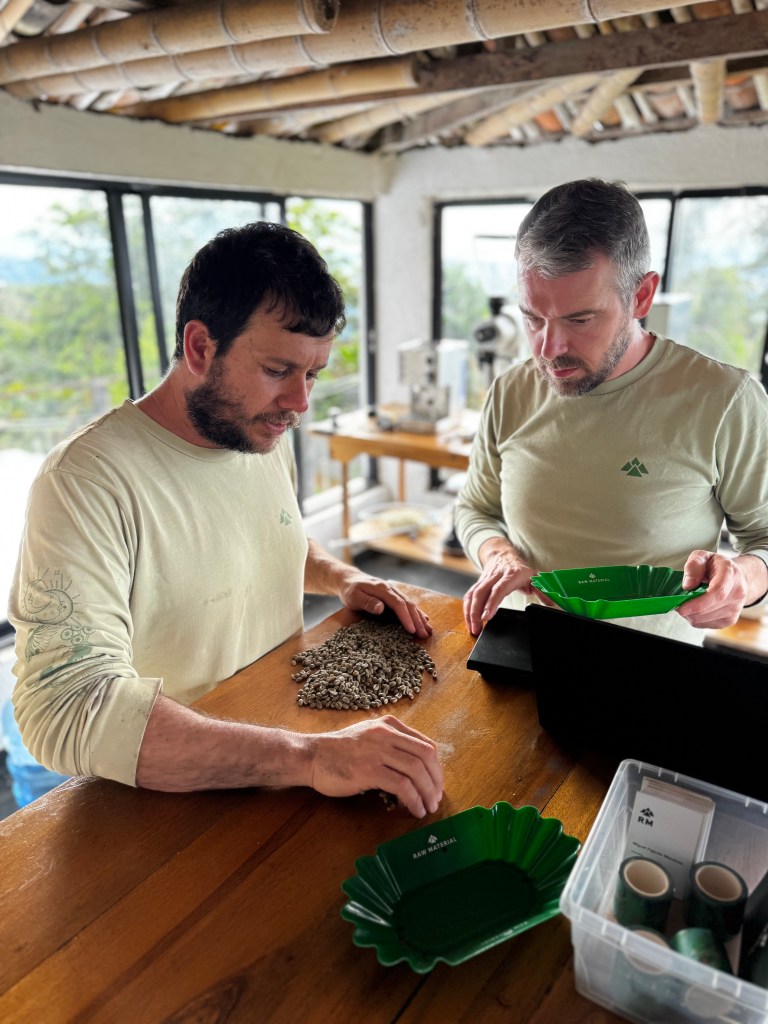
That matters for Guadalupe’s Pink Bourbon because the coffee is connected to El Fénix, but it is not an El Fénix coffee. El Fénix is part of the route into the story: it is where I was staying for this part of the trip, where Miguel works in and around the Raw Material Colombia world, and where the Pink Bourbon seedlings for this lot came from. But the coffee itself grows higher up, at Pedacito de Cielo, Miguel and Andrea’s own home farm above it.
Before we went up there, though, Quindío gave me another piece of the story, and it came through a school.
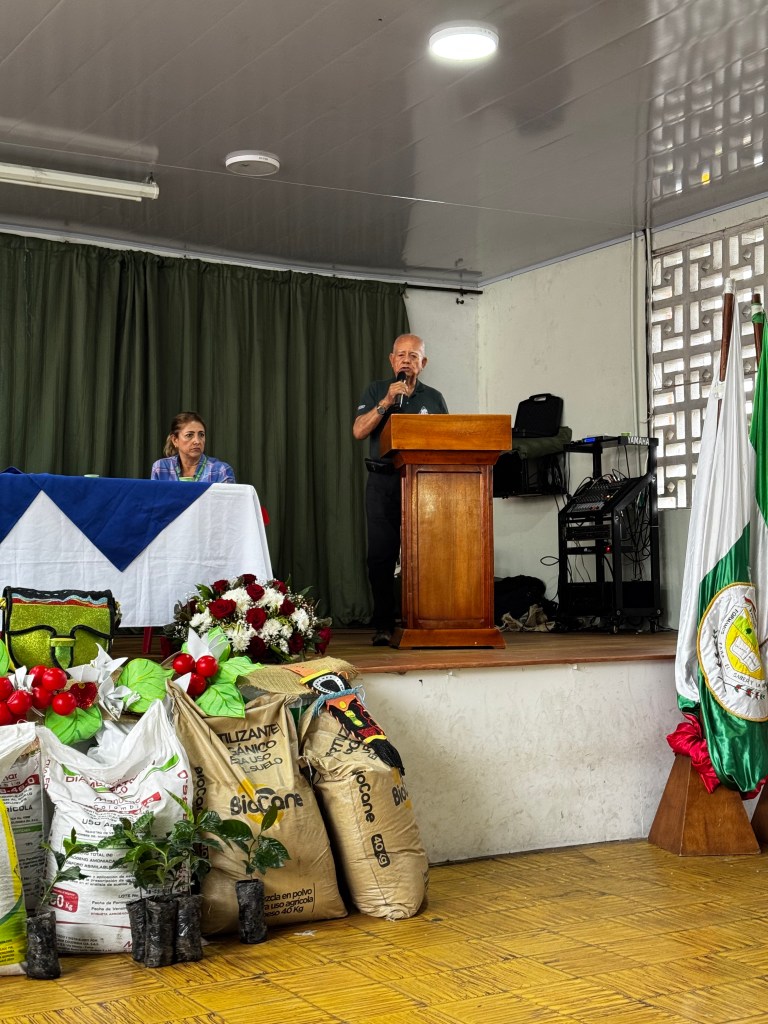
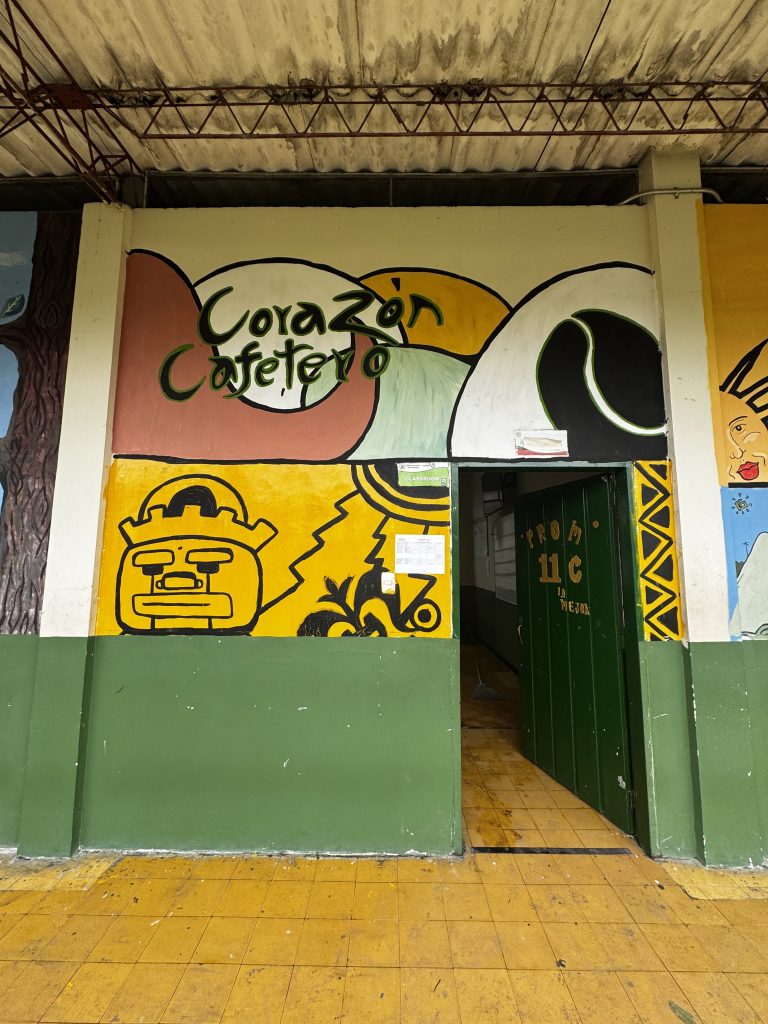
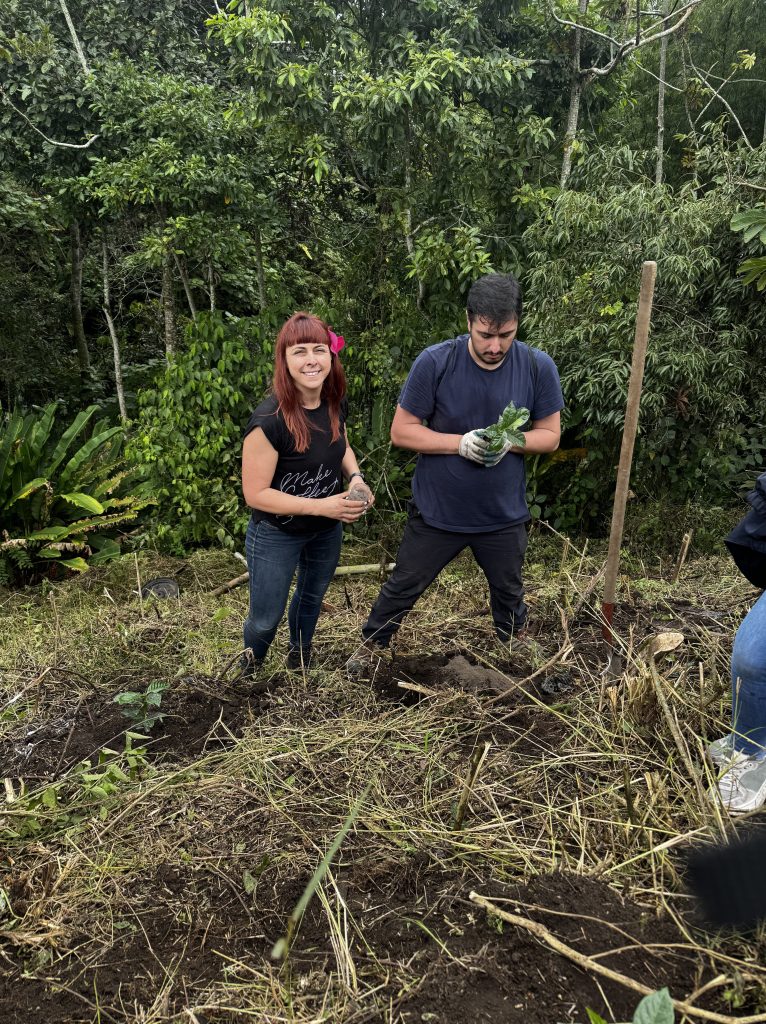
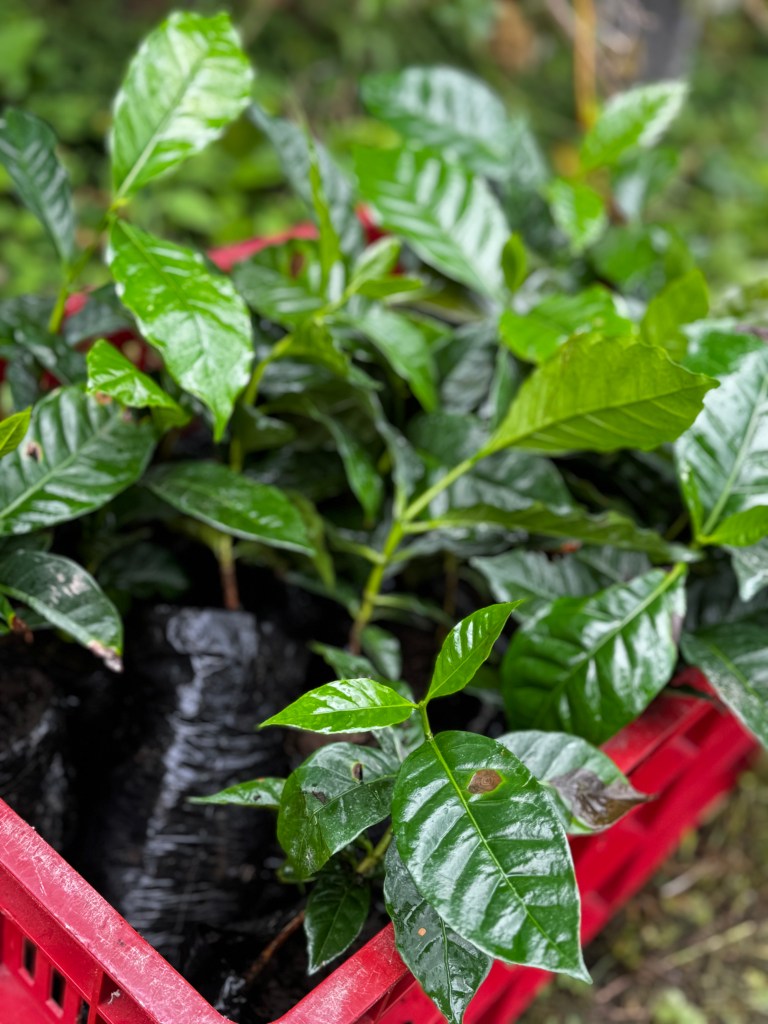
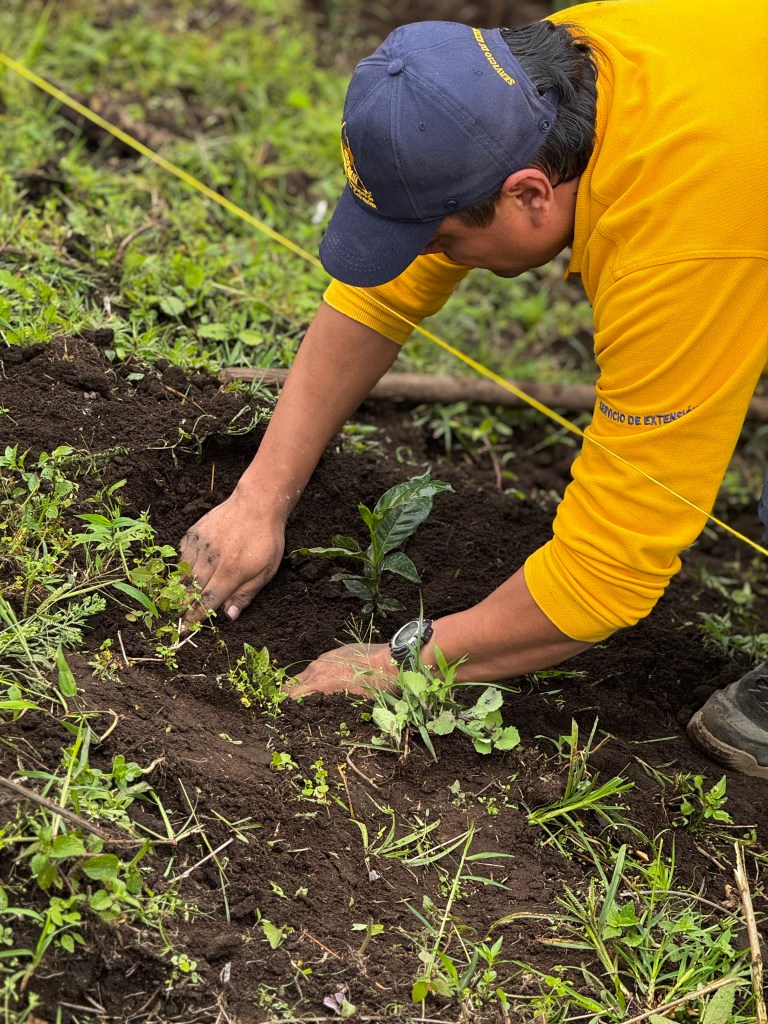
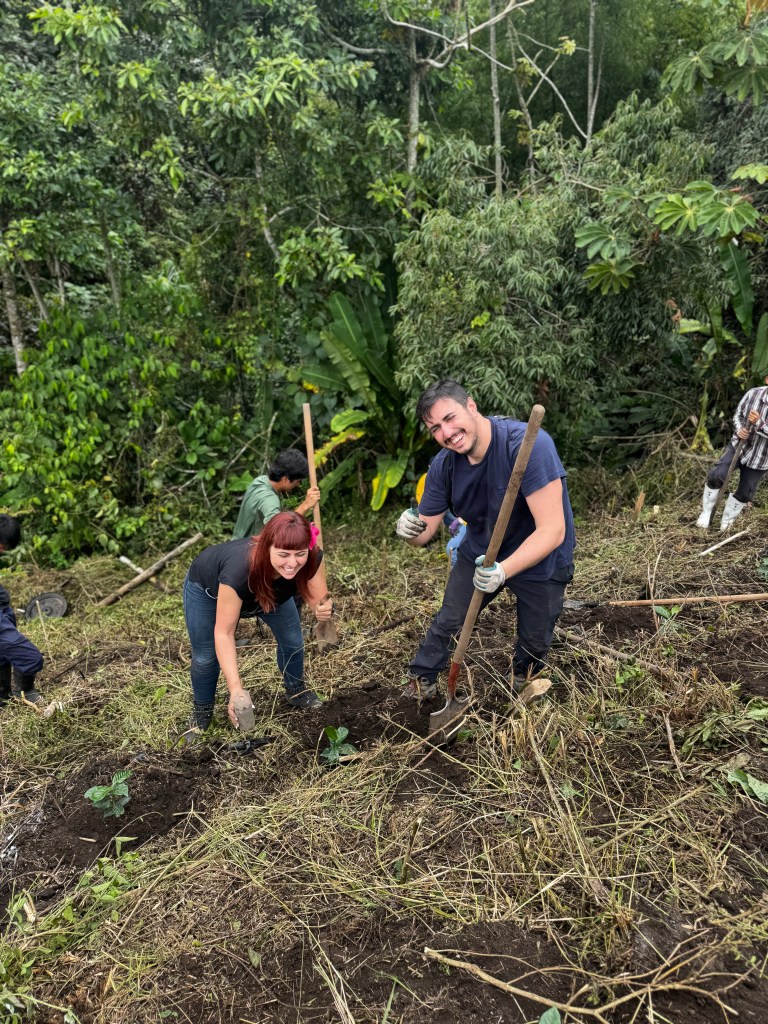
Miguel had been invited to a planting at Institución Educativa Baudilio Montoya, in vereda La Bella, Calarcá, where the school and the Comité de Cafeteros were beginning a project called Integración Generacional Quindío-Calarcá. The idea was not just to tell young people that coffee mattered, but to let them work through the reality of it: seedlings in the ground, technical support, agronomy, cultivation, and eventually the possibility of taking coffee all the way through to commercialisation. The Comité de Cafeteros had donated 1,000 coffee seedlings, along with guamo and other materials, and the first planting began with 200 of those seedlings going into the soil.
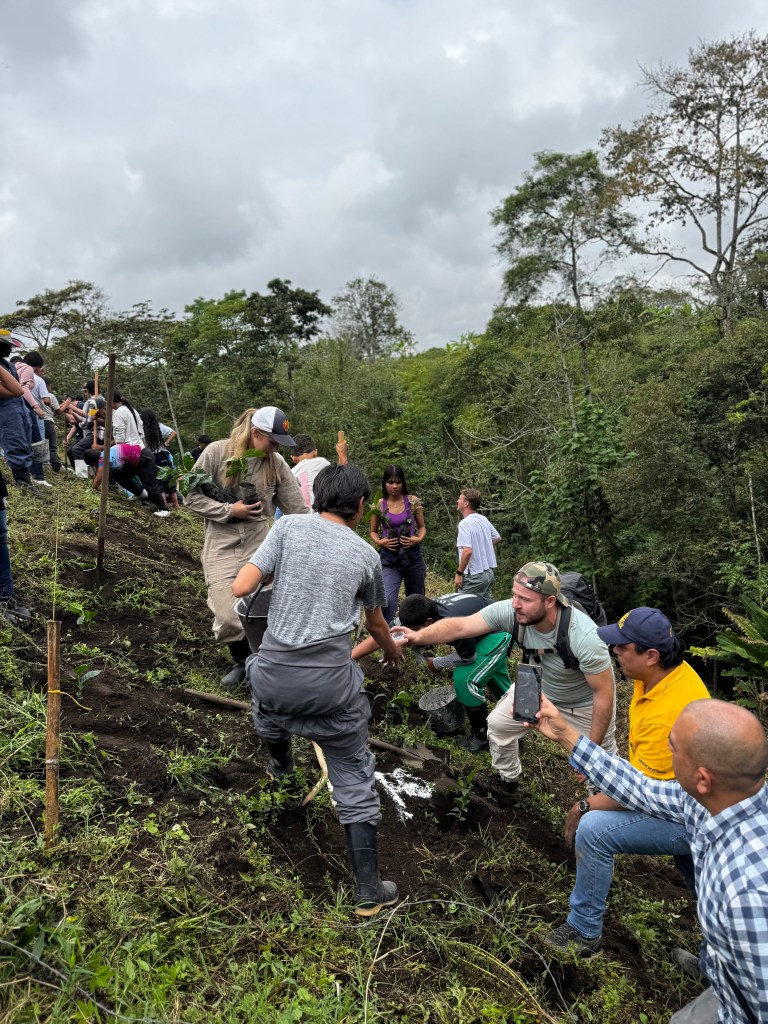
We were there for that beginning, and a few of us spoke to the students gathered in the assembly hall: Miguel, Mat, and me. The students were around fifteen or sixteen, old enough to understand that coffee is not just a romantic landscape in the distance, but work, weather, money, family, land, risk, and choice. I spoke in Spanish as a Mexican roaster in Colombia, from the buying side of the chain, and told them plainly that there is a future in coffee; that we want to buy good coffee from young producers who choose to build it; that the work happening on farms in Quindío can reach cups, shops, and customers far from where the trees are planted.
Specialty coffee talks about the future all the time in abstract terms: prices, varieties, climate, quality, market access, sustainability. All of that matters, of course it does. But in that assembly hall, the future of coffee was not abstract. It was sitting right in front of us. The question in that room was whether coffee would feel like a life those students could build with, or something they would need to move away from, and a young person cannot choose a future they have never seen made possible. That was the point of being there: to make the route visible from seedling to market, from a school project in Calarcá to people on the other side of the world who care where their coffee comes from.
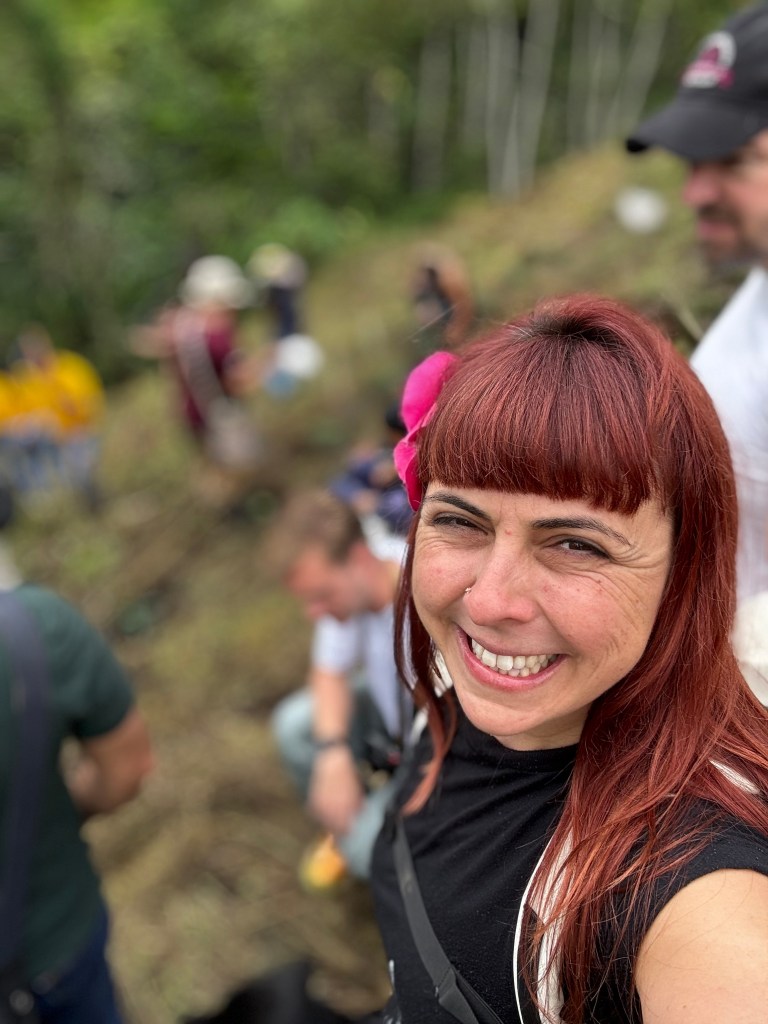
Then we planted trees, which can sound almost too neat as symbolism until you are actually doing it. Then it is simply soil, hands, young plants, and a group of people putting something small into the ground because they believe it might become something.
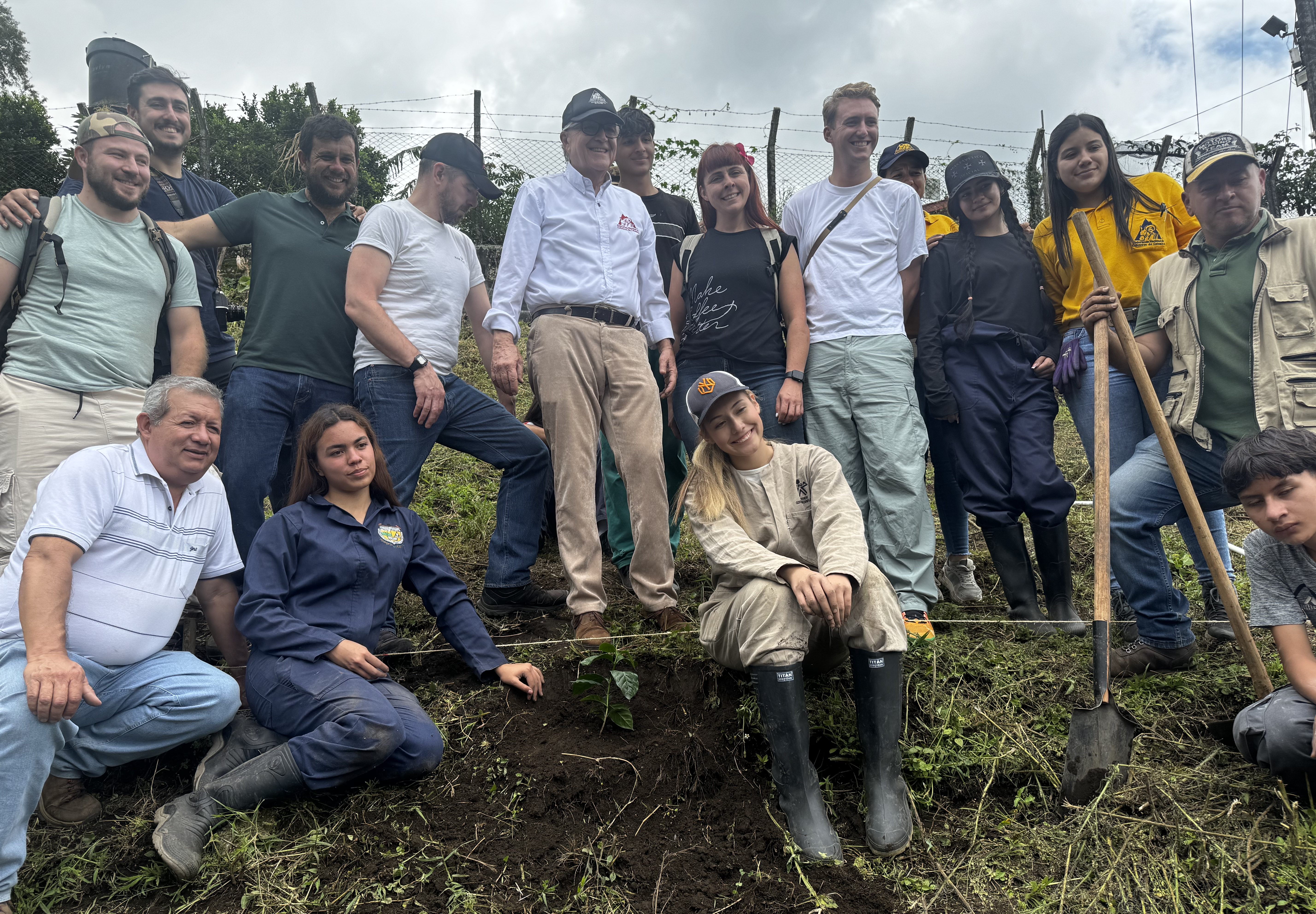
There were other pieces of the chain around that part of the trip as well. We spent time looking at dry milling, seeing more of what happens after coffee leaves the farm and before it becomes something I can roast back in London. That part of the chain deserves its own attention, but even as a glimpse it added to the feeling of Quindío as a place where different parts of coffee were sitting very close together: farming, processing, training, milling, exporting, learning, and then, eventually, a cup.
Through all of this, Miguel kept coming into clearer focus.
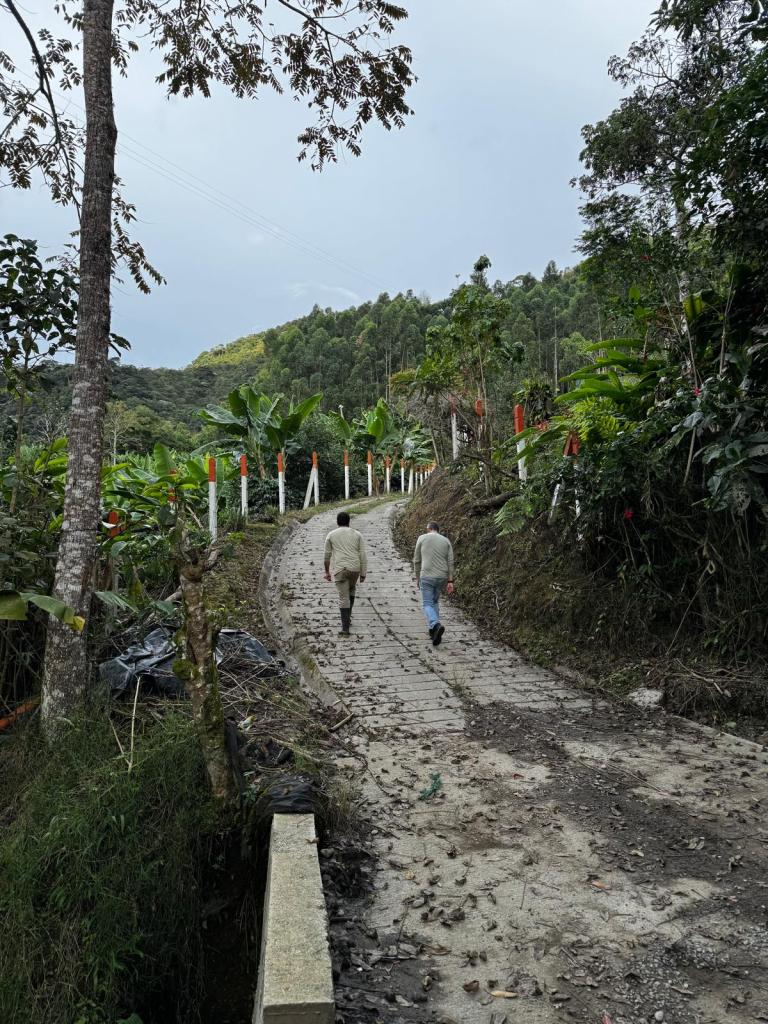
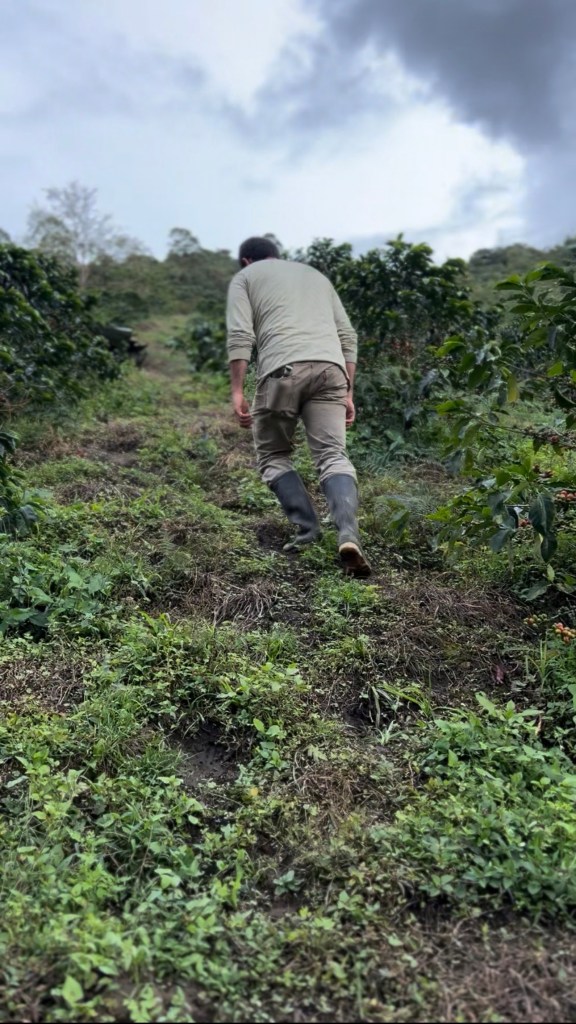
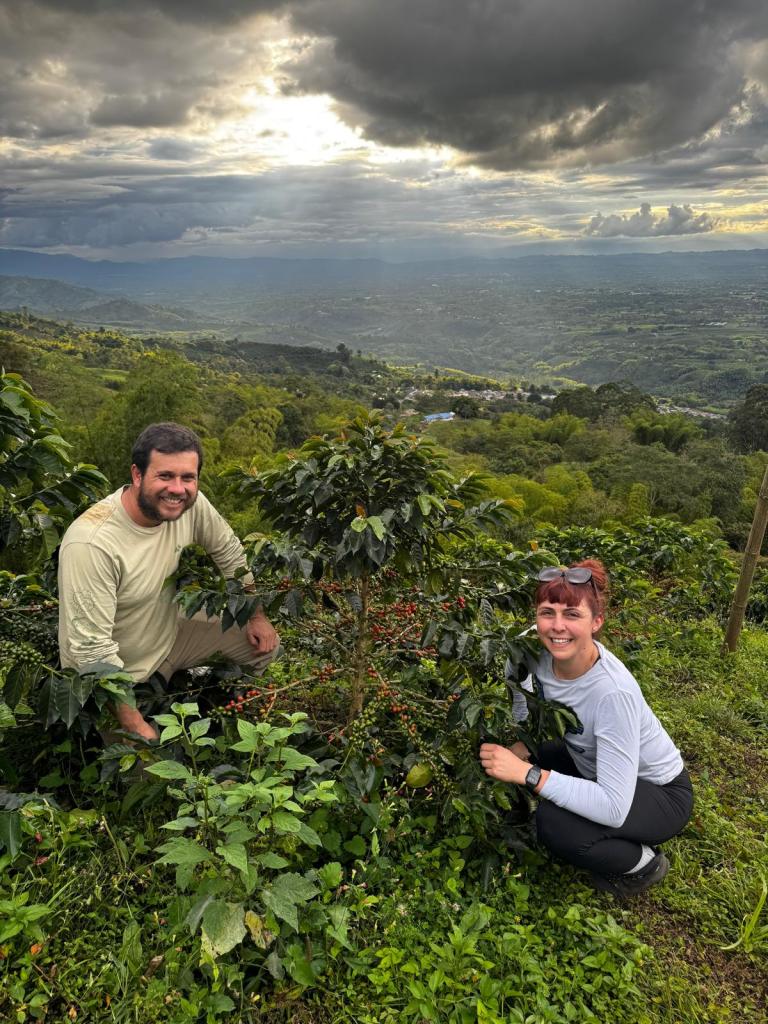
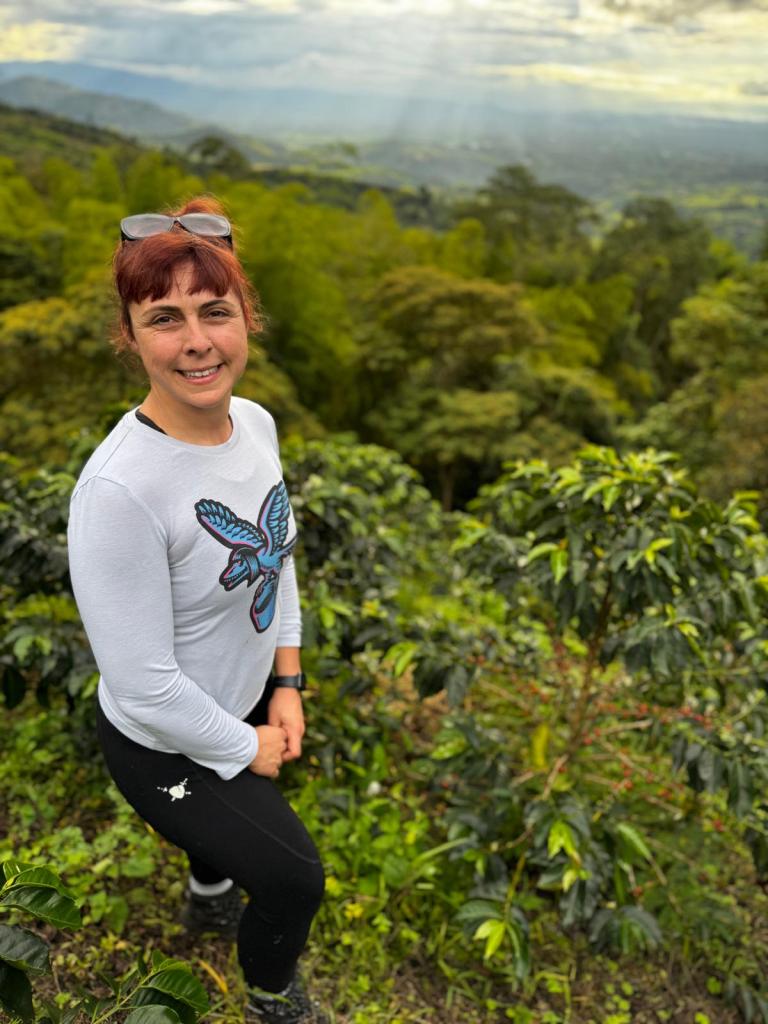
I had spent time with him at El Fénix, but the story changed when we went up toward Pedacito de Cielo. The farm sits above El Fénix, and the videos from that day make me laugh because you can hear us breathing hard. It was not a polished little origin-content moment. It was slope and altitude and legs doing the work, and by the time the view opened out, the name made sense.
Pedacito de Cielo means piece of sky.
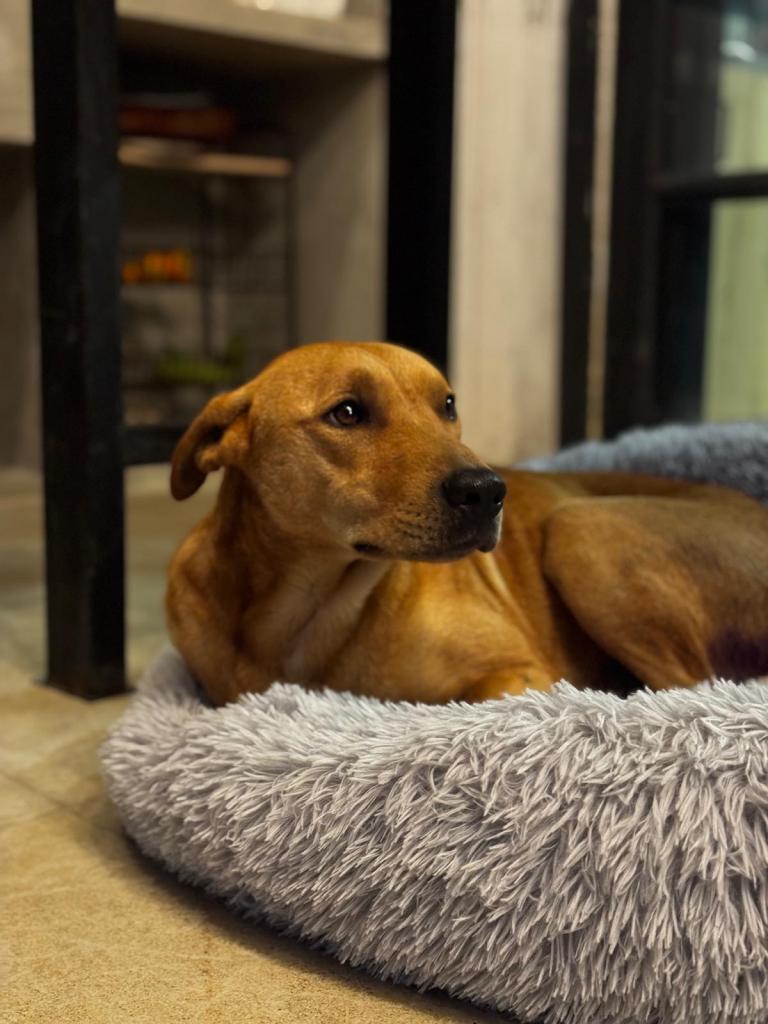
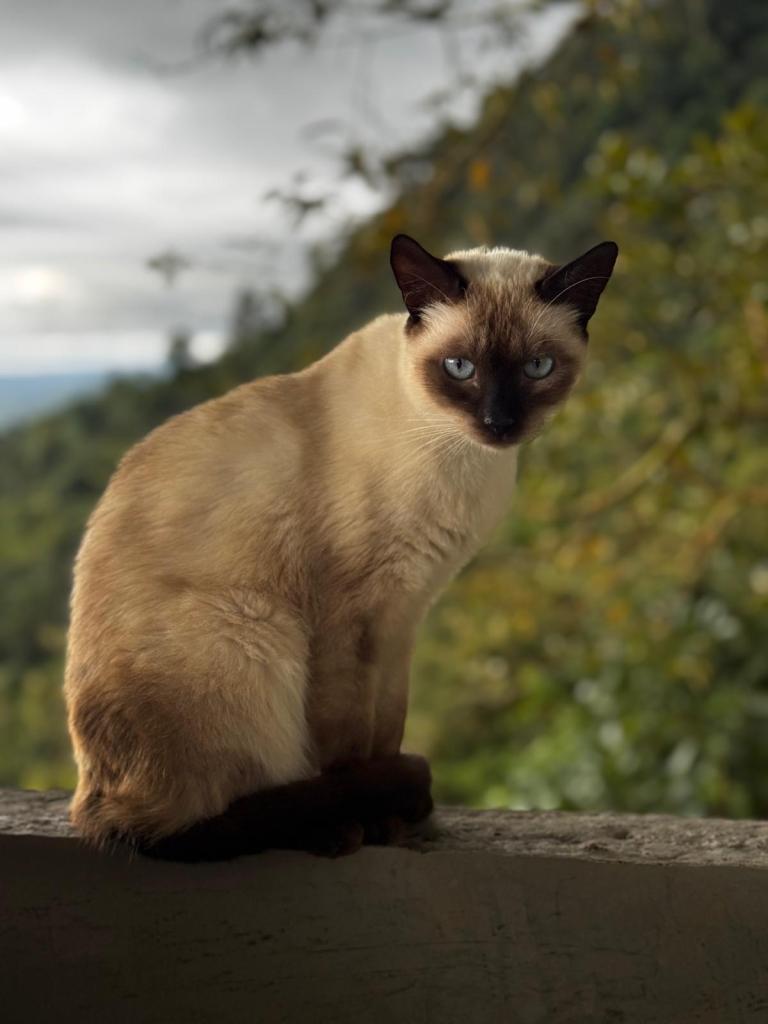
It really does feel like that. The farm sits high on the hillside above everything, and Miguel’s house is there with coffee planted around it. We went to spend time with the family, not just to look at a lot. I met Andrea, Guadalupe, the cats, the dog. We sat together, had a little bottle of wine with the group, and it felt less like being shown a production site and more like being invited into someone’s home.
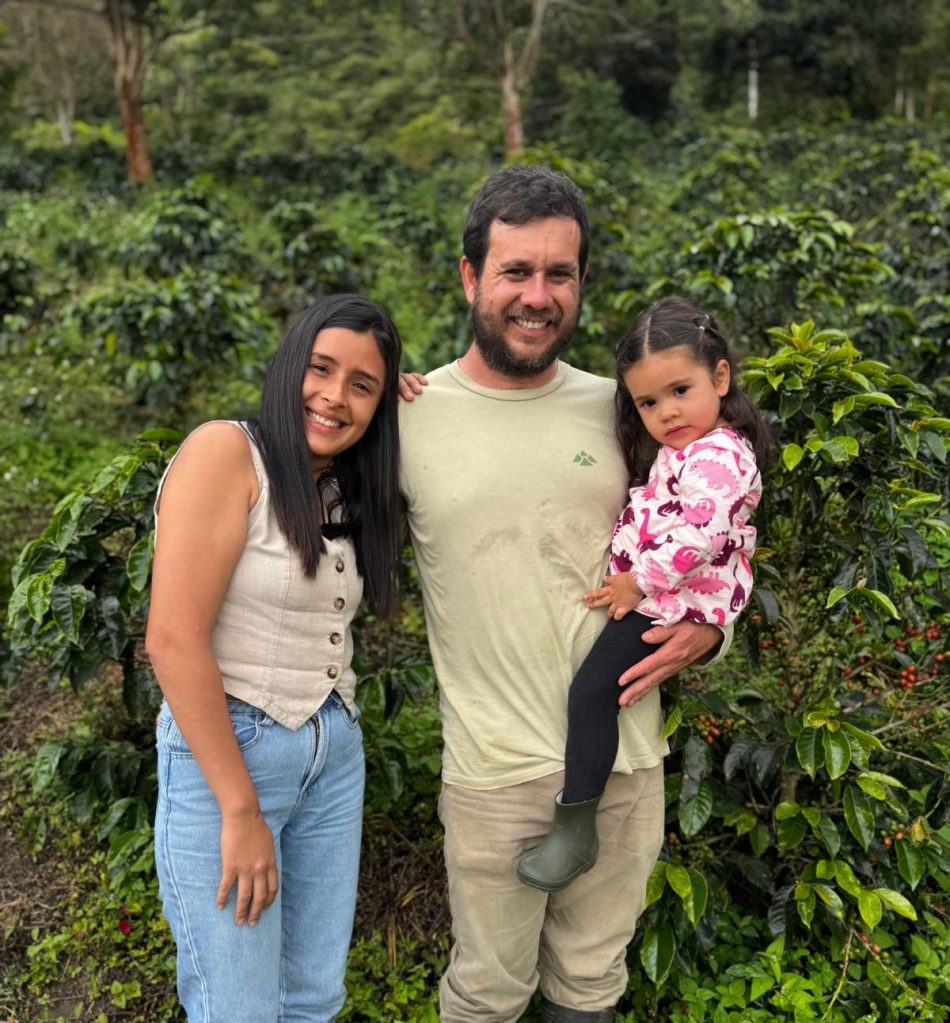
Guadalupe was wearing dinosaur clothes when I visited, which is the kind of detail Roastersaurus cannot be trusted to behave normally around, but even before the card existed, the real story was already there. Miguel and Andrea planted 4,000 Pink Bourbon trees at Pedacito de Cielo in August 2023, at the same time their daughter Guadalupe was born. They call her Guada for short. The seedlings came from El Fénix, selected because Miguel had seen strong productivity and very good taste, and then planted around the family home.
That is why the school visit stayed attached to this coffee in my mind. Miguel spoke about wanting coffee to be part of Guadalupe’s future, not as a burden passed down because that is simply what families do, but as possibility: a beautiful farm, a long-lasting family business, a crop valued for its quality, and a way of being connected to people all over the world who drink what you grow and care where it came from.
By then, the wider El Fénix story had narrowed into Miguel’s own. This was no longer only about a project, a region, or the systems around coffee. It was about a home on a hillside, coffee planted around it, and Pink Bourbon trees that had gone into the ground the year his daughter was born.
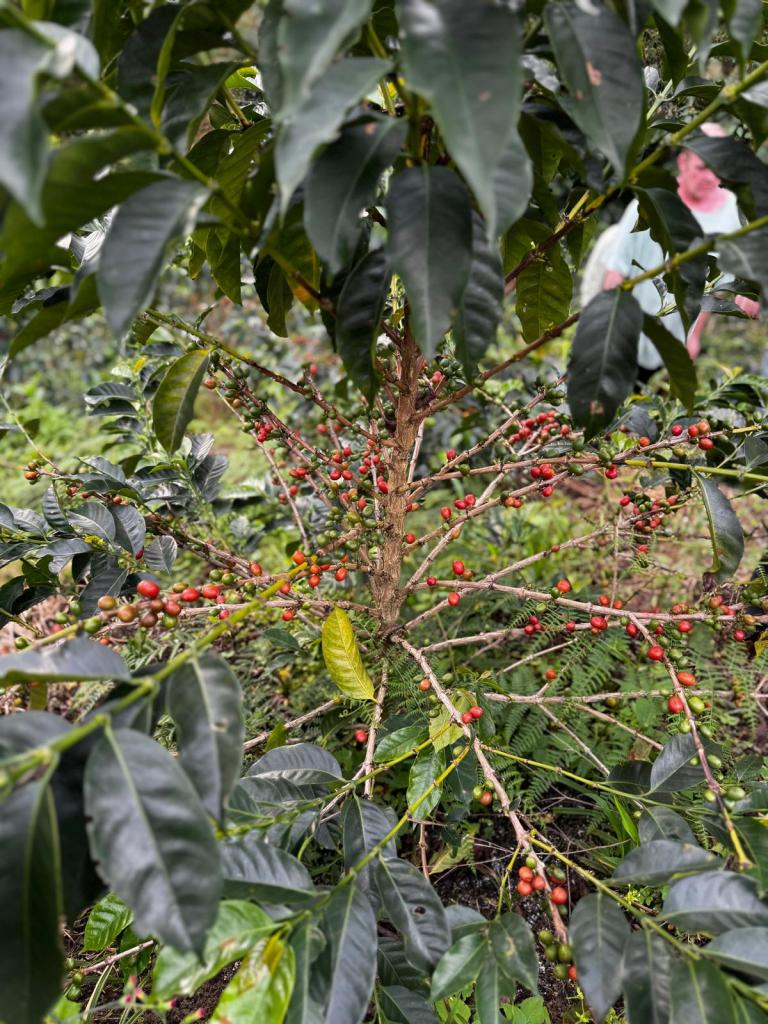
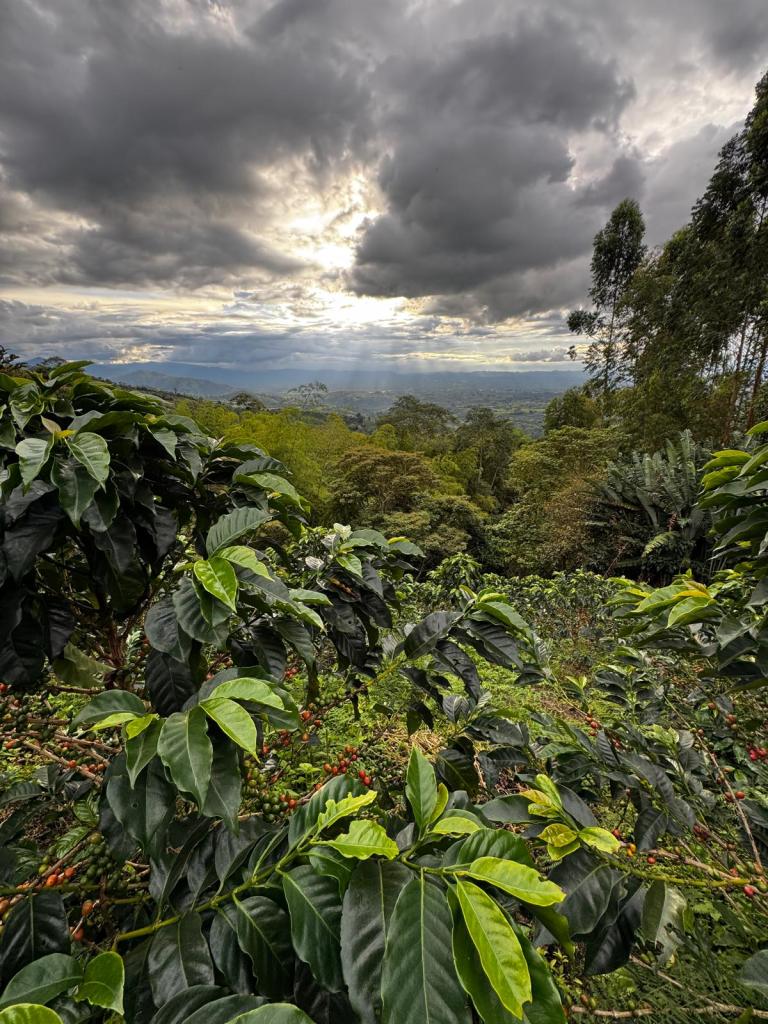
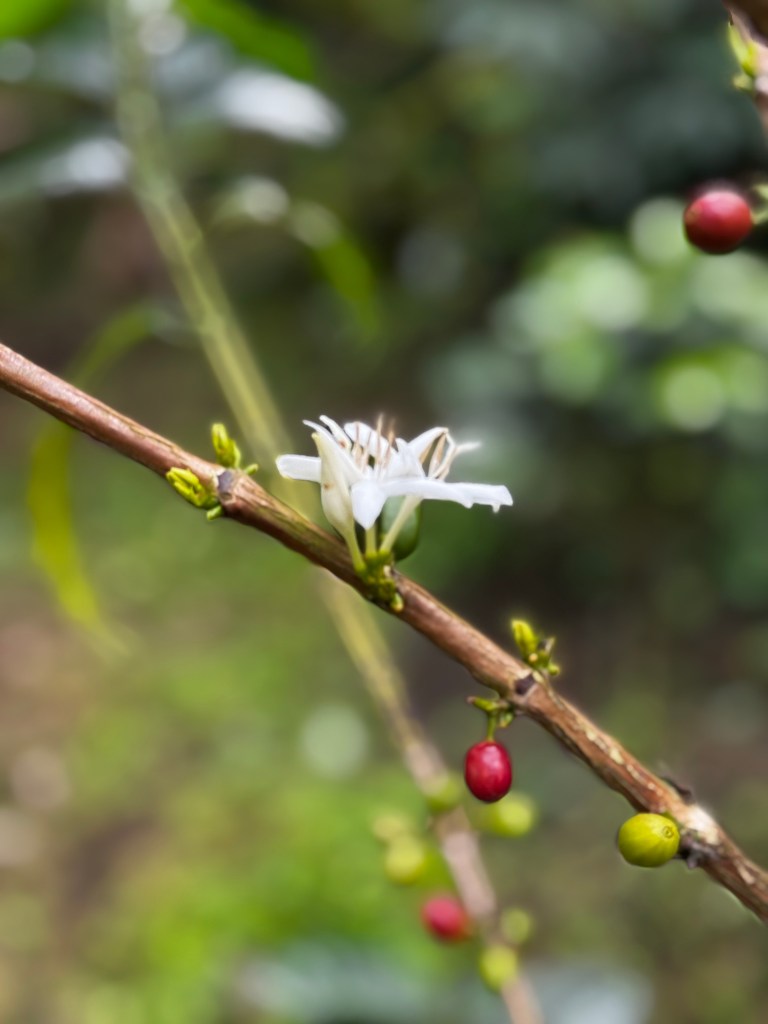
Guadalupe’s Pink Bourbon is a traditional washed coffee. Miguel processed it simply, without long or extended fermentation, because he wanted to understand the variety and the terroir first. The first main harvest is expected in October 2026, so this release is small by nature: a pre-main-harvest picking, a first taste of what those young trees are beginning to offer.
In the cup, it moves through red and pink fruit, soft florals, stone fruit, and a cool cucumber-melon finish. Pimm’s. Garden. Party. But underneath that brightness is the part that made the whole thing feel so Roastersaurus: first fruits, for Guada.
I did not know, standing there, that Guadalupe would become a Raptor. I only knew that the coffee was beginning somewhere very personal, in a place that already felt full of story, and that up at Pedacito de Cielo, before the main harvest had even arrived, its first fruits were already starting to speak.
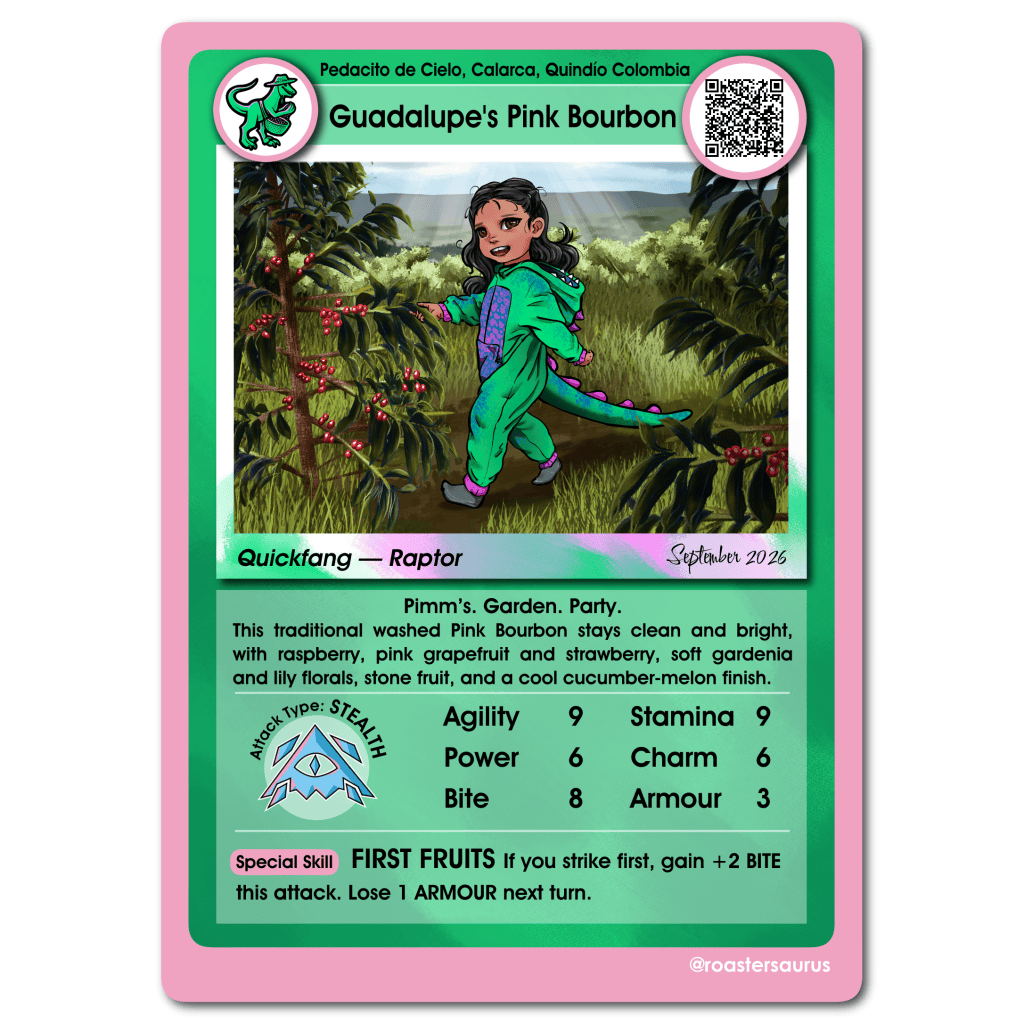
The lore page goes deeper into the card, the artwork, the name, the river of love, and how this coffee became a Quickfang Raptor. For now, I wanted to place it back on the road where I found it: after Santuario, into Quindío, through El Fénix, and up to a little piece of sky.
Guadalupe’s Pink Bourbon is now live, in very small quantities, with each 225g pack including the illustrated Roastersaurus Raptor card.