Finca El Guadual, remonta washed coffee, and two timelines from one small farm
On the drive out from Santuario towards Vereda La Linda, the road wound away from town and back into the green, and somewhere along it the coffees began to feel less like bowls on a table and more like part of a place.
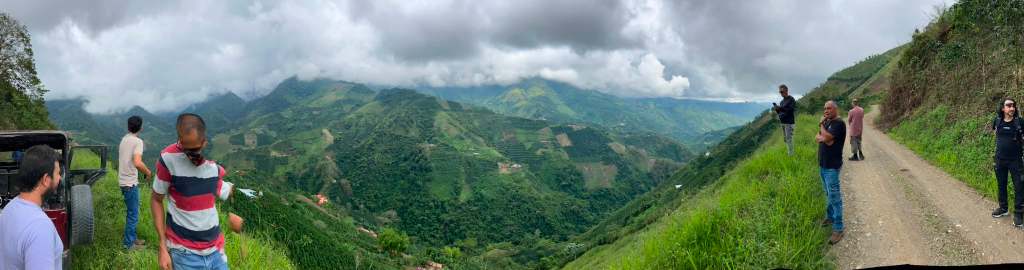
By then, I had already met Avelino, but only briefly, back in the cupping lab the day before. We had spent the day moving between tables, breaking for food, drifting back in to taste a little more, and at some point, somewhere in the middle or towards the end of all that, he came in. I think he had been in town dropping off coffee, which would make sense. It is a long drive in from La Linda, so a trip into Santuario is never just one thing. Someone introduced him and said, almost casually, that this was Avelino, the producer behind the coffees I had kept returning to.
I asked a little about them and got the simplest version first: same producer, same farm, same process, but one had fermented longer than the other. We did not go much further than that. Everyone was tired, I was a bit shy, and we were going to see his farm the next day anyway.
So when we headed out the following morning, I was carrying those coffees with me. I already knew how they had felt in the cup, one bright and lifted, the other deeper and more cola-like, and I already knew they had come from the same hands. What I did not know yet was what kind of place had made them, or how that difference had been shaped.
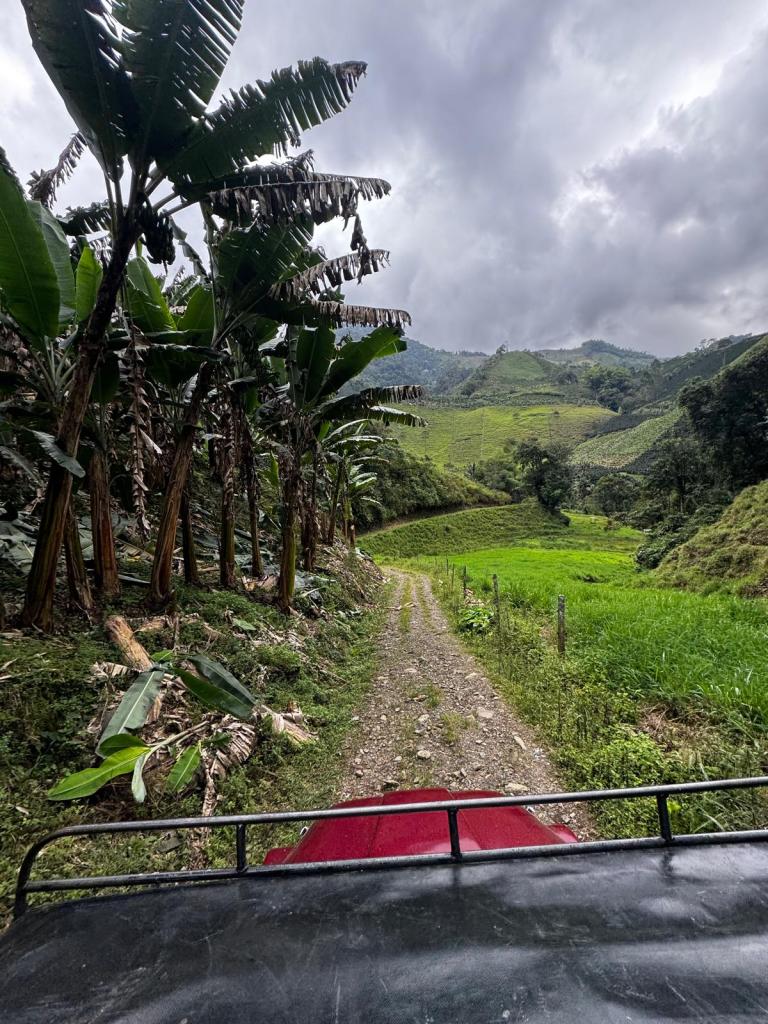
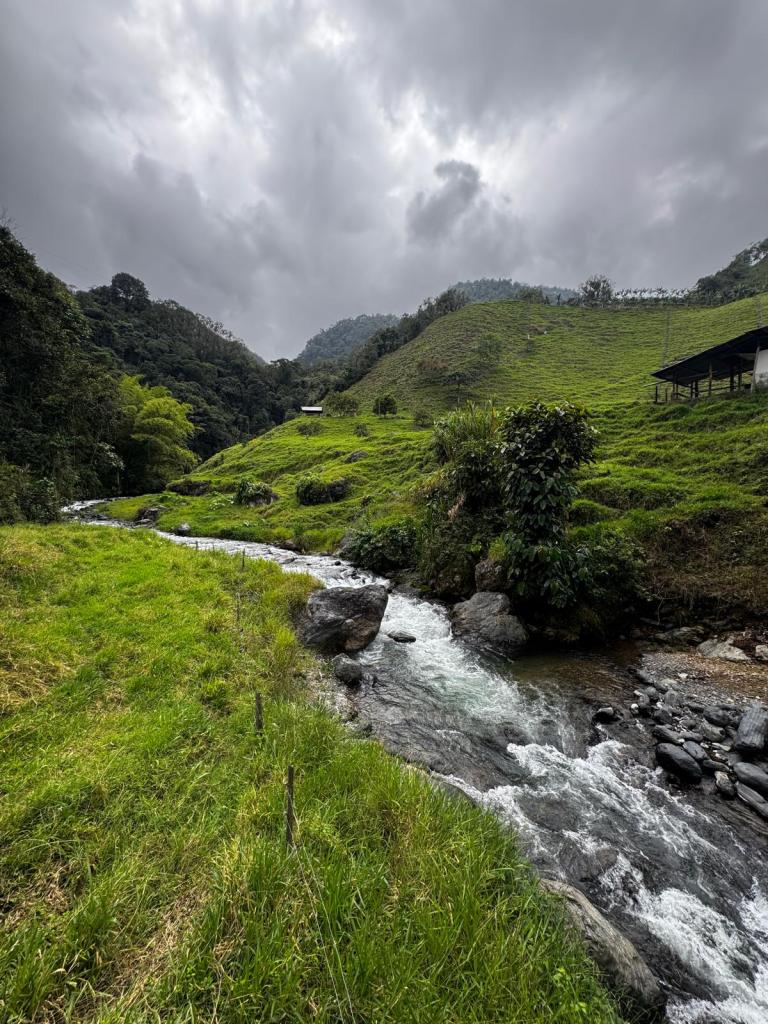
There was a stream on the way out, running through all that green, and it pulled me back to what we had been told in Santuario about Tatamá: a place of water, mountains, protected land, and coffee. Santuario had already been described to us as La Perla de Tatamá, but on that road the phrase stopped sounding like background information and became the actual panaramic view from the back of the truck.
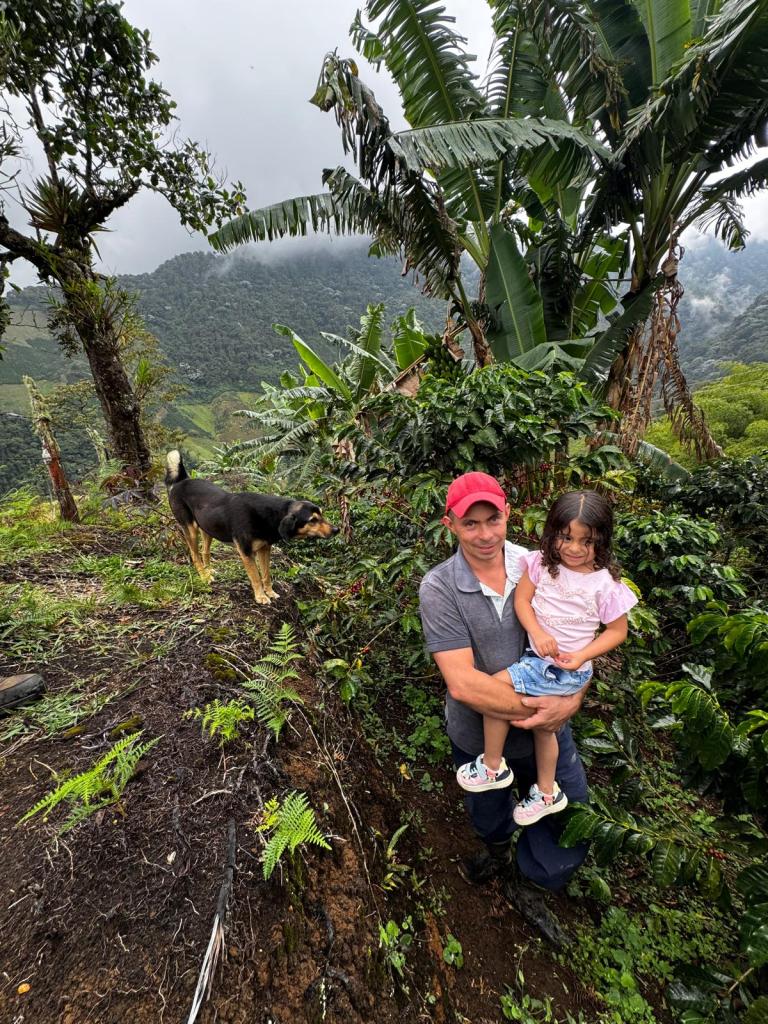
The coffees stop being cups on a table or numbers on a sample list and become part of a physical world. They belong to a road, a stream, a hillside, a small farm in Vereda La Linda, blue barrels, roof drying, changing weather, cherry selection, and one person doing the work himself. Also, as it turned out, a dog called Chiki, who seemed fairly convinced the whole operation belonged to him.
Finca El Guadual
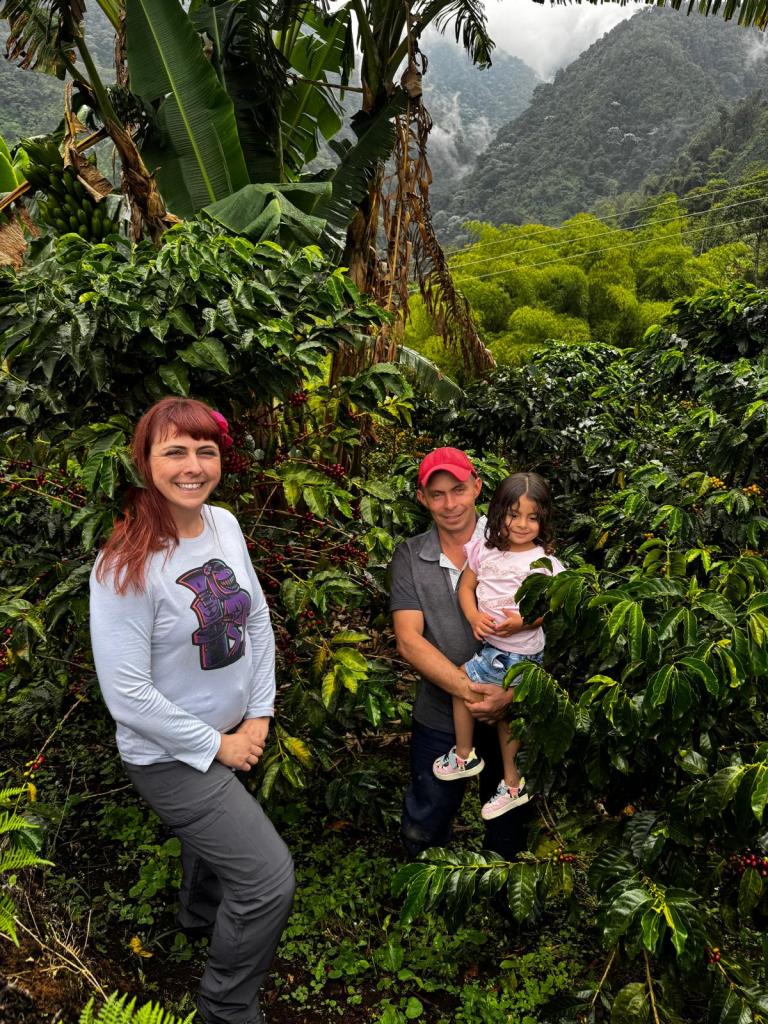
Finca El Guadual is a small farm in Vereda La Linda, in Santuario. It is only around a hectare, which changes the feel of the whole visit. This is not a big estate story. It is one person, one small piece of land, and a process built through repetition, attention, and knowing the coffee very closely.
Avelino does it all himself. That becomes obvious very quickly when you are there. The farm does not feel separated into neat categories of picking, processing, and drying with different people attached to each part. It feels held together by one person moving through all of it, making decisions as the day asks for them.
His daughter was there too, following him around in that very particular way children do when someone is clearly their hero. It was charming to watch, but it also stayed with me because it made the whole place feel less like a process description and more like a living inheritance. Finca El Guadual was not only Avelino’s work in the present. It also carried a quiet sense of future.
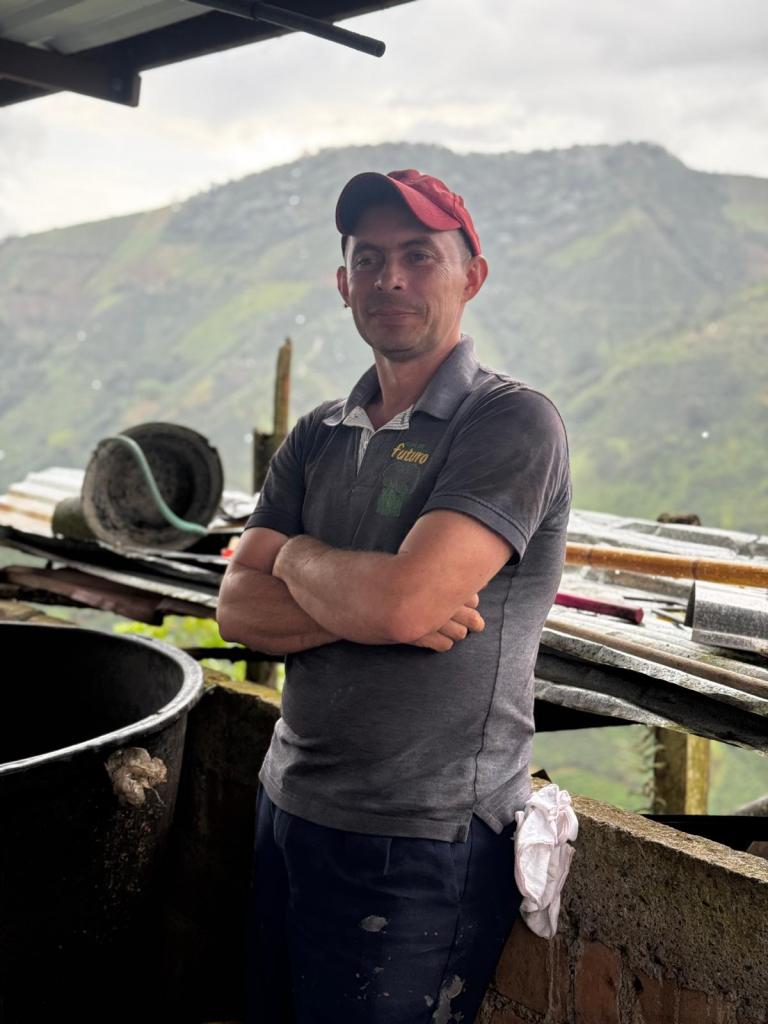
That is one of the things I loved about visiting. You can talk about fermentation days, barrels, and process names from a distance, but standing there on the farm makes it much more human. The numbers are not floating around on a spec sheet. They belong to someone’s daily decisions: what is ripe today, what can be picked, what goes into the barrel, how the weather is behaving, how the coffee is developing, and when it needs to move.
How the lot takes shape
One of the things that became clearer on the farm was that these coffees do not begin with a fermentation number. They begin with Avelino deciding what is actually ready to be picked.
Across his small farm, he is working with three varieties, Colombia, Caturra, and Supremo, and he gathers the coffee in small amounts as the cherry reaches the right level of maturation. That matters here because these coffees are not built from one giant, static batch that gets sealed away and left alone. They take shape over time, as ripe cherry comes in and the lot is built in stages.
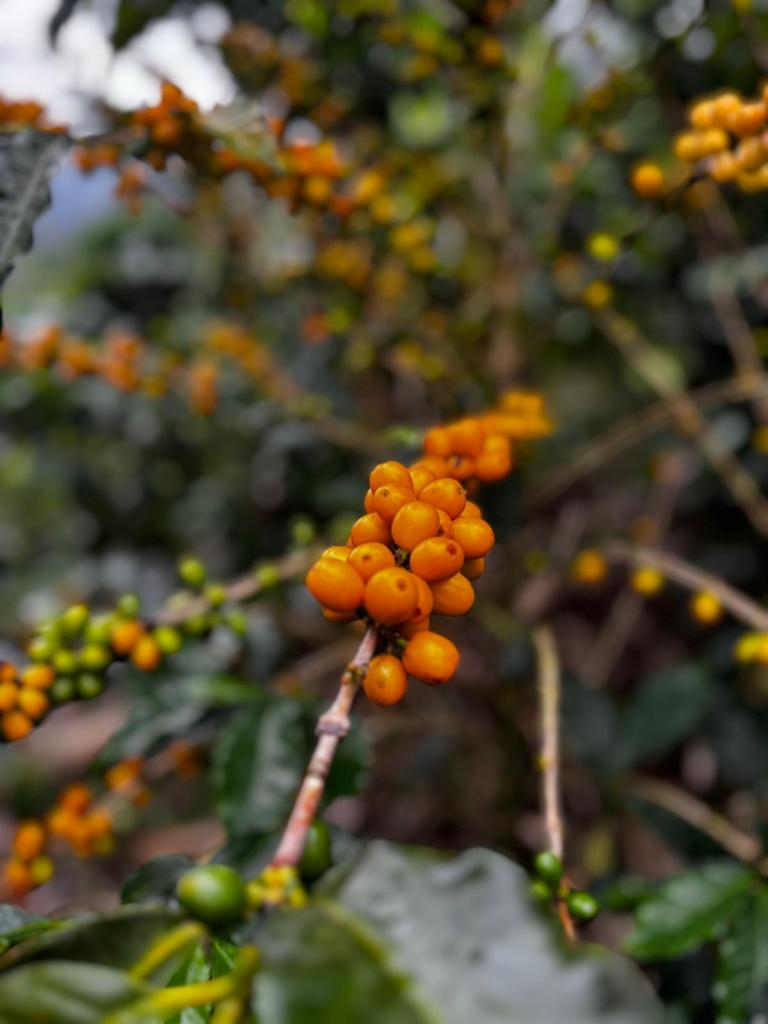
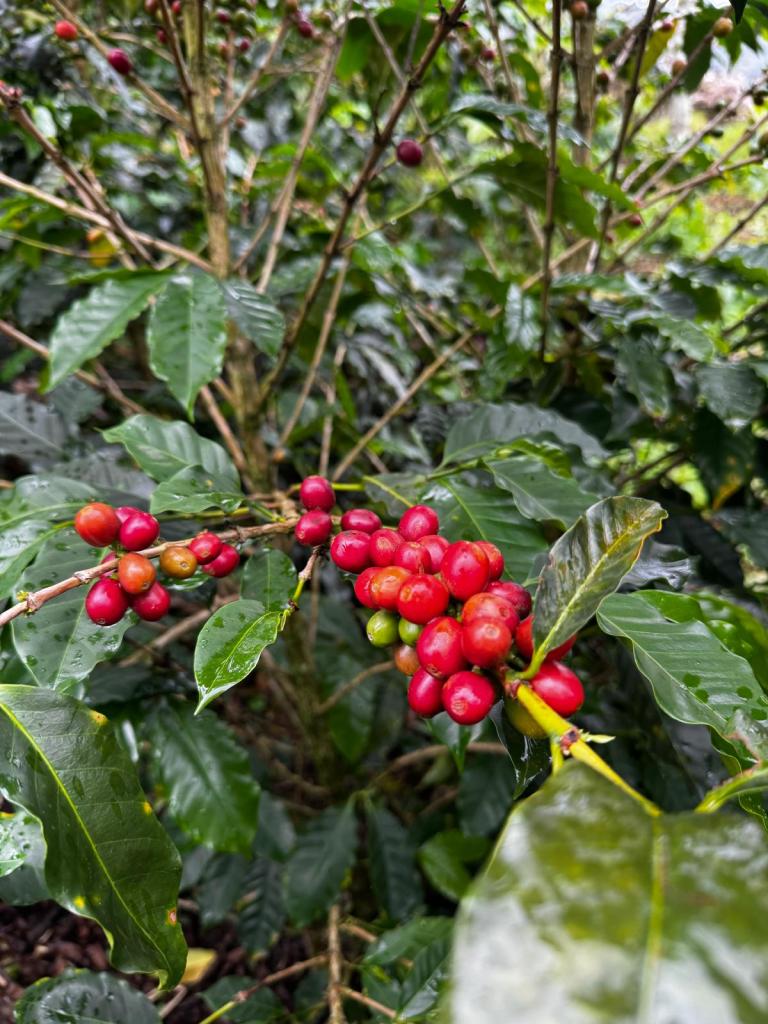
Once picked, the coffee gets a short fermentation in cherry, usually 12 to 24 hours depending on maturation, before it is pulped and moved into the sealed blue barrels for anaerobic remonta fermentation. Those barrels are now part of the visual world of this release for a reason. They are where the same farm, same producer, and same process begin to separate into different expressions.
During the remonta fermentation, the barrels are rotated every 24 hours. That rotation moves the coffee’s own mucilage-rich fermenting liquid back through the lot as it develops. It is one of the details that helps explain why these coffees have fermentation character without feeling like fermentation has swallowed the cup whole. There is movement through the process, but there is also control.
Because the lots are built from small daily collections, the coffee pulped first can reach around 15, 17, or 18 days of fermentation, while the last coffee pulped may reach around 9 or 10 days. After fermentation, Avelino washes the coffee using the lavador before it moves to drying.
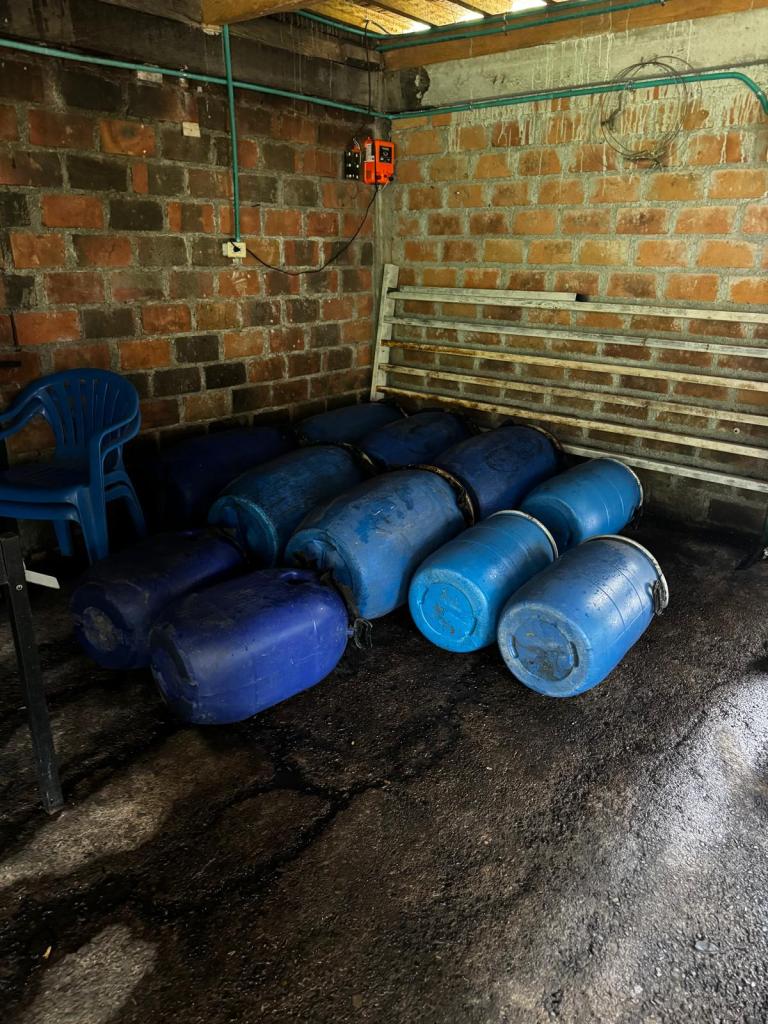
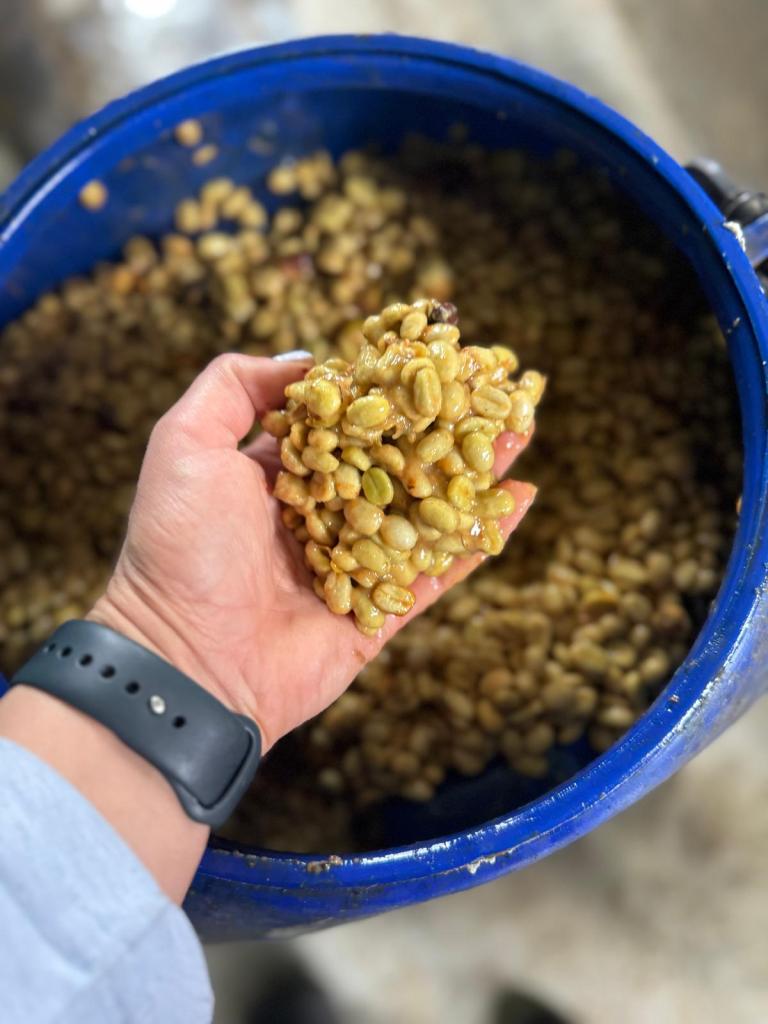
On paper, that could sound messy. Standing on the farm, it felt like the opposite. What became obvious very quickly was that Avelino is not throwing time at the coffee and hoping for the best. He has standardised what he does through repetition and close attention, and the result is a process that feels held rather than improvised. That matters, because long fermentation does not automatically mean good coffee, and it definitely does not automatically mean clean coffee. What makes these cups work is not the numbers on their own, but the fact that the process is being guided by someone who knows exactly what he is looking for.
For the release, the two expressions we selected became the 10 day and 19 day lots, with the named day marking the longest point in each one. Same producer, same farm, same remonta washed process, with time as the variable.
Roof drying and the reality of Santuario
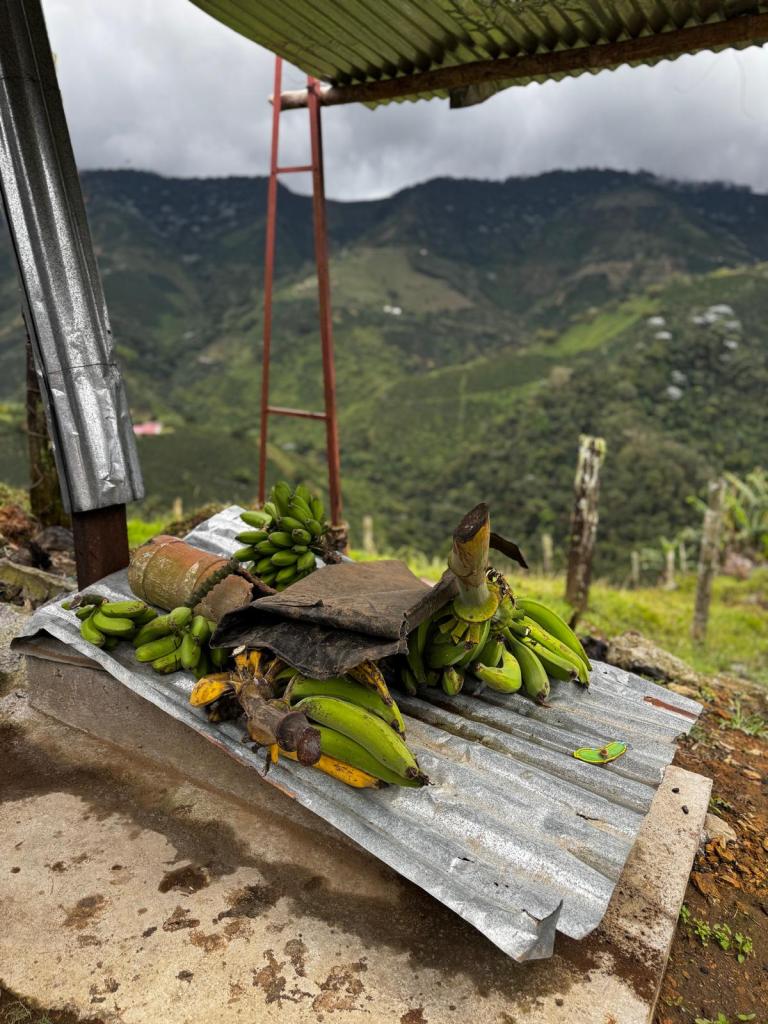
After washing, the coffee is dried on the roof for around 8 days.
This is another part of the story that feels important because drying is never just a neat line in a process description. In Santuario, weather is part of the reality. Rain can move in, conditions can shift, and small producers have to work with the infrastructure they actually have.
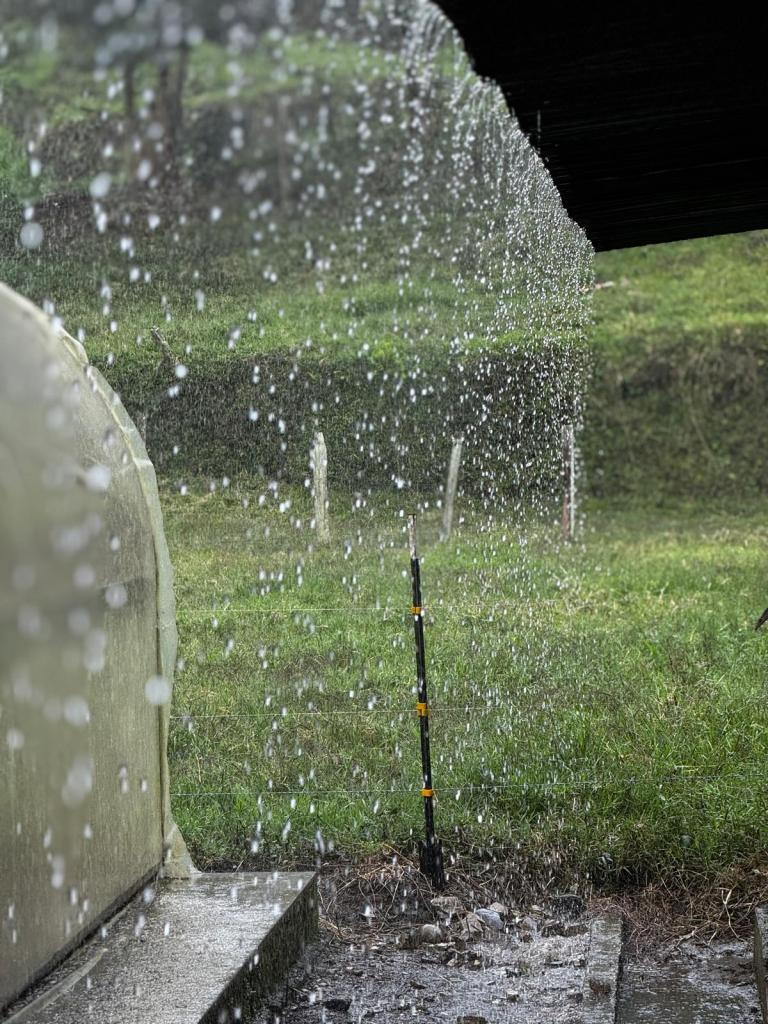
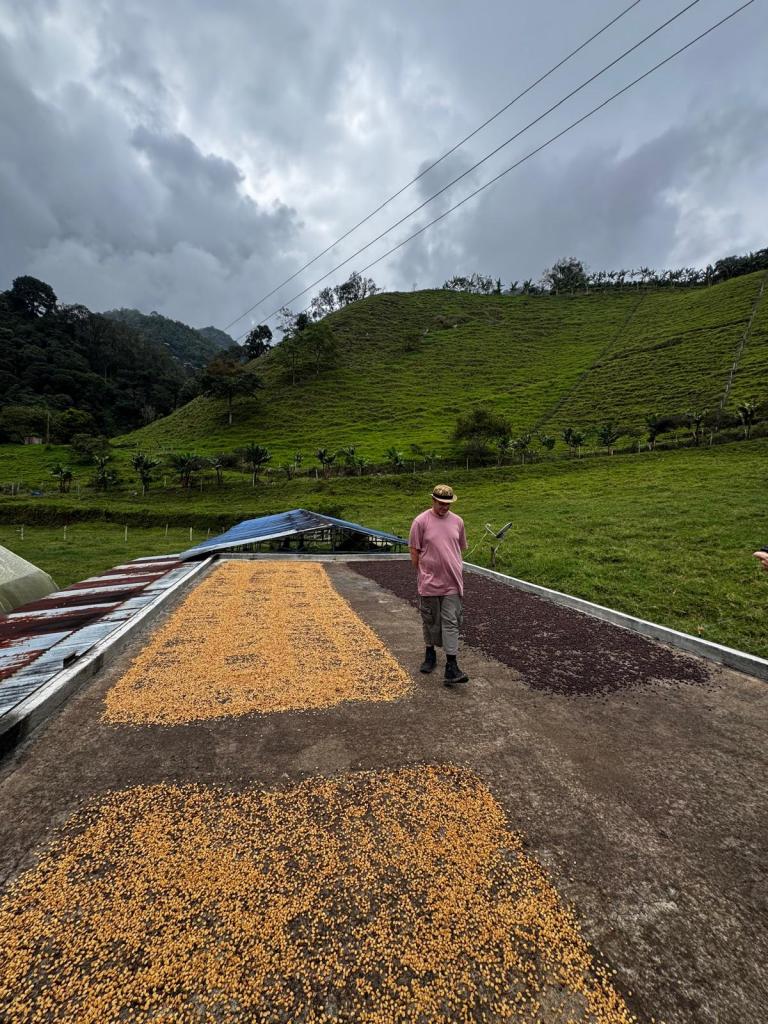
Avelino dries on the roof, adapting around the weather and protecting the coffee via a very cool roof rolling system when needed. The roof is place tracks with wheels, so that it can be brought over the coffee to protect it during pour downs. That kind of detail is not always glamorous, but it is part of what makes the coffee real. The process is not happening in a perfectly controlled fantasy lab. It is happening on a small farm, with one person doing the work, making decisions, responding to the place around him.
That is also why I find the cleanliness of these coffees so impressive. They are fermented, yes. They are expressive, yes. But they are not wild for the sake of being wild. They still feel washed. They still have structure. The fermentation adds sweetness, movement, depth, and personality, but the cups stay clear enough that you can taste the difference between the 10 day and the 19 day without everything becoming one big funky blur.
Chiki, obviously
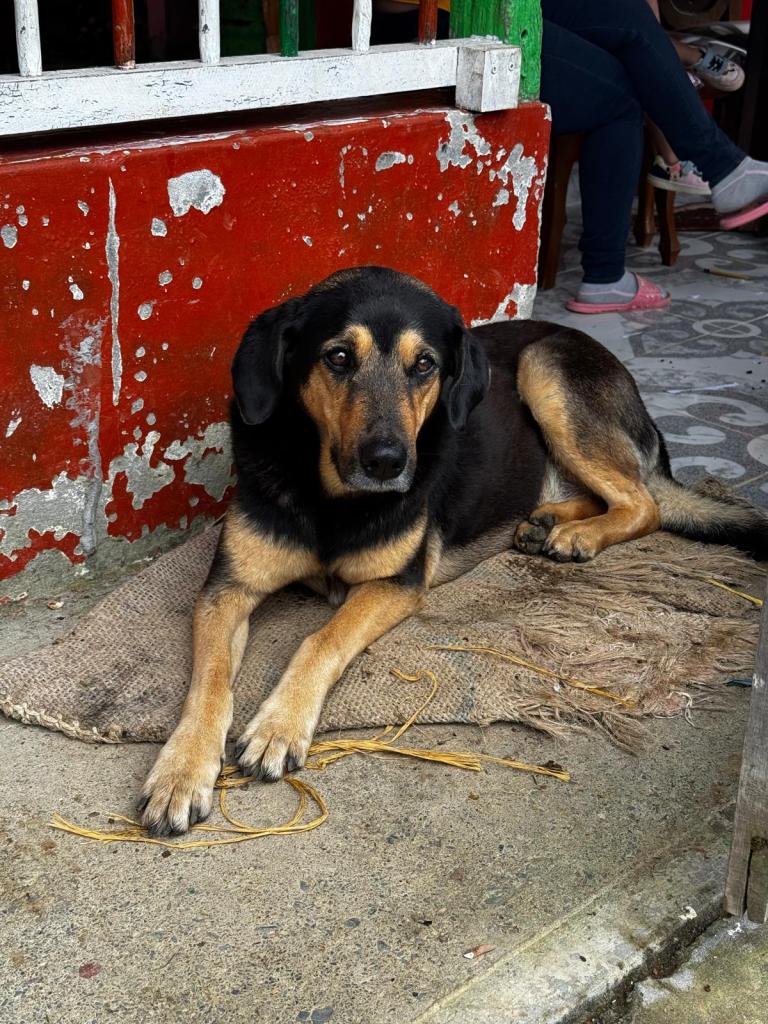
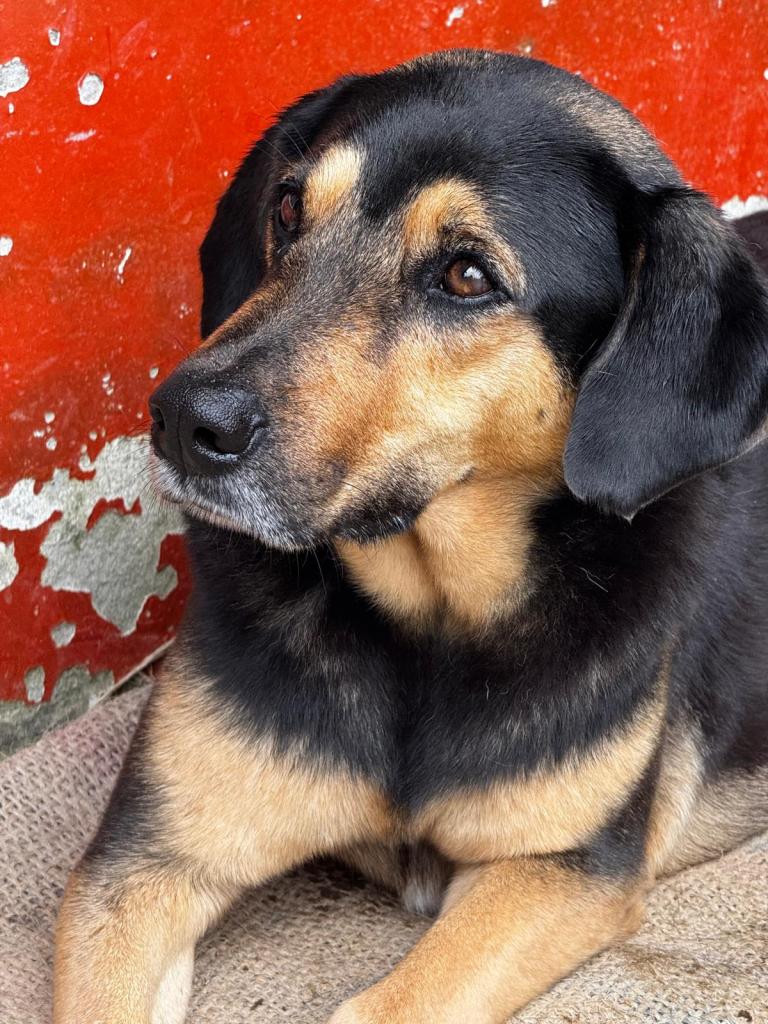
And then there was Chiki.
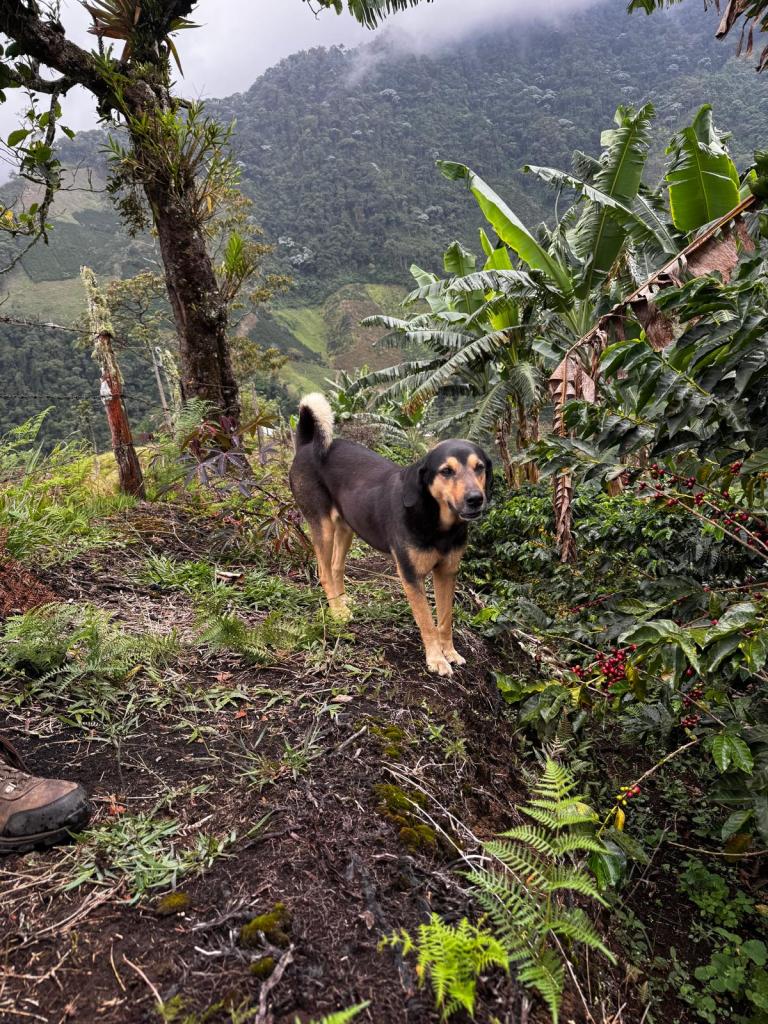
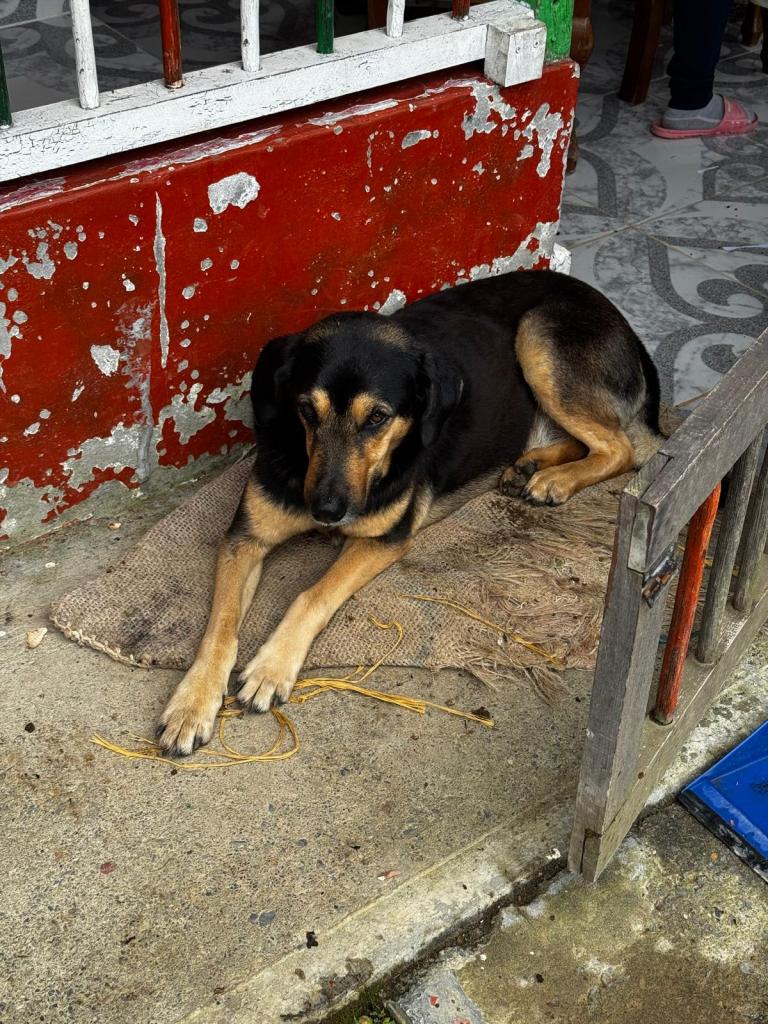
I cannot really talk about visiting Finca El Guadual without mentioning the dog, because of course the dog becomes part of the story. Some details are technically important, like fermentation times and drying days. Some details are emotionally important, like the fact that there was a dog there making the whole farm feel even more alive.
Chiki does not explain the cup profile, but Chiki absolutely belongs in the memory of the coffee. That is how origin visits work for me. The technical information matters, but so do the things that fix the place in your mind: the colour of the barrels, the roof where the coffee dries, the sound of the road, the person explaining their process, the dog walking through the scene as if it owns the entire operation.
In a way, those details are part of why I wanted these coffees for Roastersaurus. The release is not only about an interesting fermentation comparison. It is about a small farm that felt vivid enough to build a world around.
Why the pair matters
What makes this release so interesting to me is that the two coffees are not opposites from different worlds. They are two expressions of the same starting point: the same producer, the same farm, the same remonta washed process, with fermentation time as the variable.
That makes them one of the clearest paired tastings I have released through Roastersaurus. The comparison is not about deciding which coffee is better. It is about tasting what time changed.
The 10 day is the faster side of the barrel. It is bright, juicy, lifted, and Raptor-like. The 19 day is the heavier side of the barrel. It has more depth, more pull, more cola-like sweetness, and that T-Rex sense of gravity. Both are clean. Both are fruit-forward. Both still feel connected to the same producer and process.
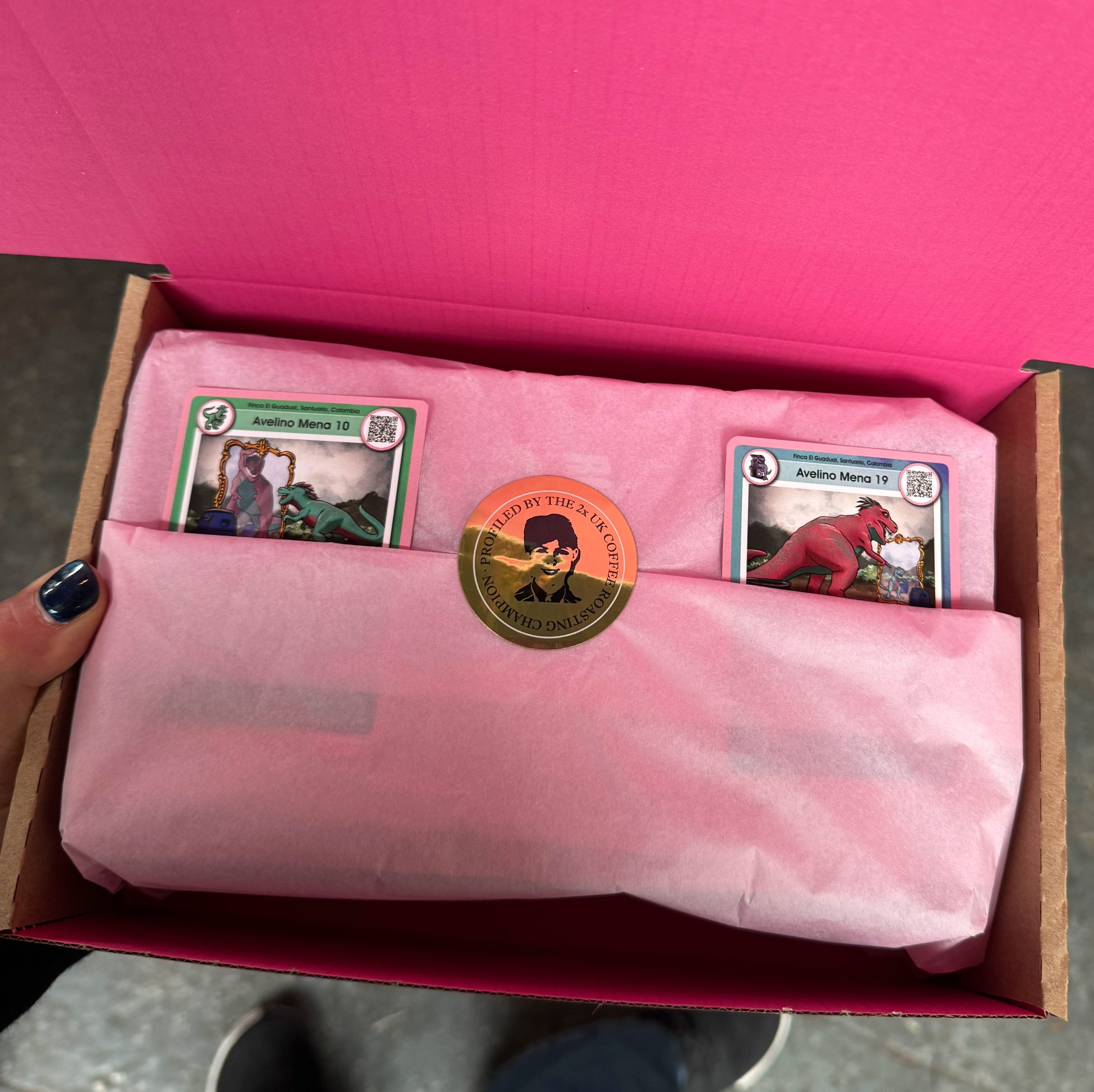
At London Coffee Festival, it was really lovely watching people taste them side by side. The T-Rex 19 seemed to just about steal the tiny crown for a lot of people, especially as espresso with milk, where that deeper cola sweetness really held its shape. The Raptor 10 had its own kind of magic too, and because it was the smaller lot, it disappeared first.
That is the reality of small releases. Sometimes the brighter side of the story vanishes before the deeper one, and the comparison becomes something you were lucky enough to catch in the moment. The T-Rex 19 is still here for now, carrying the heavier side of the barrel a little longer.
Order Avelino 19 here, while supplies last.