

I met Mo because I wanted his coffee. I just didn’t know it was his when I first tasted it.
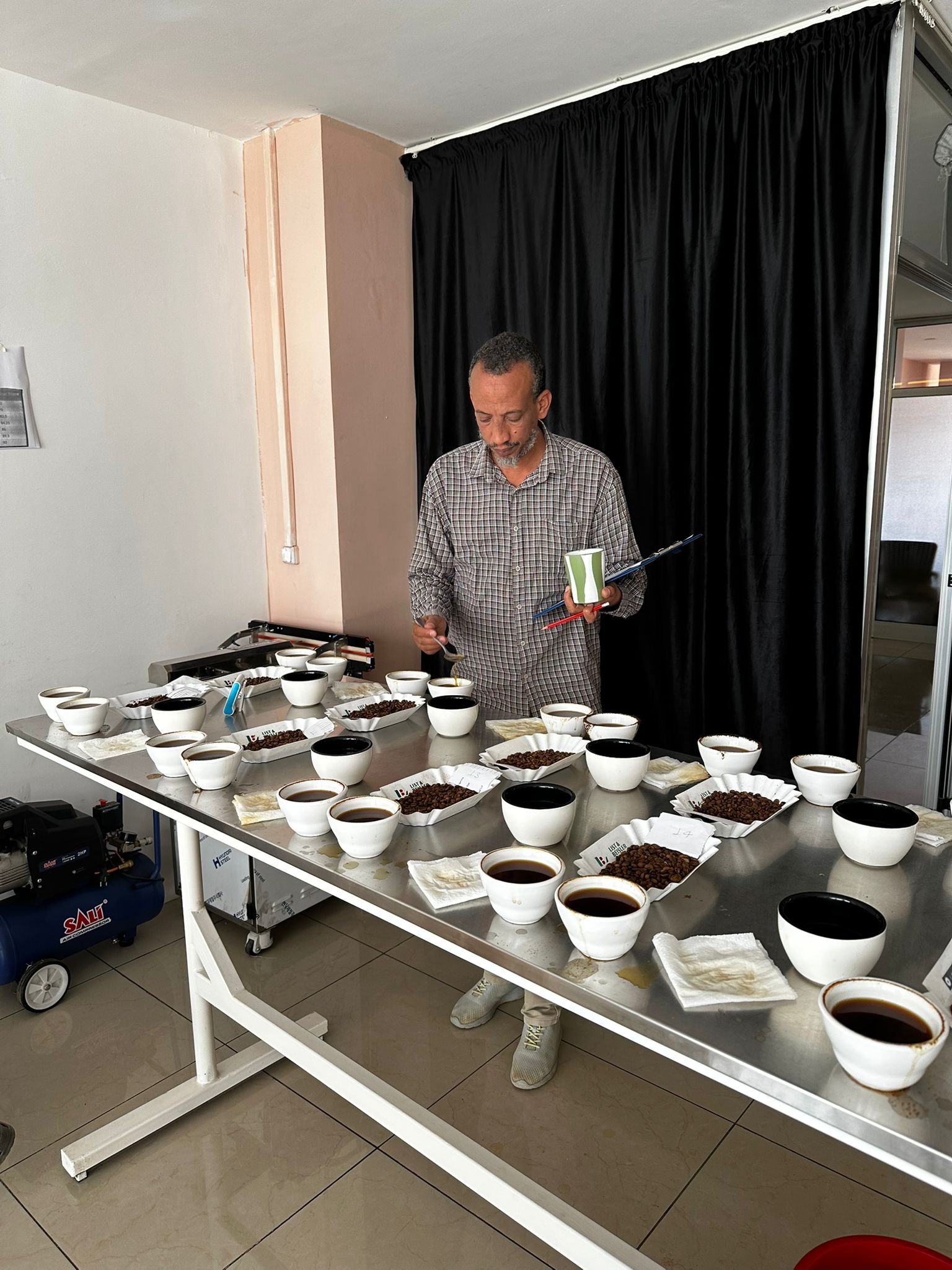
I was at World of Coffee in Brussels in June, making my way around the Cupping Village and looking for something to bring into Roastersaurus. Having bought Basha Bekele the year before, I was keen to find another Ethiopian producer to share. There is a lot to taste at World of Coffee, but a room full of coffee doesn’t necessarily make choosing easy. I was looking for something that made me want to stop and ask more questions.
The team at Omwani invited me over to taste, and there were several coffees on their table that I wanted to know more about. One in particular had really caught my attention. When I asked what it was, they told me it was Mo’s coffee, from his first harvest, and introduced me to him there.
That coffee was Lunar, a honey-processed coffee from Jimma, Ethiopia. Before I knew anything about the name or the person behind it, I already wanted to bring it home.
One bag available
I told Omwani I wanted the coffee, although that wasn’t quite the same as being able to buy it. Mo had made only a small amount, and they needed to check whether there was any left. Later, they came back to say they had one bag available for Roastersaurus. I took it.
I wish I had taken a photograph with Mo. World of Coffee gets incredibly busy, and somehow we managed the tasting, the introduction and the conversation without that part. Something for next time. For now, I have a coffee I’m very happy to share and a lovely reason to look forward to seeing him again.
Mo’s own project
Mo’s full name is Moata Raya. Through Mecota Trading, he helps connect Ethiopian farmers with buyers and navigate the bureaucracy and logistics of getting their coffee out into the world. There is a great deal of work in making those relationships possible, much of it happening long before a bag reaches a roaster.
Lunar is his first personal processing project. For this coffee, a friend offered him the use of his family’s farm in Chewa village, in Gomma district, near Agaro in Jimma. Mo installed a small two-disc pulper and trained his friend’s parents in the processing. The family picked the cherries and cared for the coffee through drying, following the approach he had set out.
The name comes from his daughter’s nickname at birth. Knowing that gives Lunar a warmth that stays with me, particularly when I look at the creature it eventually became.
A little more than “honey process”
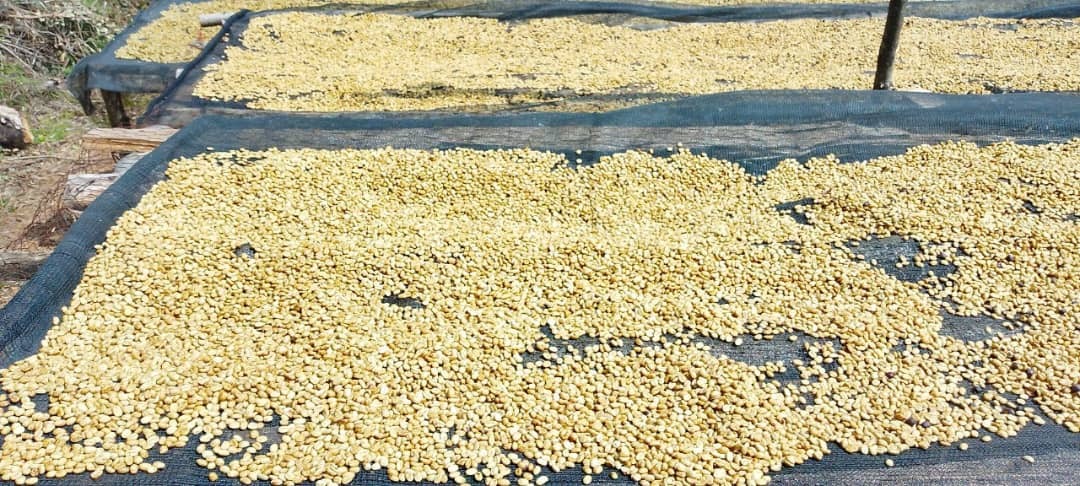
The ripe red cherries were pulped about eight hours after picking, removing the outer fruit while leaving most of the sticky mucilage around the seeds. The coffee then went onto raised beds in the evening to dry with that layer still attached. That is the “honey” in the process: the fruit’s own sticky layer, with no honey added.
Drying took ten to twelve days. During the day, the coffee was turned every two hours, with shade nets used in the hottest conditions and air moving through the beds. Those details make the process much easier to picture than the two words we can fit on a coffee label. Someone has to keep returning to those beds, watching the conditions and looking after the coffee as it dries.
Jimma gives this small project a wider context, too. For years, many buyers knew the region through commercial dry-processed coffees sold as Djimma Grade 5, although that reputation never told the whole story of what could grow there. Specialty coffees from around Agaro have helped many more drinkers get to know the region’s quality. Lunar is a Grade 1 honey-processed lot within that much broader coffee landscape, and a chance to taste Mo’s own approach to it.
So much peach
Back in London, as I roasted and brewed Lunar, peach kept coming back through my notes. Then peach again. There were other things to find, but peach was being fairly insistent about its place at the front.
Cantaloupe and ripe persimmon became clearer as I spent more time with it. Hachiya was the closer fit for the persimmon: the soft, almost custardy sweetness of the properly ripe fruit. Bergamot brings that lovely fragrant lift, with pomelo giving the mellow fruit a citrus edge. What holds it together for me is the texture, silky and creamy without feeling heavy.
We spent a while getting that language right. “Full” suggested a weight I wasn’t finding in the cup, even though there was plenty of flavour. I wanted to keep the peach and that softness without making Lunar sound like a much heavier coffee. Eventually, the words that stayed were the ones on the card: Silky. Peach. Dream.
A Triceratops with something to say
With Lunar as the name, the moon was always going to be difficult to resist. We kept coming back to the familiar pose of a wolf howling, and Caitlin, @kitsukaizen, gave that upward call to a pink Triceratops. The golden horns reach into the night while all four feet stay planted in the grass, with moonlight catching the back and frill.
I love how committed this creature is to the call. There is a lot of dinosaur beneath those horns, but something tender in the raised head and open mouth. Knowing where Mo found the name makes me imagine someone beyond the picture hearing it. That is my way into the artwork, and into the protective feeling behind Mooncall, the skill on the card.
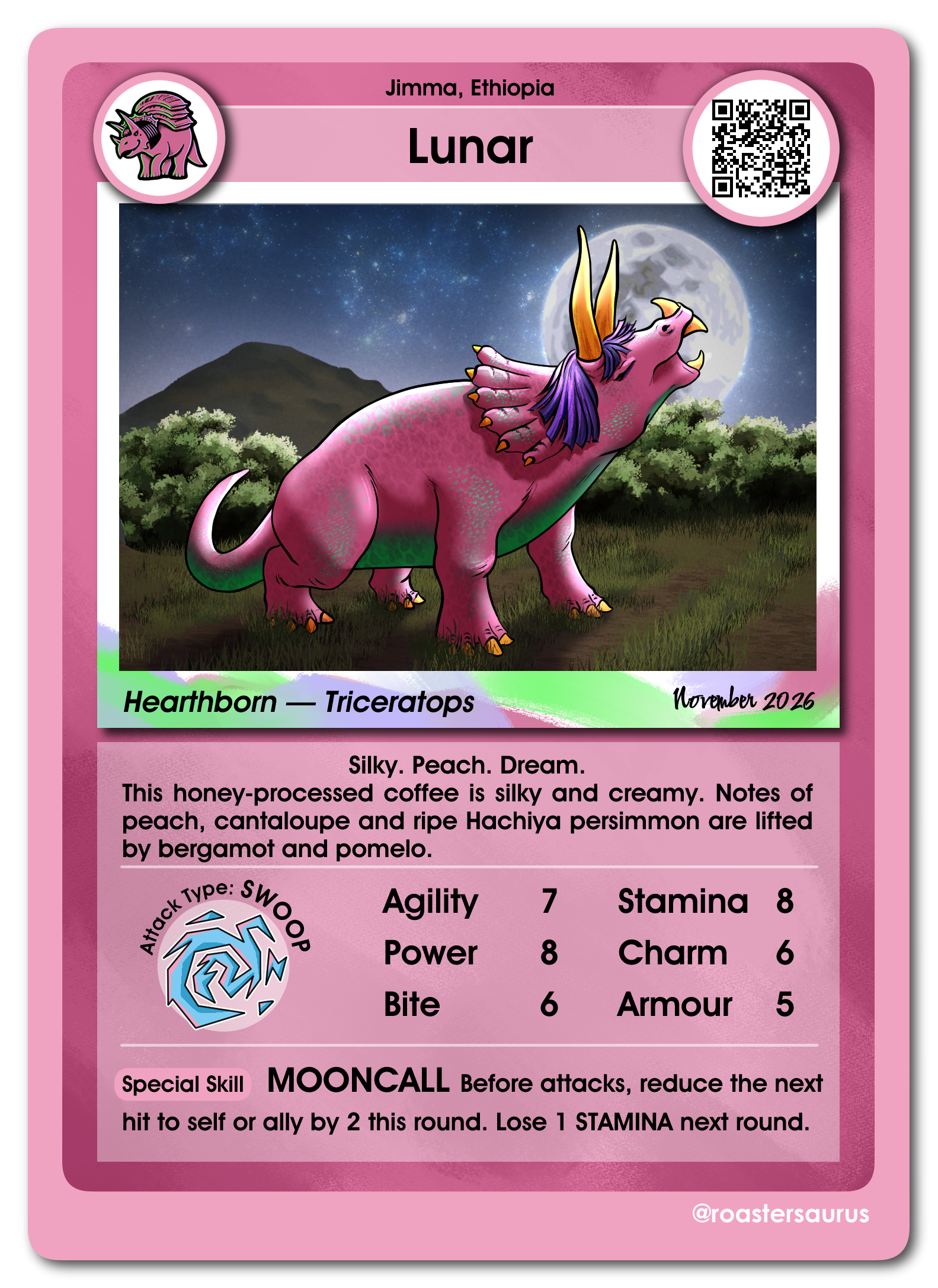
You can follow the artwork and the card further on Lunar’s lore page. Here, I wanted to go back to the table where I first found the coffee, before there was a pink Triceratops or a moonlit sky around it. I tasted something I loved, asked whose it was, and got to meet Mo. I’m very glad there was a bag left.

